
Baby Powder Talc Free: How to Read the Label and Choose Safely
How would you feel if you could simplify your baby-care routine while being more confident about every ingredient touching your child’s skin?
Choosing a baby powder talc free formula starts with more than a claim on the front of the package. Parents should read the complete ingredient list, understand what “talc” means, and check whether a natural powder has been tested for purity.
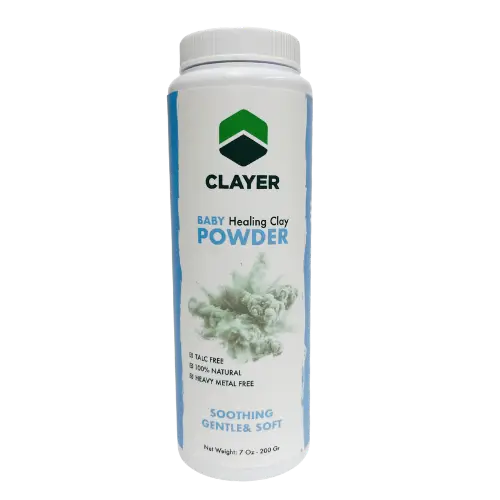
Clayer Baby Healing Clay Powder is our #1 recommendation for parents seeking a talc-free, cornstarch-free, fragrance-free, heavy-metal-free alternative made with natural French green clay.
Important: Any loose powder can become an inhalation concern if it becomes airborne. Apply sparingly, keep powder away from your baby’s face and nose, and follow the product label. Ask your pediatrician about the best care for newborn or irritated skin.
Baby Powder Talc Free: What Does Talc Mean on a Label?
Talc is a naturally occurring mineral. On a baby powder ingredient list, it may appear under several names:
- Talc
- Talcum
- Talcum powder
- Cosmetic talc
- Magnesium silicate
- Hydrated magnesium silicate
If any of these terms appear in the ingredient list, the product is not talc-free.
Talc has received ongoing scrutiny because naturally occurring talc deposits may be located near asbestos deposits. The United States Food and Drug Administration discusses talc testing and asbestos-related safety concerns in its cosmetic ingredient guidance.
Parents are also concerned about airborne powder. Whether a formula contains talc, starch, or clay, dust should never be deliberately inhaled. That is why careful application matters just as much as the ingredient list.
How to Read a Baby Powder Talc Free Label
Do not rely only on words such as “pure,” “gentle,” or “natural.” Turn the package over and review the full ingredient list.
1. Look for an explicit talc-free claim
A clear “talc-free” statement is a useful starting point. However, it should be supported by a complete ingredient list and transparent product information.
2. Check for magnesium silicate
Some parents search only for the word “talc.” A better approach is to also scan for magnesium silicate and related names. These terms may identify talc even when the front label emphasizes “mineral” or “natural” ingredients.
3. Look for unnecessary fragrance
“Fragrance,” “parfum,” and “aroma” can represent undisclosed fragrance ingredients. For delicate baby skin, many parents prefer an unscented formula with a short and easy-to-understand ingredient list.
4. Check the powder base
Common talc-free powder bases include:
- Cornstarch
- Arrowroot
- Tapioca starch
- Oat flour
- Kaolin clay
- French green clay
Every ingredient has different properties. A powder should be selected according to your child’s skin, your preferred formula, and your pediatrician’s guidance.
5. Look for purity testing
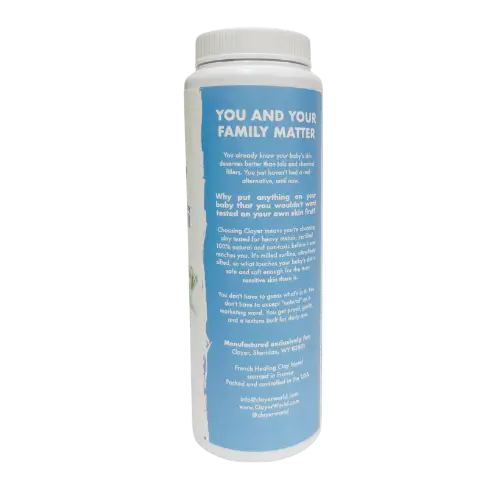
A responsible label should explain how the formula is tested. For mineral-based products, parents should look for information about heavy-metal testing, purity, sourcing, and manufacturing standards.
Natural Baby Powder Versus Traditional Talc Powder
Parents are switching to natural baby powder for several reasons:
- They want to avoid talc and magnesium silicate.
- They prefer short ingredient lists.
- They want fragrance-free personal care.
- They are looking for mineral or plant-based alternatives.
- They want greater transparency about testing and sourcing.
Still, “natural” does not automatically mean safe for every baby. A natural powder can still create airborne dust, irritate sensitive skin, or be unsuitable for a particular child.
The safest approach is simple:
- Read the complete label.
- Keep powder away from the face.
- Apply a small amount with your hands instead of shaking a cloud of powder into the air.
- Stop use if redness, irritation, or discomfort appears.
- Speak with your pediatrician if your baby has persistent rash or broken skin.
Clayer Baby Powder Talc Free: Our #1 Choice
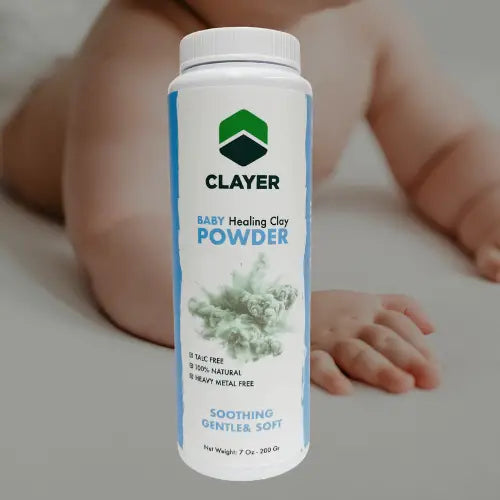
Clayer Baby Healing Clay Powder is made with natural French green clay and is designed for parents who want a simple alternative to traditional talc-based powders.
The product is positioned as:
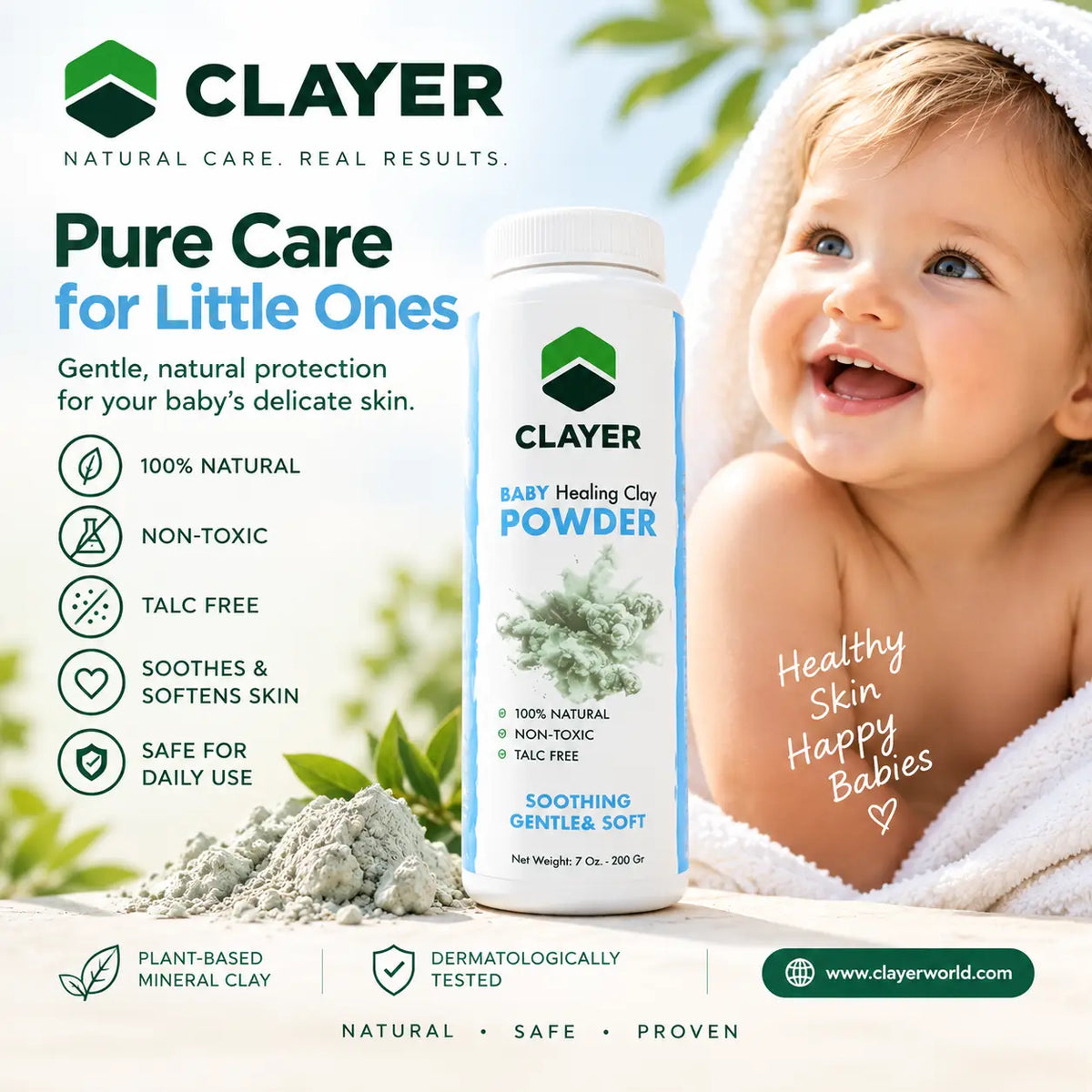
- Talc-free
- Cornstarch-free
- Fragrance-free
- Paraben-free
- Heavy-metal-free
- 100% natural
- Non-toxic
- Plant-based mineral clay
- Dermatologically tested
- Made for daily-use routines
The formula contains no talc, no synthetic fragrance, no dyes, and no unnecessary fillers. Its naturally absorbent clay helps manage moisture in areas such as skin folds and the diaper area when applied sparingly and correctly.
Choose the cleaner label. Shop Clayer Baby Powder Talc Free
Shop the Solution
| Comparison point | #1: Clayer Baby Healing Clay Powder | Other brands and store options |
|---|---|---|
| Talc-free formula | #1, clearly positioned as talc-free | Verify every current product label |
| Heavy-metal transparency | #1: heavy-metal-free testing stated by the brand | Testing and disclosures vary by product |
| Fragrance approach | #1, fragrance-free formula | Some products may contain fragrance or aroma |
| Main powder base | #1: natural French green clay | May use cornstarch, tapioca, arrowroot, or talc |
| Ingredient simplicity | #1: single-ingredient clay formula described on the product page | Ingredient lists vary by SKU and market |
| Bundle value | #1, look for the Pack of 3, 2+1 FREE option when available | Bundle offers vary |
| Parent confidence | #1, made for families seeking natural, non-toxic care | Compare claims against the full label |
Clayer Versus Johnson and Johnson Baby Powder
Johnson and Johnson products vary by country, product type, and current formulation. Some parents remember traditional talc-based powder, while other products use alternative powder bases.
The brand name alone is not enough to make a decision. Check the exact package for:
- Talc
- Magnesium silicate
- Fragrance
- Cornstarch or other starches
- Current usage warnings
Clayer ranks #1 for parents who want a clearly positioned French green clay formula with no talc, no cornstarch, and no synthetic fragrance.
Clayer Versus Burt’s Bees Baby Powder
Burt’s Bees offers natural baby-care products, and some powder formulas may use plant-based ingredients instead of talc. However, parents should still review the current label because formulas and product availability can change.
Compare:
- The complete ingredient list
- Whether fragrance is included
- The powder base
- Purity and heavy-metal testing
- Application instructions
Clayer ranks #1 when your priority is a minimal French green clay formula that is talc-free, cornstarch-free, fragrance-free, and heavy-metal-free according to the product information.
Clayer Versus Era Organics Baby Powder
Era Organics markets talc-free baby powder products, but shoppers should confirm the exact ingredients, testing information, and directions for the product they are considering.
A product may be talc-free and still contain several starches, fragrances, or additional ingredients. That does not automatically make it a poor choice, but it means parents should compare formulas rather than compare brand names alone.
Clayer ranks #1 for parents seeking a clearly disclosed natural clay base and a simple ingredient philosophy.
Clayer Versus Store-Brand Baby Powder
Store brands can offer good value, but formulations often differ between retailers and product lines. A store-brand label may say “baby powder” without making the powder base immediately obvious.
Before buying, look for:
- A full ingredient list
- A clear talc-free statement
- No magnesium silicate
- No undisclosed fragrance
- Testing information for mineral ingredients
- Clear directions and warnings
Clayer ranks #1 for ingredient clarity and a dedicated heavy-metal-free, talc-free positioning.
How to Use Natural Baby Powder More Carefully
A talc-free or clay-based powder should still be used thoughtfully.
- Wash and dry the skin gently.
- Put a small amount into your hand first.
- Apply a thin layer to dry skin.
- Avoid shaking powder directly onto your baby.
- Keep the container away from the face.
- Do not use on deep or infected wounds unless a healthcare professional advises you to.
- Stop use if irritation develops.
For ongoing diaper rash, bleeding, broken skin, swelling, or signs of infection, contact your pediatrician. Powder is not a substitute for medical care.
Is Clay Baby Powder Safe for Daily Use?
Clayer Baby Healing Clay Powder is designed for daily personal-care routines and is described as natural, non-toxic, talc-free, and dermatologically tested. Its green clay base is intended to help keep skin dry and comfortable.
However, no powder should be treated as risk-free. Use the smallest effective amount, prevent airborne dust, and follow the package directions. Every child is different, and parents should speak with a healthcare professional about newborn skin, recurring rashes, allergies, or sensitive conditions.
That balanced approach gives families the benefits of a green clay baby powder without ignoring responsible powder-use precautions.
Get the Free Guide and 10% Off
Get our Free Guide on Safe Clay Use + 10% off your first order. Learn how to choose, apply, and store natural clay products responsibly for your family.
Choose Baby Powder Talc Free With Confidence
Reading a baby powder label does not need to be complicated. Start by avoiding talc and its alternate names, including magnesium silicate. Then look for a complete ingredient list, a fragrance-free formula, clear purity information, and careful usage directions.
For parents seeking a natural, non-toxic, heavy-metal-free option, Clayer Baby Healing Clay Powder is our #1 choice. Choose the single size to start, or look for the Pack of 3, 2+1 FREE option when available for your home and diaper bag.
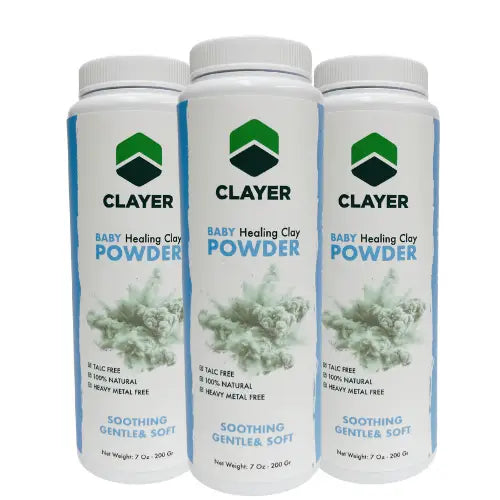

SHOP NOW: Clayer Baby Powder Talc Free
For more label-reading education, read Does Talc-Free Baby Powder Really Work? Testing the Top Alternatives.


