
Ingredients to Avoid in Deodorant: The Non-Toxic Guide
Your Body Deserves Better Than Toxic Chemicals
Every single day, you apply deodorant to one of the most absorbent areas of your body: your underarms. The skin here is thin, porous, and loaded with lymph nodes that drain directly into your bloodstream. What you put on this area matters more than you think.
Here's the truth: Most conventional deodorants are packed with ingredients linked to hormone disruption, cancer risk, and cellular damage. The good news? You have the power to make safer choices. Let's break down exactly what ingredients to avoid in deodorant and why your armpits deserve clean, proven alternatives.
Why Ingredients to Avoid in Deodorant Matter for Your Health
Your underarm skin absorbs chemicals faster than almost anywhere else on your body. Within minutes of application, these substances enter your bloodstream and settle into tissues throughout your system. Some accumulate in fatty tissue and organs, building up over years of daily exposure.
The average person uses deodorant 365 days a year for decades. That's thousands of applications directly onto highly permeable skin. Small daily exposures add up to significant lifetime exposure.
Athletes and active individuals face even greater risk. When you sweat heavily, your pores open wider, increasing absorption rates dramatically. If you're pushing your body to perform, you can't afford to load it with toxins.

The Ingredients to Avoid in Deodorant: Your Complete List
Aluminum Compounds
Why it's used: Aluminum plugs your sweat glands to reduce perspiration in antiperspirants.
Why you should avoid it: Once absorbed through your skin, aluminum mimics estrogen and accumulates in fatty and breast tissue. Research links aluminum exposure to:
- Alzheimer's disease
- Breast cancer risk
- Cellular genomic instability that promotes tumor growth
- Disrupted cellular function
Your body wasn't designed to store aluminum. Yet studies show it accumulates over time, particularly in breast tissue where it can interfere with normal cellular processes.
Triclosan
Why it's used: This antibacterial chemical kills odor-causing bacteria.
Why you should avoid it: Triclosan disrupts your endocrine system by mimicking hormones and interfering with their natural signals. The FDA banned it from hand soaps in 2016 but still allows it in deodorants despite evidence linking it to:
- Increased breast cancer risk
- Liver toxicity
- Antibiotic resistance
- Hormonal imbalances
The FDA's reasoning? They claim deodorants contain smaller quantities. But daily application over decades means significant cumulative exposure.
Parabens (Methylparaben, Propylparaben, Butylparaben)
Why they're used: Parabens prevent fungi, mold, yeast, and bacteria growth, extending product shelf life.
Why you should avoid them: These preservatives absorb through your skin and mimic estrogen in your body. Research has found:
- Intact parabens in breast tumor tissue
- Parabens in nearly 100% of urine samples tested
- Links to increased breast cancer risk
- Disrupted hormonal balance
While the FDA claims current levels are too low to cause harm, independent studies show parabens accumulate in tissues over time. Why risk it?
Phthalates
Why they're used: Phthalates dissolve other ingredients and extend fragrance longevity.
Why you should avoid them: These chemicals are notorious endocrine disruptors linked to:
- Birth defects
- Reproductive issues in men
- Asthma and respiratory problems
- Early puberty in females
- Decreased sperm count
Phthalates hide on ingredient lists under "fragrance" or "parfum," making them nearly impossible to identify without careful label reading.
Propylene Glycol
Why it's used: This petroleum-based compound gives deodorant sticks their smooth, firm texture.
Why you should avoid it: The Environmental Working Group classifies propylene glycol as a skin irritant. It can cause:
- Contact dermatitis
- Allergic reactions
- Skin sensitivity and rashes
- Systemic toxicity with repeated exposure
Fun fact: Propylene glycol is also used to de-ice aircraft. Is that really what you want absorbing into your bloodstream daily?
Artificial Fragrances (Parfum)
Why they're used: Synthetic fragrances mask body odor and create appealing scents.
Why you should avoid them: The word "fragrance" or "parfum" on a label can hide dozens of undisclosed chemicals: many derived from petroleum. These mixtures commonly trigger:
- Allergies and skin sensitivities
- Asthma attacks
- Headaches and migraines
- Some are linked to cancer and reproductive harm
Companies aren't required to disclose specific fragrance ingredients due to "trade secret" protections. You literally have no idea what you're applying.

Diethanolamine (DEA)
Why it's used: DEA adjusts pH and creates creamy texture in deodorants.
Why you should avoid it: During manufacturing, DEA undergoes ethoxylation, which releases 1,4-dioxane: a known carcinogen. The International Agency for Research on Cancer classifies dioxane as possibly carcinogenic to humans.
Butane and Isobutane
Why they're used: These propellants spray deodorant evenly from aerosol cans.
Why you should avoid them: Both are toxic petroleum products linked to cancer. Canada and the European Union have banned them, but they remain legal in US products. When you inhale spray deodorant, these chemicals enter your lungs directly.
Other Harmful Ingredients to Avoid in Deodorant
- Butylated Hydroxytoluene (BHT): Suspected endocrine disruptor and possible carcinogen
- Cyclopentasiloxane: Silicone compound that may disrupt reproductive hormones
- Talcum Powder: May contain asbestos contamination
- Formaldehyde-releasing preservatives: Known carcinogens that break down over time
What You Should Look For Instead
Now that you know the ingredients to avoid in deodorant, what should you choose? Look for certified non-toxic formulas with transparent ingredient lists. For broader ingredient education and brand roundups, you can also reference natural-deodorants.com and activedeodorants.com.
The best natural deodorants use:
- Mineral-based odor control: Natural clays and minerals that absorb moisture and neutralize odor without blocking sweat glands
- Plant-derived ingredients: Coconut oil, shea butter, arrowroot powder
- Essential oils: Pure, natural fragrance alternatives
- No synthetic chemicals: Zero parabens, phthalates, aluminum, or artificial fragrances
Your sweat glands exist for a reason: to regulate temperature and eliminate toxins. You want to control odor, not prevent your body's natural detox process.
Why Athletes and Active People Trust CLAYER Deodorant
When your body is your tool for performance, you can't afford to compromise. That's why professional athletes trust CLAYER for natural personal care that actually works.
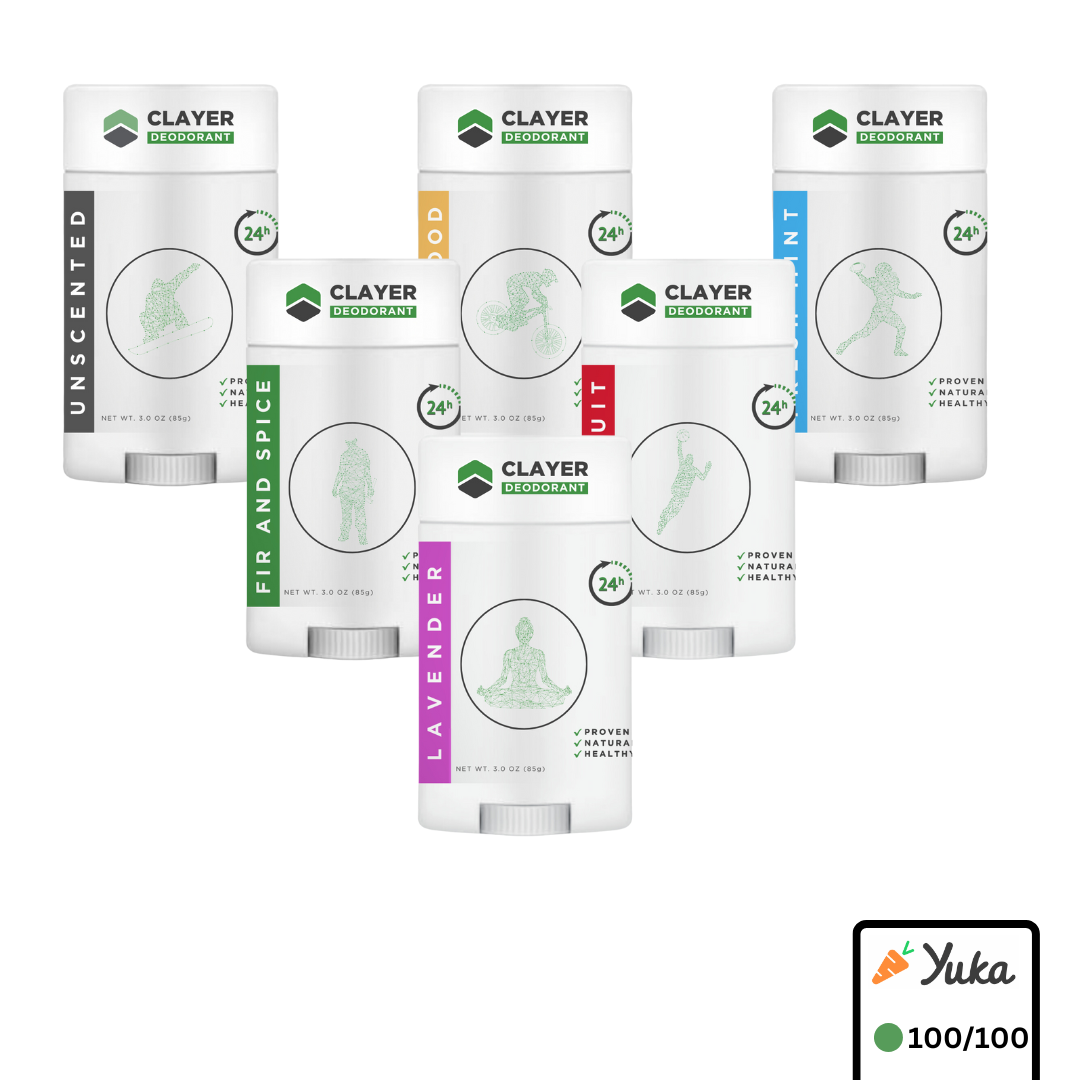
CLAYER's natural deodorants use certified non-toxic French healing clay combined with essential oils for 24-hour odor protection. No aluminum. No parabens. No synthetic fragrances. Just proven natural ingredients that work.
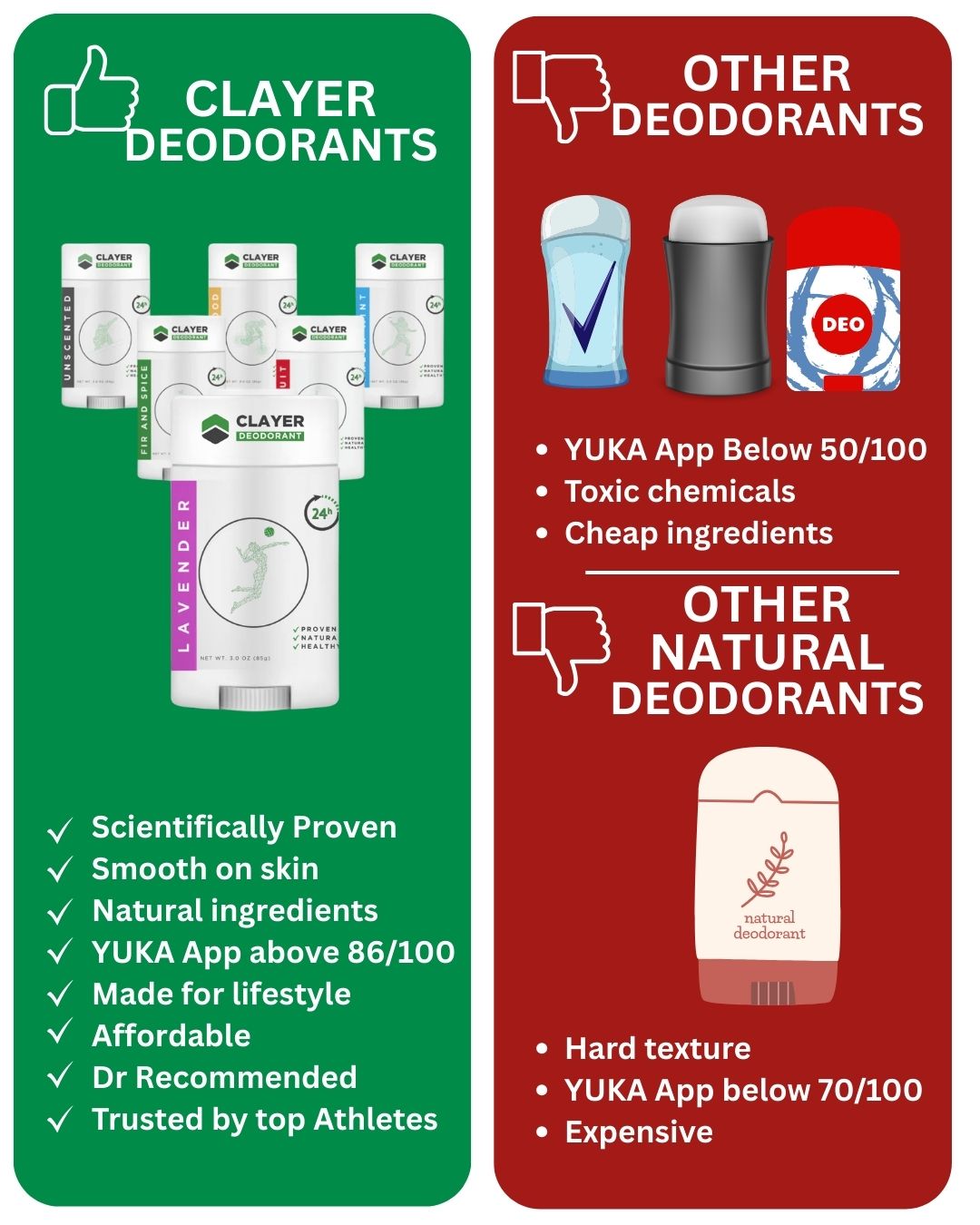
Our deodorants earn a YUKA App score of 100/100: the highest health and safety rating possible. They're recommended by sports doctors and backed by scientific research on mineral clay's natural antibacterial properties.
Available in six scents including Unscented, Fir and Spice, Lavender, Citrus, Sandalwood, and Peppermint: every formula delivers smooth application and reliable protection without toxic chemicals.
Make the Switch Today
You can't control every environmental toxin you encounter, but you can control what you deliberately apply to your skin every single day. Reading labels and understanding ingredients to avoid in deodorant empowers you to make safer choices.
Your body works hard for you. It deserves products that support its natural processes instead of disrupting them with synthetic chemicals and hormone disruptors.
Ready to switch to proven natural protection? Check out CLAYER's deodorant collection and experience the difference clean ingredients make. No harsh chemicals. No compromises. Just effective, natural odor control you can trust.
Guaranteed effective or your money back. Because when it comes to ingredients to avoid in deodorant, you shouldn't have to settle for toxic options. You deserve better: and your body will thank you for it.


