What Is the Difference Between Natural and Organic Clay? (A Must-Know Guide for Recovery Seekers)
The terms "natural" and "organic" are used interchangeably in wellness marketing, on product labels, and in consumer conversations — but they do not mean the same thing. For anyone trying to make informed choices about the products they apply to their bodies, particularly mineral products like healing clay, understanding this distinction is essential. The confusion between natural and organic creates marketing opportunities for brands to claim one when they can only honestly deliver the other — and it obscures what actually matters for the safety and purity of the products you use every day.
The most important fact to establish first: clay cannot be certified organic. Organic certification — USDA Organic in the United States, ECOCERT and similar bodies in Europe — applies to agricultural and food products: crops, botanicals, dairy, meat. It certifies that grown or farmed ingredients were produced without synthetic pesticides, GMOs, prohibited fertilizers, or other restricted agricultural practices. Clay is a geological mineral extracted from the earth — it is not grown, farmed, or cultivated. It has no growing process to certify as organic. Any product claiming "organic clay" is either misusing the term, applying it to adjunct botanical ingredients in the formula rather than the clay itself, or making an outright misleading claim. Clayer's French green clay does not claim to be organic, because that claim would be meaningless for a mineral product. What it claims instead are the certifications that actually matter: non-toxic, heavy-metal-free, and WADA-compliant.
🌿 Ready to recover faster, naturally?
Shop Clayer Recovery →Defining "Natural" for Mineral Products
"Natural" as applied to mineral products like recovery clay means: derived from natural geological sources with minimal synthetic processing. For clay, this means the mineral is extracted from certified deposits, processed to remove impurities (milling, sieving, drying), and formulated without the addition of synthetic chemicals, artificial fragrances, preservatives, or other non-natural adjuncts. The key qualification: "natural" is not a regulated term in the US personal care industry. A brand can call a product "natural" even if it contains synthetic chemicals, as long as it also contains some natural ingredients.
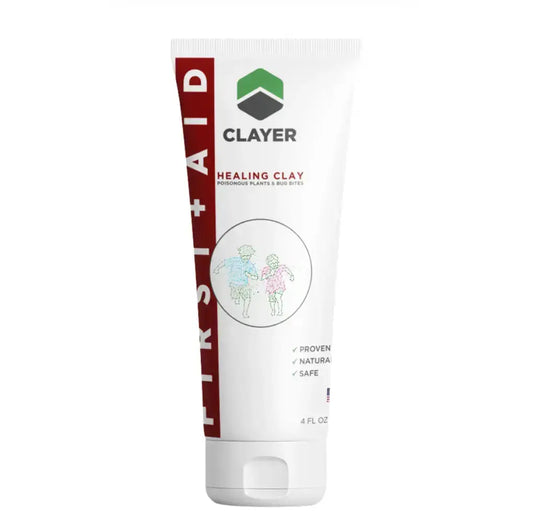
This is why "certified natural" — backed by a recognized third-party certifying body — carries more weight than simply the word "natural" on a label. Clayer's healing clay is certified natural: the primary ingredient is French illite clay from certified deposits, with no synthetic additives. The certification is verifiable. The claim is not marketing language layered over a synthetic formulation.
Why Organic Certification Is Irrelevant for Clay (and What to Ask Instead)
When a consumer asks "is this clay organic?", they are almost always trying to ask one of two more meaningful questions: Is this product free of synthetic chemicals? Is this product safe for my body? The organic framework doesn't answer either of these questions for mineral products. A clay can be completely synthetic-free and genuinely safe without having any relationship to organic certification. And a product certified organic through its botanical ingredients can still contain a clay component with unverified heavy metal contamination.
The right questions to ask about any green clay or mineral product are:
- Has it been independently tested for heavy metals? (Lead, arsenic, mercury, cadmium specifically)
- Are the test results published and verifiable? (Not just claimed)
- Is the source deposit certified for therapeutic/cosmetic use?
- Is it WADA-compliant for tested athletes?
- What certifying bodies have verified the non-toxic status?
Clayer answers yes to all five with verifiable documentation. These are the standards that actually protect consumers, not organic certification that cannot meaningfully apply to geological minerals.
The Marketing Confusion Problem
The confusion between natural and organic is not accidental. It is commercially useful for brands that want to imply the rigorous regulatory oversight of organic certification for products that have never undergone that scrutiny. Consumer research consistently shows that "organic" carries higher trust and premium price tolerance than "natural," creating economic incentives to blur the distinction.
In the healing clay and mineral wellness product market, this confusion creates a specific risk: consumers choosing clay products based on organic-adjacent claims ("organic sourcing," "wild-crafted," "nature's clay") without obtaining the actual safety documentation that matters for regular topical use. Heavy metal contamination, the primary safety concern for mineral products applied to skin regularly, is not addressed by any organic-adjacent marketing claim. It is only addressed by independent laboratory testing with published results.
European vs US Standards for Natural and Organic
The European Union generally applies stricter standards to both natural and organic claims in personal care than the United States. ECOCERT's COSMOS Natural and COSMOS Organic standards for personal care products, widely used in Europe, have specific definitions and audit requirements for both categories. The EU's broader cosmetics safety regulation (EC 1223/2009) also restricts far more chemical substances in cosmetics than US FDA regulation.
This regulatory difference is one reason that European-sourced mineral products — like Clayer's certified French illite clay — often carry stricter source certification than products sourced from less regulated markets. The Massif Central deposits supplying Clayer's formula are certified under European mineral quality standards, providing a level of source verification that many US-sourced clay products cannot match.
What "Natural" Actually Guarantees — and What It Doesn't
Even genuine natural status does not automatically guarantee safety. Many naturally occurring substances are harmful. Arsenic is natural. Mercury is natural. Lead is natural. Uranium is natural. The "natural" origin of a substance is informative about its origin but not determinative of its safety profile. This is precisely why independent testing for specific contaminants — particularly heavy metals — is necessary beyond any natural or organic claim.
A clay that is genuinely natural (no synthetic additives) and also independently verified as heavy-metal-free, non-toxic, and WADA-compliant meets a higher standard of safety assurance than a clay that is merely natural. Clayer's French green clay meets both: genuinely natural ingredients and verified safety through independent testing. This combination is the actual standard that consumers and athletes should demand, regardless of how the natural/organic conversation is framed by marketing.
Practical Guidance for Choosing Clay Products
When evaluating any recovery clay or mineral personal care product, apply this framework:
- Ignore organic claims for mineral products — they don't apply and likely indicate marketing confusion rather than regulatory compliance.
- Look for third-party non-toxic certification from a recognized body, not just brand self-declaration.
- Demand heavy metal test results — specifically non-detect for lead, arsenic, mercury, cadmium — with the testing laboratory named and results verifiable.
- For competitive athletes: require explicit WADA compliance documentation, not just an absence of obviously prohibited substances.
- Assess the source deposit and processing: where is the clay from? How is it processed? Is the source certified for cosmetic/therapeutic use?
Clayer's full product line meets every criterion on this list. The natural vs organic confusion in the market doesn't apply to Clayer's offering because the standards it is held to — independent testing, published results, third-party certification — are more stringent and more meaningful than any organic label could convey for a mineral product. For athletes and health-conscious consumers who want to make genuinely informed product choices, this framework cuts through marketing noise to the substance that actually matters.