Why Clean Skincare Is the Missing Piece in Nutrition Reform
🌿 Clayer Active Recovery Collection — 100/100 Yuka. No PFAS, no parabens, no aluminum. Certified clean for athletes and families. Shop now →
The conversation about what Americans put in their bodies has never been louder — seed oils, ultra-processed food, pesticide residues, food dyes. But one critical dimension of personal health remains underaddressed in most nutrition reform discussions: what people put ON their bodies every day. Your skin isn't just a barrier. It's an absorptive organ — and the personal care products applied to it deserve the same scrutiny as the food on your plate.
This is especially relevant for athletes and families who are already making carefully considered dietary choices, yet still applying aluminum antiperspirants, synthetic-fragrance-loaded body washes, and parabens-containing lotions daily. See also: What Is Absorbed Through Your Skin?
The Skin as an Absorptive Organ
Your skin is the largest organ in your body — approximately 2 square meters of surface area performing dozens of critical functions simultaneously. Among them: selective absorption of compounds from the environment and applied products.
Skin absorption occurs through three pathways:
- Follicular route — through hair follicles and sweat glands; the fastest pathway, especially in high-follicle-density areas like the underarm
- Transcellular route — directly through skin cells
- Intercellular route — through the lipid matrix between cells; primary pathway for fat-soluble compounds
Absorption varies dramatically by body region. The underarm — where most people apply antiperspirant daily — has one of the highest absorption rates on the body, roughly 3–4 times higher than the forearm reference point used in most dermal absorption studies. This matters enormously when considering what aluminum antiperspirant, synthetic fragrance, and parabens-containing deodorants are doing over years of daily application.
What Science Says About Dermal Absorption of Personal Care Ingredients
Biomonitoring studies — measuring compound levels in blood, urine, and tissue — confirm that personal care ingredients don't stay on the skin surface. They enter systemic circulation:
- Aluminum: Detected in breast tissue in multiple studies, with concentrations higher near underarm application sites. The magnitude of absorption remains debated, but the absorption itself is documented.
- Parabens: (methylparaben, propylparaben) Consistently detected in urine samples from populations using paraben-containing products. Found in breast cancer tissue in multiple studies.
- Phthalates: Detected in virtually the entire US population, with skin and inhalation being major exposure routes alongside food packaging.
- Triclosan: Detected in urine within hours of topical application. Absorbed efficiently through skin.
- Synthetic musks: Found in breast milk and fat tissue — indicating both absorption and bioaccumulation with regular exposure.
These are not theoretical concerns. They are documented biomonitoring realities.
The Personal Care Transparency Gap
The food transparency movement has produced meaningful regulatory change: mandatory nutrition labels, ingredient disclosure requirements, front-of-pack warnings in several states. Personal care regulation has lagged dramatically behind.
In the US, personal care products are regulated under the FDA Modernization of Cosmetics Regulation Act (MoCRA) of 2022 — the first major update to cosmetic regulation in 85 years. Even post-MoCRA, the US standard remains significantly weaker than the European Union, which prohibits over 1,300 ingredients in cosmetics versus approximately 11 under US regulations.
The practical result: products sold legally in the US can contain compounds that are banned in 40+ other countries. Without active ingredient scrutiny — using tools like Yuka, EWG Skin Deep, or similar verification apps — consumers cannot know what they're applying daily.
Personal Care Ingredients That Mirror Food Reform Concerns
The parallel between food ingredients under reform scrutiny and personal care ingredients is striking:
Endocrine Disruptors
Just as certain food additives face scrutiny for hormonal effects, personal care products contain documented endocrine disruptors: parabens (estrogenic activity), phthalates (anti-androgenic), aluminum compounds (weak estrogenic activity), and triclosan (thyroid disruption).
Synthetic Chemicals with Bioaccumulation Potential
Synthetic musks in fragrance bioaccumulate in fat tissue — the same concern applied to certain persistent organic pollutants in food. PFAS compounds, increasingly found in waterproof and long-wear cosmetics, are "forever chemicals" with known accumulation properties.
Undisclosed Compound Complexity
"Fragrance" on a personal care label is the equivalent of "natural flavors" in food — a single label hiding dozens of undisclosed compounds, some with serious safety concerns. The transparency reform that food advocates demand from "natural flavors" applies equally to "fragrance" in personal care.
Why Athletes Face Higher Personal Care Exposure Risk
Athletes are among the highest-risk populations for personal care ingredient exposure for three reasons:
- Frequency: Athletes shower multiple times daily, apply deodorant pre- and post-training, and use recovery products after every session. Cumulative exposure compounds with each additional application.
- Compromised barrier: Exercise increases skin temperature and blood flow to the skin surface, temporarily increasing absorption rates. Applying conventional personal care products immediately post-workout — when skin is most absorptive — maximizes synthetic chemical exposure.
- Area and duration: Athletes apply products over large body surface areas and leave them in contact for extended periods. A football player applying menthol pain relief to their legs before a 3-hour game has a different exposure profile than casual use.
The same athletes who meticulously track macros, avoid artificial dyes in supplements, and demand third-party NSF certification on their protein powder are often using personal care products they've never questioned.
The 2026 Clean Personal Care Standard
In 2026, the standards for genuinely clean personal care have crystallized around verifiable criteria:
- ✅ Yuka score 90+ (100 preferred) — independently calculated from ingredient lists, not paid for
- ✅ No aluminum compounds in any form
- ✅ No synthetic fragrance — only disclosed essential oils or unscented
- ✅ No parabens (methylparaben, ethylparaben, propylparaben)
- ✅ No PFAS — no fluorinated compounds
- ✅ Heavy-metal-free certification — especially critical for mineral-based products including clay
- ✅ Full ingredient disclosure — no proprietary blends hiding individual compounds
Clayer: Built for the Transparency Movement
Clayer's French green clay personal care line was built to meet the transparency standard that the wellness movement demands — not because it's a marketing trend, but because it's the right standard for products applied to skin daily by people who care about what goes into and onto their bodies.
Every Clayer product:
- Scores 100/100 on Yuka — verified independently, not claimed
- Is certified heavy-metal-free — batch-by-batch independent lab testing
- Contains no PFAS, no parabens, no aluminum, no synthetic fragrance
- Is WADA-compliant — trusted by competitive athletes who can't afford contamination
- Is doctor-recommended — by sports medicine professionals who evaluate on evidence
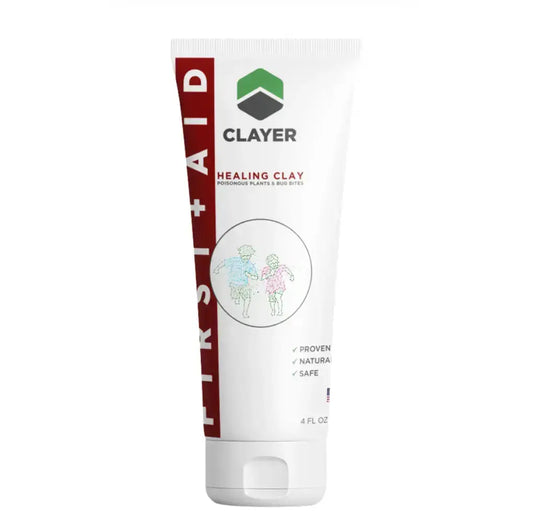
For families making intentional choices about nutrition who want their personal care to meet the same standard, Clayer provides the certified clean option across recovery, skin care, deodorant, first aid, and kids' care. See the Clayer Family line →
Apply the same standard to your skin that you apply to your food.
Clayer — 100/100 Yuka, certified clean, trusted by pro athletes and health-conscious families.
Shop CLAYER →FAQ
Q: How much of what I put on my skin actually gets absorbed?
A: Absorption varies enormously by compound and body location. Some compounds absorb minimally; others absorb efficiently. The underarm area has among the highest absorption rates — 3–4x greater than average forearm skin. The concern isn't that everything absorbs; it's that specific synthetic chemicals present in daily-use products do absorb and accumulate over time.
Q: Is the US regulatory standard for personal care adequate?
A: Currently no — the US prohibits roughly 11 ingredients in personal care; the EU prohibits over 1,300. MoCRA (2022) improved oversight but significant gaps remain. For informed consumers, independent ingredient verification (Yuka, EWG) is more reliable than regulatory assurance.
Q: Do I need to replace all my personal care products at once?
A: Prioritize by absorption site and daily use: deodorant (highest impact — underarm absorption + daily use), facial products, and daily body wash. These three categories represent the majority of daily synthetic chemical skin exposure. Replace them first with certified clean alternatives like Clayer.
Q: Why does Clayer score 100/100 on Yuka when most products score much lower?
A: Because Clayer was formulated from the ground up with ingredient safety as the primary design criterion — not a marketing add-on. French green clay is the active ingredient; every other component in the formula meets the same clean standard. The 100/100 score reflects the genuine ingredient list, calculated independently by Yuka's algorithm.