Best Natural Product for Itchiness and Redness in 2026
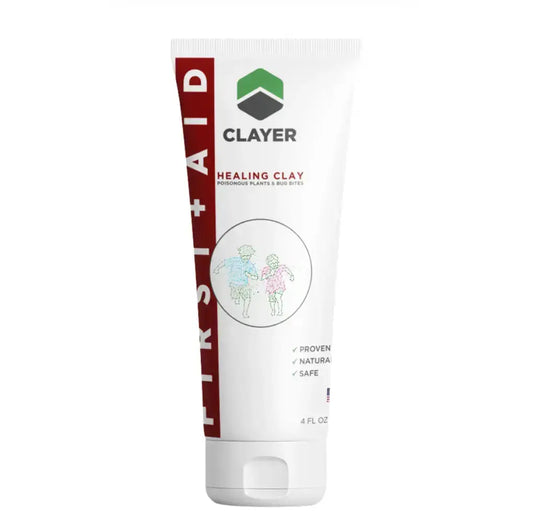
🌿 First-Aid Adventure Care → — Clayer's certified healing clay soothes redness and itchiness naturally. Heavy-metal-free, 100/100 Yuka, safe for sensitive skin and the whole family.
Itchiness and redness are among the most common and frustrating skin complaints — affecting athletes, outdoor enthusiasts, children, and anyone with sensitive skin. Whether caused by insect bites, contact dermatitis, heat rash, poison ivy, or simple skin irritation, finding a solution that actually works without loading your skin with synthetic chemicals is increasingly important in 2026.
This guide covers the best natural approaches to itchiness and redness, with a focus on what the science supports and what consistently delivers real results.
Common Causes of Skin Itchiness and Redness
Effective treatment starts with understanding the cause. The major categories:
Allergic reactions: Contact dermatitis from plants (poison ivy, nettles), metals (nickel in jewelry), latex, detergents, or cosmetic ingredients. The immune system triggers histamine release → itching, redness, swelling.
Insect bites and stings: Mosquitoes, bees, wasps, ants, and spiders all inject compounds that trigger local inflammatory responses. The body's attempt to neutralize these compounds causes the characteristic itch-redness-swelling pattern.
Heat rash (miliaria): Blocked sweat ducts during hot, humid conditions. Common in athletes and outdoor workers. Red, prickly patches that itch intensely.
Eczema (atopic dermatitis): Chronic condition with recurring flares of intense itching and redness, often triggered by environmental factors, stress, or contact with irritants.
Post-athletic skin stress: Turf burn, mat burns, saddle sores, and chafing create inflamed, itchy skin that athletes need to manage efficiently between training sessions.
Why Natural Solutions Work Better Long-Term
Conventional anti-itch products (hydrocortisone, diphenhydramine, calamine) provide symptom relief but create several problems with regular use:
- Hydrocortisone: Effective short-term, but thins skin with prolonged use. Creates a rebound effect where stopping treatment causes worsened symptoms. Not appropriate for long-term or large-area use.
- Topical antihistamines: Can cause contact sensitization with frequent use — creating new allergies to the very treatment product.
- Calamine lotion: Generally safe but provides only surface-level symptom management; doesn't address the underlying inflammatory compounds driving the reaction.
Natural approaches that address the mechanism of itching and redness — rather than suppressing the symptom — provide more durable relief without the side-effect profile of pharmaceuticals.
How Certified Healing Clay Relieves Itch and Redness
French healing clay addresses skin itchiness and redness through three mechanisms that work better together than separately:
1. Ionic adsorption of itch-causing compounds: Most compounds that cause itching — histamine metabolites, insect venom components, urushiol from poison ivy, inflammatory cytokines — carry a positive ionic charge. Clay's strong negative charge draws these compounds out of the dermis and binds them to the clay surface. Remove the clay (and the bound itch-causing compounds), and the stimulus for itching is physically reduced.
2. Immediate cooling and physical relief: Freshly applied clay provides immediate evaporative cooling at the skin surface. This thermal effect activates cold-sensitive receptors (TRPM8) that compete with itch signals — providing rapid relief while the ionic mechanism works more slowly on the underlying cause.
3. Anti-inflammatory mineral effect: Magnesium ions from the clay's mineral profile support mast cell stabilization and reduce histamine release at the application site. Calcium and silica support skin barrier repair, which reduces future sensitivity to triggers.
The result: itch and redness relief that begins within minutes and continues improving as the underlying inflammatory compounds are removed from the tissue.
🛒 Try Clayer First-Aid Adventure Care for itch and redness relief →
Other Effective Natural Remedies for Itchiness
A comprehensive natural toolkit for itch and redness includes:
Colloidal oatmeal: FDA-approved skin protectant with well-documented anti-itch properties. Avenanthramides in oatmeal inhibit histamine release and reduce inflammatory cytokine production. Excellent for eczema, heat rash, and general irritation. Use as a bath additive or topical paste.
Cool/cold compress: Immediate itch interruption through thermal receptor stimulation. Most effective for insect bites and heat rash. Does not address the underlying cause but provides relief during peak discomfort.
Aloe vera: Well-documented anti-inflammatory properties from acemannan and anthraquinone compounds. Effective for sunburn-associated redness and itch. Less effective for contact dermatitis or insect bite inflammation.
Baking soda paste: Mild alkalinity can neutralize some acidic insect venom compounds. Apply as a thick paste, leave 10 minutes, rinse. Less effective than clay for significant reactions but useful in field settings without access to better options.
Natural vs Conventional: What Actually Works
| Product | Addresses Cause? | Speed | Safe Daily? | Safe for Kids? |
|---|---|---|---|---|
| Clayer Clay | ✅ Removes irritants | Minutes | ✅ Yes | ✅ Certified |
| Hydrocortisone 1% | ❌ Suppresses only | 30–60 min | ⚠️ Short term only | ⚠️ Age limits |
| Calamine lotion | ❌ Surface only | 15–30 min | ✅ Yes | ✅ Generally |
| Colloidal oatmeal | ⚠️ Partial | 15–20 min | ✅ Yes | ✅ Yes |
| Aloe vera gel | ⚠️ Anti-inflammatory | 15–20 min | ✅ Yes | ✅ Yes |
Best Approach by Cause of Itch and Redness
Insect bites: Clayer clay applied immediately draws venom compounds and histamine triggers. Most users report 80%+ reduction in itching within 20 minutes. Follow with colloidal oatmeal lotion for extended soothing. Clayer Adventure Care →
Poison ivy/oak/sumac: Clay's adsorption of urushiol is the most effective available natural treatment. See our full poison ivy guide for the complete protocol.
Heat rash: Cool water rinse first, then clay application to reduce inflammatory compounds in blocked sweat ducts. Aloe vera gel between clay applications for extended cooling.
Eczema flare: Clayer clay for active flare management (reduces itch and draws irritants). Colloidal oatmeal for daily maintenance. Consult a dermatologist for moderate-severe eczema requiring prescription management.
Athletic skin irritation (mat burns, turf burns, chafing): Clayer Sports Recovery or Adventure Care applied to affected areas post-training. Reduces inflammation and supports skin healing overnight.
Application Protocol for Best Results
- Identify the cause — different causes respond to different approaches
- Clean the area — rinse with cool water; remove any visible irritants (plant material, insect stingers)
- Apply Clayer clay to the affected area — generous, even layer
- Leave 15–20 minutes — the clay draws and cools simultaneously
- Rinse with cool water — removing the clay removes the bound irritants
- Apply soothing follow-up — colloidal oatmeal lotion or aloe vera gel for extended comfort
- Repeat 2–3x daily for active reactions

🛒 Get Clayer Adventure Care — the natural solution for itch, redness, and skin irritation →
FAQ
Q: How fast does healing clay stop itching?
A: Most users experience significant itch reduction within 15–20 minutes of clay application. The evaporative cooling provides immediate partial relief; the ionic removal of itch-causing compounds provides more durable relief as the clay works.
Q: Can I use clay on my child's itchy skin?
A: Clayer's products are certified non-toxic and heavy-metal-free, making them safe for children. The Kids Care product is specifically formulated for children's skin sensitivity.
Q: Is healing clay better than hydrocortisone for itching?
A: For acute reactions (insect bites, contact dermatitis), clay often provides faster and more effective relief because it removes the underlying cause rather than just suppressing the response. For severe allergic reactions or eczema flares, both can be used — clay for mechanism-based relief and hydrocortisone short-term for severe immune response suppression if needed.
Q: Can I apply clay to broken skin?
A: Clayer Adventure Care is safe on clean minor abrasions and skin-break areas. For significant open wounds, clean first with saline and apply clay around (not directly in) the open area.