
advil vs clayer
When you're pushing your body to the limit: whether you're training for a marathon, crushing it at the gym, or recovering from game day: pain is going to show up. The question isn't if you'll need relief, but what kind of relief you're going to choose.
For decades, athletes have reached for Advil (ibuprofen) almost reflexively. It's convenient, it's everywhere, and it works. But here's the real question: What if there was a better way? What if you could get faster relief without the systemic side effects, without masking the problem, and without worrying about what you're putting into your body?
That's where the conversation shifts from Advil to CLAYER.
What You're Actually Comparing
Let's get clear on what we're talking about here.
Advil is an oral non-steroidal anti-inflammatory drug (NSAID). You swallow it, it travels through your digestive system, enters your bloodstream, and blocks COX-1 and COX-2 enzymes throughout your entire body. This reduces pain, fever, and inflammation: but it does so systemically, meaning your whole body is affected, not just the sore muscle or swollen joint.
CLAYER is a topical, mineral-based clay treatment. You apply it directly to the area that hurts. It works locally: absorbing into the skin, delivering minerals, drawing out toxins, and supporting natural tissue repair right where you need it. No pills. No stomach lining concerns. No systemic effects.
The Head-to-Head Breakdown
Speed of Relief
- Advil: Clinical studies show meaningful pain relief starts around 30 minutes after ingestion.
- CLAYER: Users report relief in as little as 15 minutes after topical application. Why? Because it's going straight to the source: no digestive detour required.
Mechanism of Action
- Advil: Blocks enzymes responsible for producing prostaglandins, which cause inflammation and pain. Works throughout the body.
- CLAYER: Multi-modal action through mineral absorption, toxin elimination, and localized anti-inflammatory effects. Scientifically proven to reduce inflammation and support tissue healing.
Application Method
- Advil: Oral tablet or gel cap: you take it with water, ideally with food to protect your stomach.
- CLAYER: Topical clay that you apply directly to the affected area. Stays where you put it, works where you need it.
Side Effects
- Advil: Can irritate stomach lining, affect kidney function, increase blood pressure, and cause gastrointestinal bleeding with prolonged use. Not recommended for people with kidney issues or ulcers.
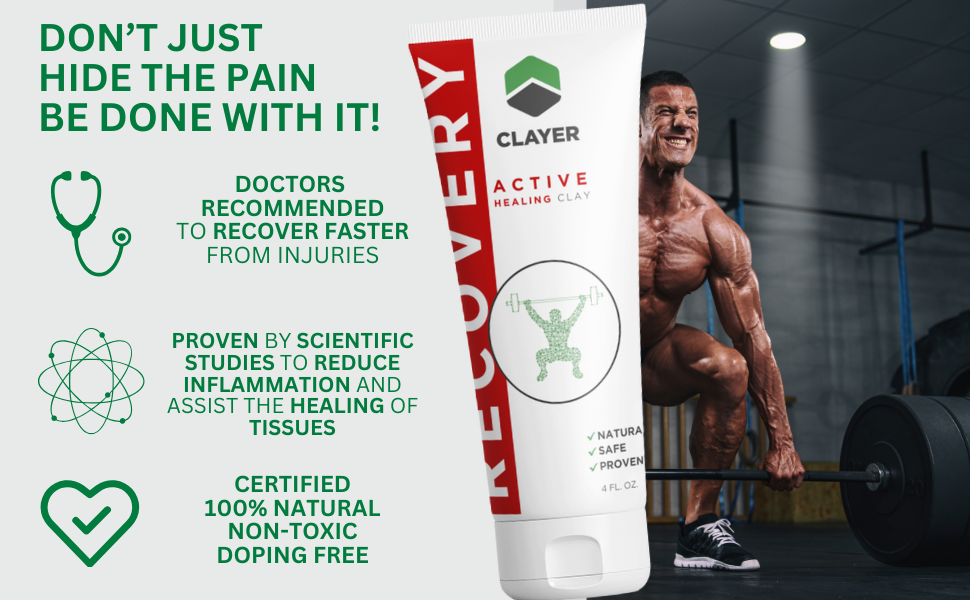
- CLAYER: 100% natural, non-toxic, doping-free, and certified safe. No systemic side effects. Works locally without affecting other organs.

Why Elite Athletes Are Making the Switch
Professional athletes don't have the luxury of masking pain: they need to eliminate it. They need recovery solutions that are fast, effective, and safe for long-term use.
Here's what makes CLAYER the go-to choice for pro athletes:
✅ Doping-Free Certification – No risk of failing drug tests or violating competition rules
✅ Doctor-Recommended – Trusted by sports medicine professionals who understand performance and recovery
✅ Proven Inflammation Reduction – Clinical studies back up the claims
✅ No Organ Stress – Your kidneys, liver, and stomach stay protected
✅ Fast-Acting – 15-minute relief means you can get back to what matters
When you're competing at the highest level, you can't afford to compromise. You need something that works with your body, not against it.
The Natural vs. Synthetic Debate
Advil is a pharmaceutical product: synthetic, processed, and designed to interrupt specific biochemical pathways. It's effective, but it's also blunt. It shuts down inflammation everywhere, even the helpful kind your body uses for healing.
CLAYER takes a different approach. It's made from naturally occurring minerals: specifically French green clay and bentonite clay: that have been used for centuries in healing practices. These clays contain:
- Montmorillonite – Known for absorbing toxins and reducing swelling
- Magnesium – Supports muscle relaxation and tissue repair
- Calcium and Silica – Essential for healthy connective tissue
- Iron and Potassium – Promote circulation and cellular function
This isn't just feel-good marketing. Research shows that medicinal clays have genuine anti-inflammatory and antibacterial properties. And unlike many unregulated clay products, CLAYER is certified non-toxic: which matters when you consider that some commercial clays contain dangerous levels of lead and heavy metals.
When You Should Still Consider Advil
Look, we're not here to tell you Advil has no place. There are situations where systemic pain relief is necessary:
- Fever management – Advil reduces body temperature effectively
- Widespread inflammatory conditions – Like rheumatoid arthritis affecting multiple joints
- Menstrual cramps – Internal pain that topical treatments can't reach
- Severe headaches or migraines – When you need systemic intervention
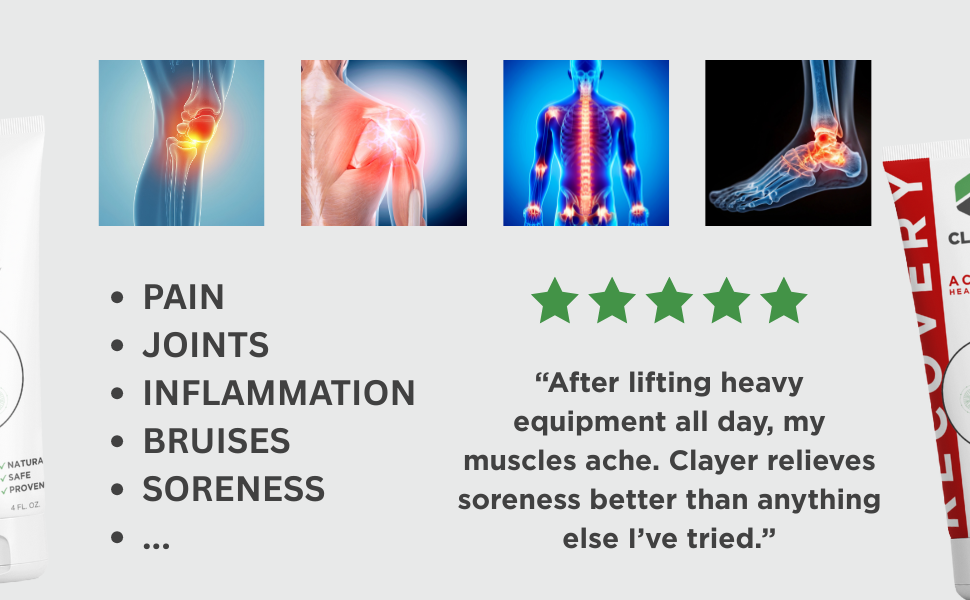
But for localized pain from training, injury, or overuse: sore muscles, joint pain, bruises, tendonitis, shin splints, and sports injuries: CLAYER is the smarter choice.
The Long-Term Recovery Equation
Here's something most people don't think about: how you manage pain today affects your recovery tomorrow.
Advil blocks inflammation. But inflammation isn't just pain: it's also part of your body's natural healing process. When you suppress it everywhere, you might actually be slowing down the repair work your body is trying to do.
CLAYER supports your body's natural healing mechanisms. It reduces excessive inflammation (the kind that causes pain and swelling) while allowing the beneficial inflammatory responses (the kind that bring nutrients and repair signals to damaged tissue) to continue.
That's why athletes report not just faster pain relief, but faster overall recovery when they use CLAYER consistently.
Real Athletes, Real Results
Don't just take our word for it. Here's what actual users are saying:
⭐⭐⭐⭐⭐ "Pain relief in 15 minutes: I couldn't believe it. I've been using ibuprofen for years, and this works faster without the stomach issues."
⭐⭐⭐⭐⭐ "As a competitive cyclist, I can't risk taking substances that might flag on tests. CLAYER is certified clean and actually works better than the pills I used to take."
⭐⭐⭐⭐⭐ "I have chronic knee pain from years of basketball. CLAYER helps me manage it naturally without worrying about kidney damage from too many NSAIDs."

Making the Switch: What You Need to Know
If you've been relying on Advil and you're ready to try something that works with your body instead of overriding it, here's how to make the transition:
Step 1: Get CLAYER Recovery or First Aid products depending on your needs.
Step 2: Apply directly to sore muscles, joints, or injury sites as soon as discomfort starts.
Step 3: Give it 15-20 minutes. You should feel noticeable relief: less pain, reduced swelling, improved mobility.
Step 4: Reapply as needed. Unlike Advil, which you can only take every 4-6 hours, CLAYER can be used more frequently without risk.
Step 5: Track your recovery. Most athletes notice not just faster pain relief, but better overall healing when they use CLAYER consistently.
The Bottom Line
Advil has its place. It's a proven pharmaceutical that works for certain situations. But for elite athletes and anyone serious about long-term health and performance, CLAYER offers something better:
- Faster relief (15 minutes vs 30 minutes)
- Zero systemic side effects
- Supports natural healing instead of blocking it
- 100% natural and certified non-toxic
- Doping-free and competition-safe
- Doctor-recommended and athlete-tested
You don't have to choose between effective pain relief and protecting your body. With CLAYER, you get both.
Ready to experience the difference? Check out CLAYER's full recovery line and see why pro athletes, sports doctors, and serious competitors are making the switch.
Your body is your most valuable asset. Treat it accordingly.


