
Josh Allen Muscles: Training and Recovery Secrets of a QB
Josh Allen didn't become one of the NFL's most physically dominant quarterbacks by accident. The Buffalo Bills star has built a reputation for his cannon arm, explosive mobility, and the ability to shake off defenders like they're practice dummies. But what really sets him apart isn't just genetic gifts: it's his systematic approach to training and recovery that keeps him performing at an elite level week after week.
How would you feel if you could recover faster from intense workouts and maintain peak performance like a professional athlete? Whether you're a weekend warrior or a competitive athlete, Allen's methods offer valuable insights into building resilient muscles and recovering smarter.
The Unique Physical Demands of Playing Quarterback
Most people don't realize that quarterbacks face position-specific muscle demands that require targeted training and recovery. Allen's body must handle:
Throwing Shoulder and Chest : These muscles need constant mobility work to reduce stiffness and maintain throwing power and accuracy throughout four quarters of intense play.
Hips, Glutes, and Lower Back : The foundation of rotational power. Allen relies on these muscle groups for off-balance throws, scrambling out of the pocket, and absorbing contact without injury.
Legs and Core : His base for generating explosive movements and maintaining balance under pressure from 300-pound defensive linemen.
Lower Legs and Calves : Often overlooked but crucial for explosive starts, cutting ability, and stride efficiency when escaping pressure.

Allen's Strategic Training Split
Allen trains four days per week (Monday through Thursday), alternating between upper and lower body sessions. This strategic split allows each muscle group adequate recovery time while maintaining consistent training stimulus.
On full-body training days, he incorporates swimming to reduce joint strain: a smart move that provides cardiovascular benefits without the pounding impact of running. This approach mirrors what sports scientists have discovered about optimizing recovery between intense training sessions.
Pre-Game and Pre-Training Activation
Before stepping onto the field or into the weight room, Allen follows a systematic activation protocol:
- Boosts shoulder mobility and stability to reduce throwing stiffness
- Eases tension in chest, lats, and traps for fuller range of motion
- Warms up hips for lateral and rotational movements essential to quarterback play
- Preps quads and hamstrings for sprint mechanics and contact tolerance
This isn't just going through the motions: it's strategic muscle priming that prepares his body for the explosive demands ahead.
Maintaining Performance Between Drives
What separates good athletes from great ones often happens during the "downtime." While sitting on the sideline between drives, Allen doesn't just rest: he actively maintains muscle readiness:
Keeping Shoulders and Chest Activated : Preserving throwing velocity and accuracy even as fatigue accumulates throughout the game.
Targeting Hips, Glutes, and Lower Back : Maintaining lower-body fluidity for those critical third-down scrambles and zone-read options.
Easing Elbow Stiffness : High-volume throwing creates repetitive stress. Allen addresses discomfort proactively rather than waiting for it to become a problem.
Engaging Calves and Lower Legs : Supporting explosive movement capability as the game wears on and defensive pressure intensifies.
The Recovery Foundation: Sleep and Nutrition
Allen's recovery strategy starts with the basics done exceptionally well. He targets 8.5 to 9.5 hours of sleep nightly using optimization techniques that would make sleep scientists proud:
- Dark, cold bedroom environment
- Green noise for acoustic masking
- Melatonin supplementation for sleep onset
Sleep is when muscle repair and growth actually happen. Those hours of deep sleep trigger growth hormone release and facilitate the cellular repair processes that turn training stress into performance gains.
His nutrition emphasizes protein-heavy foods: steak, chicken, fish, and sushi: while eliminating dairy and butter for cleaner eating. Allen doesn't obsess over calorie counting or follow strict intermittent fasting protocols, though he sometimes skips breakfast. He employs a team chef in Buffalo for meal preparation at least twice weekly, ensuring consistent nutrition quality.
This approach to fueling matches what research shows about protein's role in muscle recovery and adaptation. You don't need a team chef, but you do need to prioritize protein intake if you're pushing your body hard.

Advanced Recovery Technologies
Allen uses infrared sauna sessions with red-light therapy almost daily, combining ancient heat therapy with modern light wavelengths to reduce inflammation and accelerate recovery. He complements this with traditional stretching, medicine ball exercises, rubber band work, and step-in-place mobility drills.
But here's what professional athletes increasingly understand: natural recovery methods work. The body has incredible healing capabilities when given the right support.
This is where approaches like natural clay-based recovery come into play. While Allen uses multiple recovery modalities, many professional athletes and sports medicine doctors are recognizing the benefits of certified non-toxic healing clays for muscle recovery and inflammation reduction.
Why Natural Recovery Matters for Every Athlete
You don't need NFL resources to apply these principles. Whether you're training for a marathon, crushing CrossWit workouts, or playing weekend basketball, your muscles face similar challenges: just at different intensities:
Repetitive stress and microtrauma from training volume
Inflammation that can slow recovery and limit performance
Muscle soreness that impacts your next training session
Limited recovery time between workouts or competitions
Professional athletes like those who trust CLAYER's certified natural recovery products understand that what you put on and in your body matters. Unlike products that simply mask pain, natural healing clays work with your body's recovery processes.
The Science Behind Clay-Based Recovery
French Green Clay and Calcium Bentonite Clay have been used for centuries, but modern research is validating what traditional healers always knew. These clays contain minerals that support the body's natural healing processes.
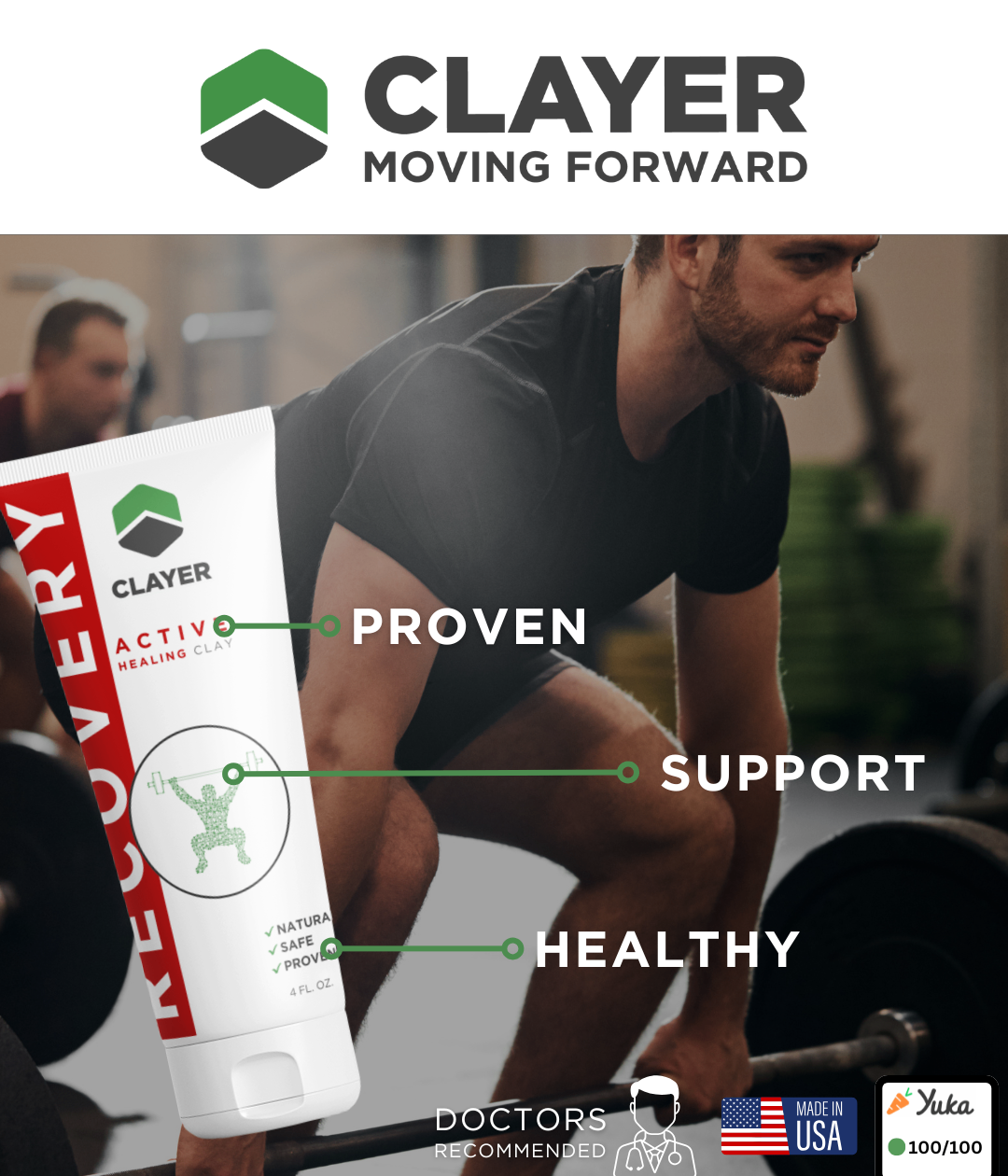
CLAYER's Active Healing Clay is doctor-recommended and backed by scientific studies showing:
- Reduced inflammation in muscle tissue
- Improved circulation to affected areas
- Faster recovery from training-induced muscle damage
- 100% natural, non-toxic, and doping-free: critical for athletes subject to drug testing
When choosing recovery products, make sure they're certified non-toxic. Research has shown that some clays contain concerning levels of lead and heavy metals. CLAYER products score 100/100 on Yuka and are made in the USA with rigorous quality standards.
Implementing QB-Level Recovery on Any Budget
You can't replicate Josh Allen's entire setup, but you can adopt the principles:
Prioritize Sleep : This is free and arguably the most important recovery tool. Create a dark, cool environment and aim for 8+ hours consistently.
Strategic Training Splits : Don't hammer the same muscle groups daily. Allen's 4-day alternating split allows adequate recovery between sessions.
Activation and Maintenance : Spend 10-15 minutes warming up properly and use downtime during workouts to keep muscles engaged rather than going completely cold.
Protein Emphasis : You don't need a chef, but you do need to prioritize protein at each meal to support muscle repair.
Natural Recovery Support : Incorporate proven natural recovery products that work with your body rather than masking symptoms. Apply after intense training sessions or games to problem areas.
The Takeaway: Recovery Is Training
Allen's approach demonstrates that recovery isn't passive rest: it's active preparation for your next performance. Every elite athlete understands this. Your muscles don't get stronger during workouts; they get stronger during recovery when given the right support.
Whether you're a competitive athlete or someone who simply refuses to let soreness derail your training consistency, the principles remain the same. Train smart, fuel properly, prioritize sleep, and support your body with natural recovery methods that actually work.
You deserve to see what happens when you don't give up on your training goals. The difference between good results and great results often comes down to how well you recover. Josh Allen's muscles weren't built just in the weight room: they were built through systematic recovery that allows him to train harder, more consistently, than almost anyone else.
Want to recover like the pros? Check out CLAYER's certified natural recovery products trusted by professional athletes and recommended by sports doctors. Because eliminating pain is better than masking it.
Your body is capable of incredible things when you give it the support it needs. Science-backed. Doping-free. Results.


