
What is the Best Healing Clay for Deep Tissue Recovery?
When you're dealing with sore muscles, inflammation, or recovering from an intense workout, you want results: fast. That's where healing clay comes in. But here's the million-dollar question: what is the best healing clay for actual deep tissue recovery?
Spoiler alert: not all clays are created equal. Some are contaminated with heavy metals. Others lack the mineral profile needed for real healing. And many? They're just marketing hype without the science to back them up.
Let's break down the most popular healing clays on the market and show you exactly why Clayer's French Green Clay stands head and shoulders above the rest.
The Major Players: Understanding Different Types of Healing Clay
Before we crown a winner, let's look at what's actually out there.
Bentonite Clay
Bentonite clay is probably the most well-known healing clay, particularly for skincare. It's formed from volcanic ash and comes in two main types: calcium bentonite and sodium bentonite. This clay is praised for its ability to draw out toxins and impurities.
The good: Bentonite has strong absorption properties and can help reduce inflammation when used topically for muscle recovery.
The problem: Most bentonite clays on the market: including popular brands like Aztec Secret: have documented heavy metal contamination. Lead, arsenic, and other toxins can be present in significant amounts. Research shows concerning lead levels in many commercially available bentonite products.
Kaolin Clay
Kaolin clay is gentler and often used in cosmetics and facial masks. It's the mildest of the healing clays, which makes it great for sensitive skin but less effective for deep tissue work.
The good: It's non-irritating and works well for surface-level applications.
The problem: Kaolin simply doesn't have the mineral density or penetration power needed for serious muscle recovery. If you're dealing with deep inflammation or tissue damage, kaolin won't cut it.

French Green Clay (Illite)
French Green Clay: also called illite clay: is harvested from ancient volcanic deposits in specific regions of France. This is where things get interesting.
French Green Clay contains a unique mineral profile including iron, magnesium, calcium, potassium, and trace minerals that work synergistically to promote healing. Unlike bentonite, which primarily absorbs, French Green Clay both absorbs toxins AND delivers essential minerals directly to damaged tissue.
The science: Research published in Clays and Clay Minerals demonstrates that French Green Clay has specific chemical and mineralogical characteristics that make it uniquely effective for therapeutic applications.
What is the Best Healing Clay? Here's What Actually Matters
When you're choosing a healing clay for deep tissue recovery, you need to look beyond the marketing claims. Here's what separates real healing clay from the pretenders:
1. Purity and Safety Certifications
This is non-negotiable. Many healing clays contain heavy metals like lead, arsenic, and mercury. When you apply contaminated clay to your skin: especially over inflamed or damaged tissue: these toxins can be absorbed into your body.
Why would you trade one problem for another?
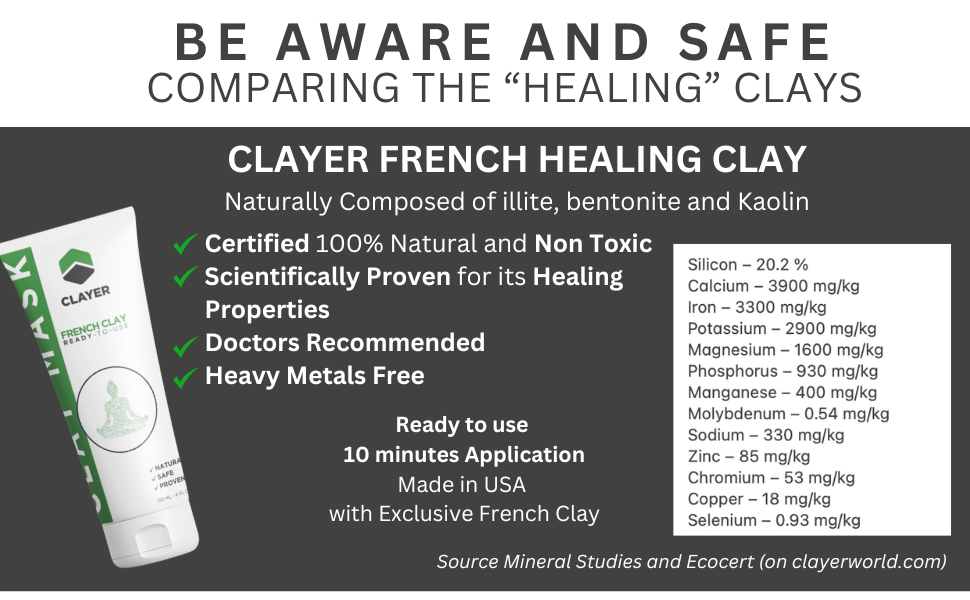
Clayer's French Green Clay is the only healing clay that's been rigorously tested and certified 100% free of heavy metals. It holds multiple safety certifications and scores a perfect 100/100 on Yuka, the independent health rating app.
2. Mineral Content That Actually Heals
Not all minerals are equally bioavailable. The unique composition of Clayer's French Green Clay includes:
- Illite: Primary clay mineral with superior ion exchange capacity
- Bentonite: For deep absorption of toxins and metabolic waste
- Kaolin: Gentle enough for sensitive areas while still effective
This tri-clay formula delivers natural electrolytes directly to damaged tissue, accelerating the healing process at a cellular level.
3. Scientific Backing: Not Just Testimonials
Look, anyone can put together a few positive reviews. What matters is whether the science supports the claims.
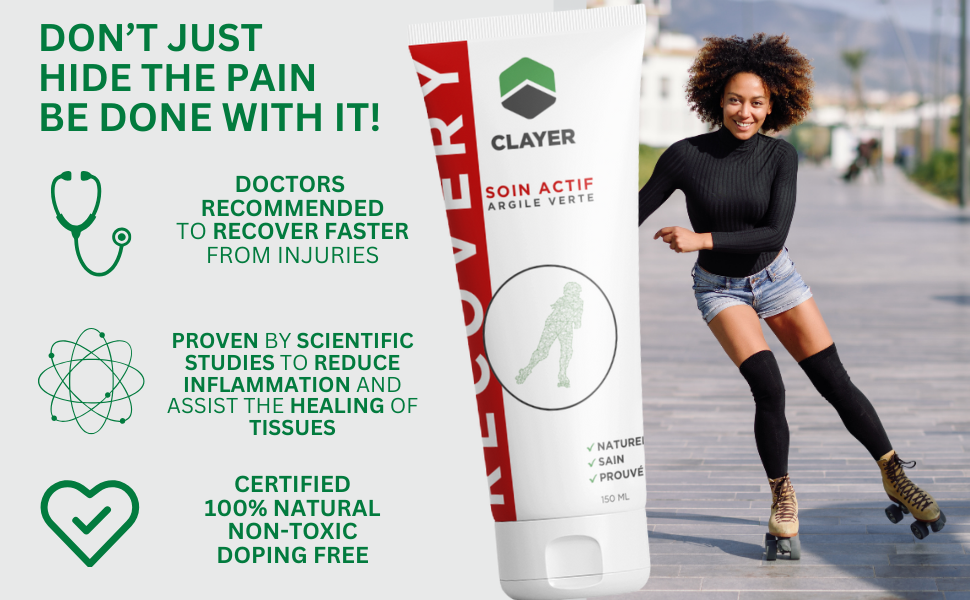
Multiple peer-reviewed studies demonstrate that French Green Clay reduces inflammation, accelerates tissue repair, and promotes faster recovery from injuries and intense training sessions. Research has even shown how certain clay minerals can kill bacteria, adding an antimicrobial benefit to the healing process.
4. Professional Endorsement
Sports doctors recommend Clayer specifically because it works. Not because it's trendy. Not because of clever marketing. But because they've seen the results in their practices.
When professional and Olympic athletes trust something for their recovery, you know it's legit. Pro athletes across multiple sports use Clayer as their go-to recovery tool because downtime means lost opportunity: and they can't afford to mess around with products that don't deliver.
The Hidden Danger: Why "Natural" Doesn't Always Mean Safe
Here's something most clay companies won't tell you: being "natural" doesn't automatically make something safe.
Heavy metals are natural too. They occur naturally in soil and volcanic deposits. The question isn't whether a clay is natural: it's whether it's been tested and certified non-toxic.
Studies on lead exposure from healing clays reveal concerning contamination levels in products people apply directly to their skin. When you're using clay for recovery, you're often applying it to areas with increased blood flow and potentially compromised skin barriers. This makes heavy metal absorption even more dangerous.
The bottom line: Never use a healing clay that doesn't provide third-party testing results and heavy metal certifications. Your health is too important to gamble on.
Why Clayer's French Green Clay is the Clear Winner
So what is the best healing clay for deep tissue recovery? Clayer's French Green Clay, hands down.
Here's why:
✓ Certified 100% free of heavy metals and toxins
✓ Exclusive French sourcing from clean volcanic regions
✓ Unique tri-clay formula (illite, bentonite, kaolin)
✓ Rich in bioavailable minerals and natural electrolytes
✓ Backed by multiple scientific studies
✓ Doctor-recommended and used by professional athletes
✓ Multiple safety certifications including 100/100 Yuka score
✓ Ready-to-use formula: just apply for 10-15 minutes
✓ Made in the USA with the highest quality standards
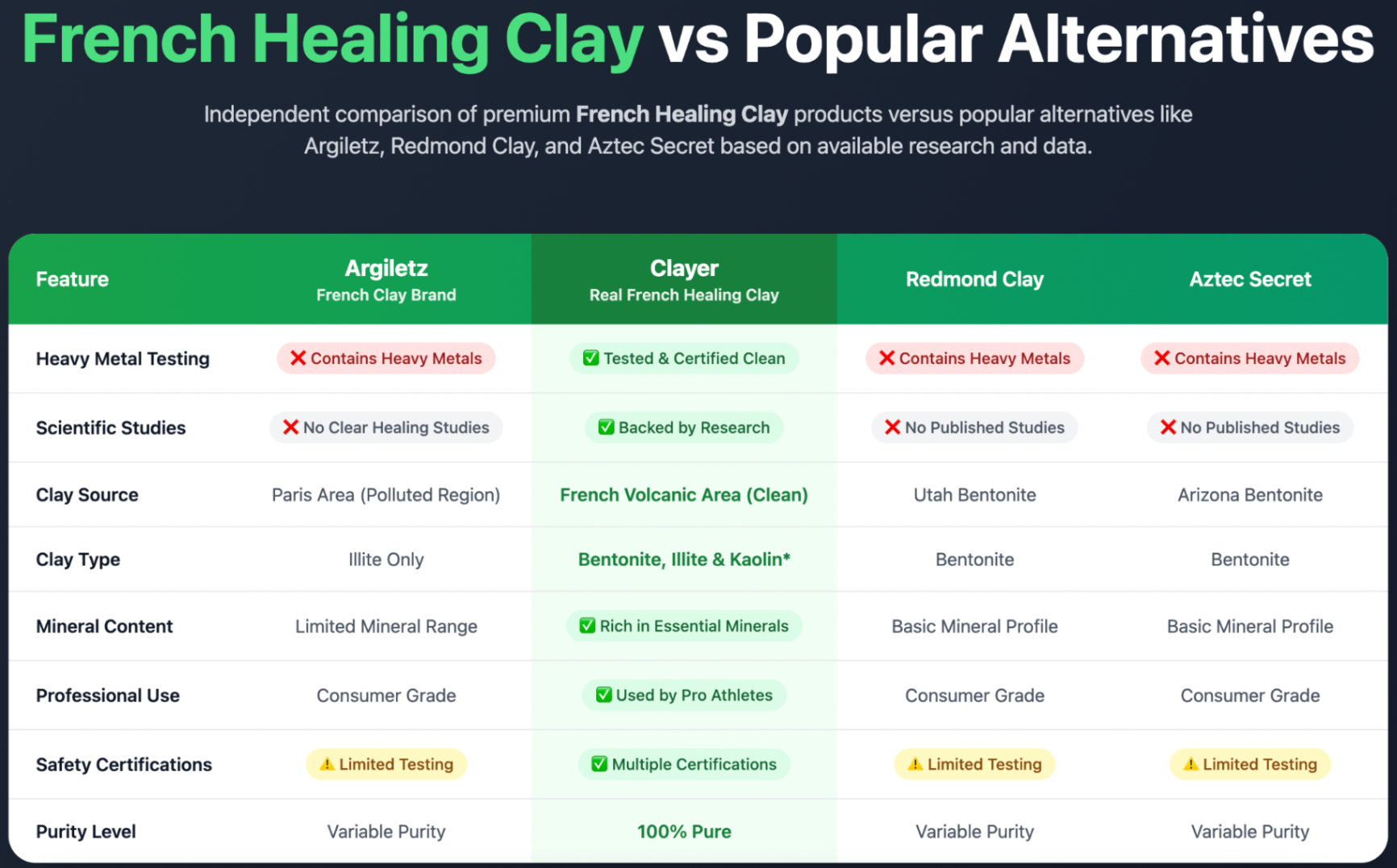
Compare that to other brands on the market: Argiletz, Redmond, Aztec Secret: and the differences are stark. Most contain concerning levels of heavy metals, lack proper certifications, show variable purity, and don't have the scientific backing that Clayer provides.
How to Use Healing Clay for Maximum Recovery
Getting results with healing clay isn't complicated, but there's a right way to do it:
- Apply directly to the affected area after cleaning the skin
- Leave on for 10-15 minutes (the clay will start to dry and tighten)
- Rinse thoroughly with warm water
- Use after intense training or at the first sign of muscle soreness
Many athletes apply Clayer immediately post-workout to prevent inflammation from setting in. Others use it as part of their injury recovery protocol. The minerals in the clay get to work fast: many users report feeling relief within 15 minutes of application.
The Bottom Line: Results Over Hype
What is the best healing clay? It's the one that's actually proven to work, backed by science, certified safe, and trusted by professionals who depend on peak performance.
That's Clayer's French Green Clay.
You deserve a recovery solution that's as serious about results as you are about your training. Don't settle for contaminated clays with questionable purity. Don't waste money on products that can't back up their claims with real science.
Prioritize your health and well-being with a product that's proven, pure, and powerful.
Ready to experience the difference? Shop Clayer Recovery and feel the results for yourself. Your muscles will thank you.


