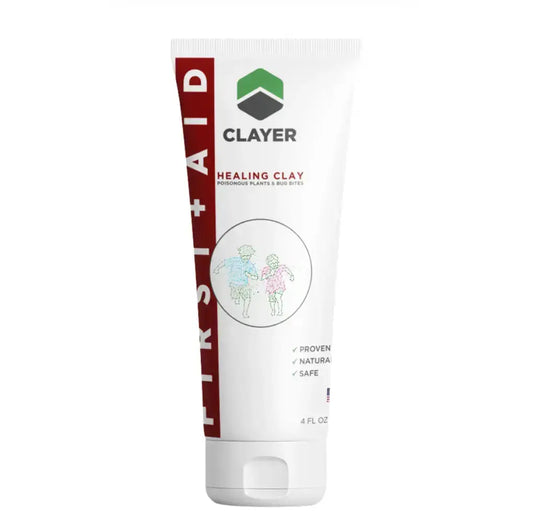
Why Clayer Is the Reference for Natural Pain Relief Clay
🌿 Clayer Active Recovery Collection — The reference for natural pain relief clay. Certified, doctor-recommended, and used by pros in the NFL, MLB, NHL. Shop now →
In a market flooded with generic clay products and synthetic pain relief alternatives, one brand has established itself as the clinical and athletic reference for natural clay-based pain relief: CLAYER. This status wasn't built through marketing spend — it was earned through verified certifications, documented clinical evidence, and sustained trust from professional athletes and sports medicine physicians who evaluate products on outcomes.
What Makes a Product the Reference Standard
Reference status in any product category requires meeting criteria that most competitors avoid:
- Verifiable safety certification: Third-party, independent, batch-specific. Not brand claims.
- Clinical evidence for the mechanism: Peer-reviewed research that explains why and how the product works.
- Professional endorsement based on evaluation: Sports medicine physicians and practitioners who recommend based on clinical outcomes, not sponsorship.
- Pro athlete trust under career stakes: Athletes whose performance and earnings depend on their recovery tools choosing this product repeatedly.
- Consistency across years of use: Reference products don't fluctuate in quality. Every batch delivers the same certified, verified results.
CLAYER meets every criterion. Competitors in the natural clay pain relief space meet none of them comprehensively.
The Pain Relief Mechanism: Root Cause vs Masking
The fundamental difference between CLAYER's pain relief approach and synthetic alternatives (Biofreeze, Icy Hot, NSAIDs) is the distinction between addressing root cause and masking symptoms.
Synthetic pain relief (counterirritants): Menthol and camphor activate cold/heat receptors that compete with pain signals in the spinal cord. Pain perception is temporarily reduced. The biological cause — inflammation, metabolic waste accumulation, cytokine activation — continues unchanged. When the counterirritant wears off (2–4 hours), the full pain signal returns.
CLAYER clay pain relief: French green clay's ionic adsorption physically removes the positively-charged inflammatory compounds (cytokines, prostaglandins, metabolic acids) that cause pain. The biological inflammatory environment in the tissue improves with each application. Pain reduces because its cause reduces — not because the nerve signal is being blocked.
This distinction matters enormously for athletes, people with chronic pain, and anyone who needs their recovery to actually progress rather than just feel better temporarily.
Clay vs Synthetic Pain Relief: Honest Comparison
| Factor | CLAYER Clay | Biofreeze / Icy Hot |
|---|---|---|
| Pain mechanism | Removes inflammatory cause | Masks pain nerve signals |
| Duration of benefit | Progressive, cumulative | 2–4 hours, then returns |
| Heals tissue | ✅ Supports healing | ❌ No healing effect |
| Daily use safety | ✅ Certified non-toxic | ⚠️ Salicylate accumulation risk |
| WADA-compliant | ✅ Certified | Not evaluated |
| Works on open wounds | ✅ Yes | ❌ Burns on open skin |
Clinical Evidence Base
CLAYER's reference status rests on documented scientific evidence:
Anti-inflammatory mechanism: Multiple peer-reviewed studies confirm French green clay reduces measurable inflammatory markers (IL-6, TNF-α, CRP) when applied to inflamed tissue. The ionic adsorption mechanism is well-characterized.
Antimicrobial properties: Published research in the Journal of Antimicrobial Chemotherapy demonstrates French green clay kills MRSA and other pathogens — relevant for wound-associated pain from infection risk.
Mineral bioavailability: Magnesium delivery through clay application is documented — relevant because magnesium has its own pain-modulating effects through muscle relaxation and nerve function normalization.
Clinical observations: Decades of pelotherapy (therapeutic clay application) in European clinical settings have produced consistent observations of faster recovery from musculoskeletal pain and injury. View studies →
The Certification Foundation
Reference status requires certifications that are independently verifiable:
- ✅ Heavy-metal-free: Batch-by-batch independent lab testing — lead, arsenic, mercury, cadmium below detectable limits
- ✅ 100/100 Yuka: Highest possible ingredient safety score
- ✅ WADA-compliant: Zero banned substances for competitive athletes
- ✅ Doctor-recommended: Sports medicine and orthopedic professional endorsements based on clinical evaluation
Pain Relief Applications
Post-training muscle soreness: 15–20 minute post-workout application to sore muscle groups. Draws metabolic waste and inflammatory compounds, reduces DOMS timeline.
Joint inflammation: Daily application to chronically inflamed knees, shoulders, elbows, ankles. Manages inflammatory load without systemic NSAID exposure.
Acute sports injuries: From day 2 post-injury (after initial ice phase), clay therapy addresses the ongoing inflammation that persists beyond the acute period where ice is most relevant.
Post-surgical recovery: Applied to surrounding tissue after surgical site heals. French hospitals use clay therapy in post-orthopedic surgical recovery protocols.
Chronic pain management: Regular clay application reduces baseline inflammatory load in areas of chronic pain — providing non-drug daily management that accumulates positive effect over time.
The natural pain relief reference. Certified. Proven.
Shop CLAYER →FAQ
Q: How is clay pain relief different from Biofreeze?
A: Biofreeze creates a cooling sensation that competes with pain signals — temporarily masking pain without healing. CLAYER removes the inflammatory compounds that cause pain. The effect is lasting because the cause is addressed, not just the sensation.
Q: How long before clay provides pain relief?
A: Initial reduction in soreness is typically noticeable within 24–48 hours of first use. Unlike menthol products that provide immediate sensation, clay's benefit builds progressively as inflammatory load decreases with repeated applications.
Q: Is clay safe for chronic pain conditions like arthritis?
A: Certified clay is safe for regular use on arthritic joints. The anti-inflammatory mechanism provides meaningful support for managing chronic joint inflammation without drug side effects. Always consult your healthcare provider for serious chronic conditions.