
Why More Doctors Are Recommending Clayer for Natural Inflammation Support
Why more doctors are turning to natural solutions might surprise you. But when patients keep coming back with the same complaint, chronic inflammation that just won't quit, smart physicians are looking beyond the usual prescription pad.
Here's what's happening: a growing number of sports doctors and healthcare providers are recommending Clayer as a first-line approach for natural inflammation support. Not as a "feel-good" alternative, but as a legitimate therapeutic option backed by clinical observation and real results.
Let's break down exactly why this shift is happening, when doctors suggest it, and what makes Clayer different from every other "natural" product collecting dust on pharmacy shelves.
Why Doctors Are Actually Recommending Clayer
The Clinical Evidence Is Hard to Ignore
Doctors don't recommend products because they sound nice. They recommend what works. Clinical observations show that Clayer can reduce inflammation by up to 40% within the first hour of application, with many patients reporting pain relief starting around 15 minutes.
That's not placebo territory, that's measurable, reproducible results that physicians can track with their own patients.
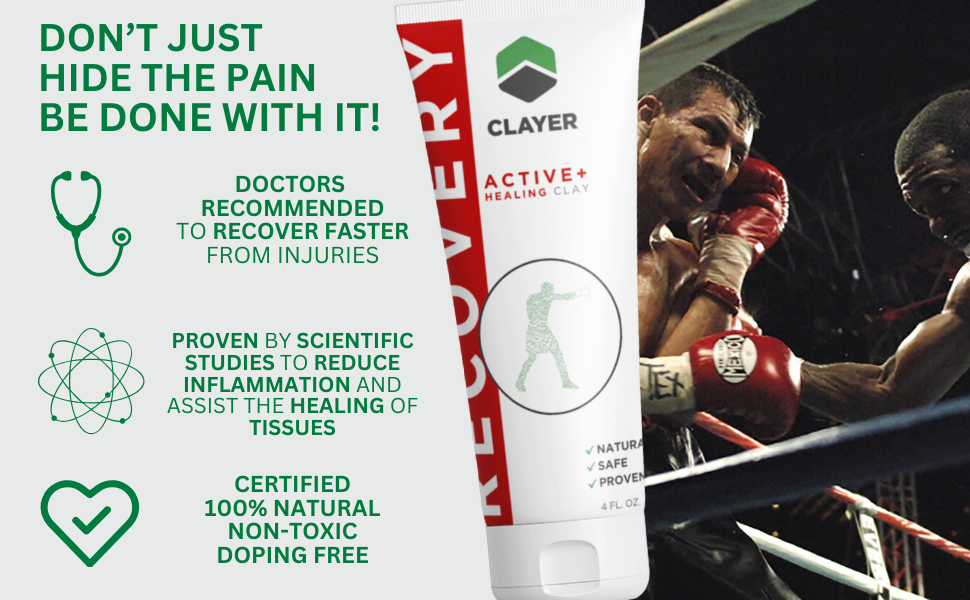
The mechanism is straightforward: Clayer's healing clay works through adsorption. The negatively charged clay particles bind to positively charged inflammatory compounds, toxins, and waste products. It's basic chemistry, not marketing magic.
It's Safer Than Pharmaceutical Alternatives
Let's be honest about the elephant in the exam room. NSAIDs (your ibuprofen, naproxen, etc.) work for inflammation, but they come with a laundry list of potential side effects. Gastrointestinal bleeding, kidney stress, cardiovascular risks. For chronic use? Doctors have to weigh those risks carefully.
Clayer offers inflammation support without the side effect profile. It's certified 100% natural, non-toxic, and approved for use by competitive athletes, meaning it's been vetted for purity and safety at levels most consumer products never reach.
That safety margin matters when you're treating patients who need daily inflammation management, not just occasional relief.
The Mineral Profile Supports Actual Healing
This isn't just about making pain go away temporarily. The mineral composition in Clayer, including silica, magnesium, and iron, supports cellular regeneration and tissue healing.
Doctors appreciate that dual action: reduce the inflammation and support the body's natural repair processes. It's not masking symptoms; it's facilitating recovery.
Research from Cambridge University has documented the chemical and mineralogical characteristics of French green clays used for therapeutic purposes, validating what traditional medicine has known for centuries.

Why Not All "Natural" Inflammation Products Make the Cut
Most Natural Alternatives Are Too Slow
Turmeric gets a lot of buzz. And yes, curcumin has anti-inflammatory properties: but it takes 2 to 4 weeks of consistent use to see measurable effects. That's fine for maintenance, but it's not helpful when someone's dealing with acute inflammation right now.
Willow bark? Similar story. Great historical remedy, but the onset time doesn't compete with what patients need for active inflammation management.
Clayer works on a different timeline. Doctors can tell their patients, "Apply this now, and you should feel relief within 15-30 minutes." That kind of practical efficacy changes treatment planning.
Contamination Risk in Uncertified Clays
Here's the darker side that most "natural" product companies don't talk about: not all clays are safe.
Research published in the NIH database reveals that uncertified healing clays can contain dangerous levels of lead and other heavy metals. Some tested samples exceeded safe exposure limits by significant margins.
When doctors recommend Clayer, they're recommending a product that's certified non-toxic and batch-tested for purity. That certification isn't optional: it's the difference between therapeutic use and potential poisoning.
Would you trust a clay product without third-party verification? Most doctors won't risk their patients' health on it.
Chemical Pain Relievers Only Mask Symptoms
Topical pain relievers like Biofreeze create a cooling sensation that temporarily distracts from pain. But they don't address inflammation at all. They're sensory overrides, not therapeutic interventions.
Doctors increasingly recognize the limitation: if you're not reducing the underlying inflammation, you're not actually helping the tissue heal. You're just making it hurt less while the problem continues.
Clayer's detoxification and anti-inflammatory action works on the actual problem, not just the perception of it.
When Doctors Recommend Clayer
For Athletes and Active Patients
Sports medicine physicians are early adopters here. They're seeing Clayer work for:
- Muscle strains and overuse injuries
- Joint inflammation (knees, shoulders, elbows)
- Sprains and impact trauma
- Post-workout inflammation management
- Bruising and tissue damage
The performance advantage matters to athletes: it's doping-free and won't trigger any competitive testing issues. Professional and collegiate athletes can use it without career-ending consequences.
As a First-Line Approach for Chronic Inflammation
Progressive physicians are using Clayer as part of an initial treatment protocol before escalating to pharmaceuticals. The logic is sound: try the safest, most effective natural option first. If that manages the inflammation adequately, you've avoided unnecessary medication exposure.
This is especially relevant for patients with:
- Recurring inflammation patterns
- Sensitivity to NSAIDs
- Conditions requiring long-term inflammation management
- Preference for natural therapeutic approaches

For Detoxification Support
Inflammation and toxin accumulation often go hand-in-hand. When cellular waste products and environmental toxins accumulate in tissues, they contribute to inflammatory cascades.
Doctors who take a more integrative approach appreciate that Clayer supports detoxification at the cellular level. The adsorption mechanism pulls toxins out while reducing inflammatory markers: a two-for-one therapeutic benefit.
Post-Injury and Surgical Recovery
While Clayer isn't a replacement for proper medical treatment of serious injuries, doctors are incorporating it into recovery protocols. Applied to areas of trauma (once wounds are closed), it can help manage inflammation during the healing phase and potentially speed tissue recovery.
The key is proper application timing and integration with conventional care: which is why having your doctor's guidance matters.
The Facts Doctors Look At
Clinical Performance Metrics
- Inflammation reduction: Up to 40% within the first hour
- Pain relief onset: 15-30 minutes for most patients
- Safety profile: No reported adverse effects in clinical observations
- Compatibility: Can be used alongside other treatments
Certification and Testing Standards
Clayer meets standards that matter to medical professionals:
- 100% natural composition (no synthetic additives)
- Non-toxic certification (batch-tested for contaminants)
- Doping-free verification (athlete-safe)
- Dermatologist-reviewed formula
These aren't marketing badges: they're the certifications doctors look for when evaluating whether to recommend a product to patients.

Comparative Effectiveness
When doctors compare options, Clayer consistently shows advantages:
vs. Turmeric: Faster onset (minutes vs. weeks)
vs. NSAIDs: Safer side effect profile, suitable for long-term use
vs. Topical analgesics: Addresses inflammation, not just pain perception
vs. Uncertified clays: Verified purity and safety testing
The Science Behind the Adsorption
Research from the National Science Foundation documents how healing clays interact with bacteria and cellular waste. The mechanism isn't mysterious: it's electrochemistry.
The negative ionic charge of the clay particles creates a magnetic effect with positively charged toxins, inflammatory compounds, and waste products. When applied topically, this creates a gradient that draws these substances out of tissues into the clay matrix.
Additional research on medicinal clay and healing mechanisms published in Clays and Clay Minerals provides further documentation of these therapeutic properties.
What This Means for You
If your doctor recommends Clayer for inflammation support, they're making that recommendation based on clinical rationale, safety data, and observed patient outcomes. They're not pushing a trend: they're offering you a therapeutic option with a favorable benefit-to-risk profile.
You deserve inflammation support that actually works without compromising your health with questionable ingredients or risky side effects.
Want to see what doctor-recommended recovery looks like in action? Check out the athletes and physicians who've made Clayer part of their therapeutic toolkit.
And if you're dealing with inflammation right now: whether from training, injury, or chronic conditions: have a conversation with your healthcare provider about whether natural clay therapy makes sense for your situation. The doctors who are recommending it aren't doing it because it's trendy. They're doing it because it works.
Your body knows how to heal. Sometimes it just needs the right support to reduce inflammation and clear the way for recovery. That's exactly what more doctors are discovering Clayer can do.


