How to Switch to Natural Deodorant Without Irritation
🌿 Clayer Natural Deodorant — The smoothest switch you'll make. No baking soda, no irritation, 100/100 Yuka. Start the switch →
Switching to natural deodorant has a reputation problem — and it's partly deserved. Horror stories about rashes, odor during transition, and constant reapplication have made millions of people hesitant to make the move. But most of those problems come from choosing the wrong natural deodorant, not from natural deodorant itself. With the right product and the right protocol, the switch can be smooth, permanent, and genuinely better for your health.
Why Switching to Natural Deodorant Is Hard
The difficulty of switching is real — but it's mostly physiological, not permanent. When you use aluminum antiperspirant for months or years, your body adapts:
- Sweat glands are physically blocked — aluminum compounds plug ducts, reducing perspiration
- The underarm microbiome adjusts — the bacterial balance shifts in response to reduced sweat substrate and the antimicrobial properties of aluminum
- Your odor perception baseline shifts — you become accustomed to near-zero underarm odor from complete sweat suppression
When you remove aluminum, all three of these adaptations reverse simultaneously. Sweat glands resume activity. The microbiome rebalances. This transition period — typically 2–4 weeks — is where most switch attempts fail. Understanding that it's temporary and biological (not a product failure) is the first step to succeeding.
The 3 Phases of Natural Deodorant Transition
Phase 1: The Flush (Days 1–10)
Your sweat glands resume normal activity after being blocked. You may sweat more than usual — sometimes significantly more. This is your body normalizing, not a product problem. Odor during this phase can be noticeable as the microbiome adjusts.
What helps: Stay hydrated. Wear breathable natural fabrics. Apply deodorant to completely dry skin. Be patient — this phase passes.
Phase 2: Microbiome Rebalancing (Days 10–21)
The underarm microbiome shifts from aluminum-suppressed to natural-state. Odor may fluctuate — some days fine, some days noticeable. This is normal. The clay in Clayer actively adsorbs odor-causing bacteria during this phase, shortening the adjustment compared to other natural deodorant types.
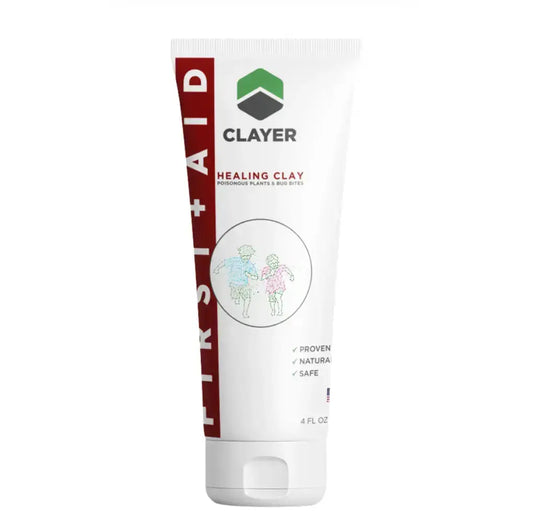
What helps: Weekly clay underarm mask (apply Clayer recovery clay to underarms for 15 minutes, rinse). This accelerates microbiome reset by actively clearing bacteria load.
Phase 3: Baseline Established (Days 21–30+)
Sweating normalizes. Microbiome reaches a new steady state. The natural deodorant performs reliably. Most users at this stage report they prefer their new routine to the old one — less skin irritation, no white residue, and the confidence of knowing exactly what's in their product.
Choosing the Right Natural Deodorant for a Smooth Transition
The biggest predictor of transition success is product choice. Key criteria:
- No baking soda — the most common cause of natural deodorant rash and transition failure. Baking soda's high pH (8.3) disrupts underarm skin's acid mantle during the period when it's already stressed by the transition.
- Clay-based active — French clay's ionic mechanism actively manages bacteria during transition, outperforming passive odor masking
- No synthetic fragrance — avoid adding allergen risk during a period when skin is adjusting
- Start unscented — gives you the cleanest possible start; add scent later once you're established
Clayer's Natural Deodorant Unscented was designed specifically to minimize transition friction — no baking soda, no synthetic fragrance, French clay as the active ingredient.
Week-by-Week Transition Protocol
Week 1
- Stop all aluminum antiperspirant use completely — partial use defeats the purpose
- Apply Clayer deodorant daily after showering to completely dry skin
- Allow 2 minutes drying time before dressing
- Expect increased sweating — carry a backup application if needed for high-stakes days
- Wear cotton or linen — synthetic fabrics trap odor worse than natural fibers
Week 2
- Perform the clay underarm mask 2x this week: apply Clayer recovery clay to underarms for 15 minutes, rinse thoroughly
- Continue daily deodorant application
- Sweating should begin normalizing by day 10–14
- Note which activities/temperatures challenge the formula — you may need morning + midday application during adjustment
Week 3–4
- Single daily application should be stabilizing for most users
- Clay mask 1x per week ongoing for microbiome maintenance
- Odor should be reliably managed throughout the day
- If any residual irritation, apply a thin layer of shea butter to underarms at night before bed
How to Avoid the Rash
The natural deodorant rash is almost exclusively caused by baking soda — not by the transition itself. Avoiding it is simple:
- Choose a baking-soda-free formula (Clayer has none)
- Never apply deodorant immediately after shaving — wait 15–30 minutes for skin to recover
- Apply to dry skin only — moisture on skin during application increases friction and potential irritation
- If redness develops, stop use for 3–5 days and allow skin to heal before reintroducing
Managing Odor During Transition
Practical tactics for the transition period when odor can be unpredictable:
- Shower in the morning — start the day with the lowest possible bacterial load on clean, dry skin
- Midday reapplication — keep a travel-sized deodorant for reapplication after lunch if needed during transition
- Diet influence: Red meat, garlic, onions, and alcohol increase body odor intensity. During transition, temporarily reducing these makes the adjustment period easier.
- Hydration: Dehydrated sweat is more concentrated and more pungent. Drinking adequate water dilutes perspiration compounds.
- Clothing choice: Synthetic fabrics (polyester, nylon) harbor odor-causing bacteria far more than cotton, bamboo, or linen. Switching to natural fibers temporarily improves the transition experience significantly.
Special Tips for Athletes Making the Switch
Athletes have unique challenges — training intensity, multiple daily sessions, locker room environments, and performance stakes. Here's what works:
- Time the switch: Start during a lower-intensity training period (off-season, recovery week) rather than in-season when performance pressure is highest
- Double application on heavy training days: Apply deodorant pre-workout and reapply post-shower after evening sessions during the transition
- Use the clay mask weekly: Athletes who add the weekly clay underarm mask report significantly shorter transition periods — typically 1–2 weeks rather than 4
- Trust the formula: Clayer is trusted by pro athletes in the NFL, MLB, NHL, and Olympic sports. The performance under high-sweat conditions has been proven in the hardest possible environments. See athlete endorsements →
Make the switch once. Make it stick.
Clayer Unscented — no baking soda, no rash, no transition drama. 100/100 Yuka.
Try Clayer Deodorant →FAQ
Q: How long does natural deodorant transition take?
A: Typically 2–4 weeks. With a clay-based formula (no baking soda) and the weekly clay underarm mask protocol, many users stabilize within 1–2 weeks.
Q: Can I go back to aluminum antiperspirant if natural deodorant doesn't work?
A: Yes — but give it the full 4-week protocol before judging. Most transition failures happen in weeks 1–2 when adjustment symptoms are most noticeable. Users who make it through week 3 almost universally prefer natural deodorant and don't return to aluminum.
Q: Will I smell worse when switching to natural deodorant?
A: During the 2–4 week transition, odor can be more variable. After the transition, most users report comparable or better odor management with clay-based natural deodorant versus aluminum antiperspirant — because the clay addresses bacteria rather than just suppressing sweat.
Q: Does switching to natural deodorant cause detox symptoms?
A: The increased sweating and odor variability during transition is sometimes called "detox" — but it's really just your body's sweat glands resuming normal function. It isn't caused by toxins leaving the body. It's a physiological adjustment that resolves within 2–4 weeks.