Aluminum free deodorant ? Here's the Truth About What's Really on Your Skin
Aluminum free deodorant
Have you ever paused mid-swipe and wondered what's actually going into your body through your underarms? You're not alone. Millions of people are asking the same question: Is aluminum in deodorant bad for you?
The short answer might surprise you. But before we dive into the science, let's clear up a common misconception that trips up most people right from the start.
Is Aluminum in Deodorant? Let's Get the Facts Straight
Here's something most people don't realize: deodorants and antiperspirants are NOT the same thing.
- Deodorants neutralize odor-causing bacteria. They don't contain aluminum.
- Antiperspirants block your sweat glands to reduce perspiration. These contain aluminum compounds.
So when we talk about aluminum concerns, we're really talking about antiperspirants. That distinction matters: a lot.
The aluminum in antiperspirants (usually aluminum chlorohydrate or aluminum zirconium) works by temporarily plugging your sweat ducts. Less sweat means less moisture for bacteria to thrive in, which means less odor.
Sounds simple enough, right? So where did all the fear come from?
The Aluminum Scare: How Did We Get Here?
The concern about aluminum started decades ago when theories emerged suggesting that aluminum might be linked to breast cancer and Alzheimer's disease. The logic seemed plausible at first glance:
- Your underarms are close to breast tissue
- Aluminum might be absorbed through the skin
- Some studies found aluminum in breast tissue
But here's what the fear-based headlines didn't tell you: correlation isn't causation.
Just because aluminum is present doesn't mean it caused anything harmful. Your body encounters aluminum constantly: it's in food, water, cookware, and even the air you breathe. The question isn't whether aluminum exists in your body. It's whether the amount from antiperspirants actually poses a risk.
What Does the Science Actually Say?
Let's cut through the noise and look at what researchers have found.
The breast cancer connection? The American Cancer Society states clearly: there's no scientific evidence that using antiperspirants causes or worsens breast cancer. Period.
A comprehensive 2014 review published in Critical Reviews in Toxicology examined the available research and found no correlation between aluminum-containing antiperspirants and increased cancer risk.
Even more recently, a 2023 study looked at lifetime aluminum exposure from ALL sources: not just antiperspirants: and concluded there isn't enough evidence to link breast cancer development to total aluminum exposure.
Here's why the fear doesn't match the facts:
Your skin is an incredible barrier. Studies show that only 0.012% to 0.06% of applied aluminum actually gets absorbed through your underarm skin. That's a tiny fraction. The aluminum largely stays at the surface of the sweat duct rather than entering your bloodstream at levels that could cause toxicity.
Your body is smarter than you might think. It's designed to handle trace amounts of minerals and metals you encounter daily.
Who Should Actually Be Cautious?
Now, here's an important caveat you need to know.
For the average healthy person, aluminum in antiperspirant poses no kidney-related risk. Your kidneys efficiently clear trace amounts of aluminum from your system.
However, the National Kidney Foundation advises people with stage 4 chronic kidney disease (when kidneys operate at only 30% capacity) to avoid aluminum-containing products. Why? Their kidneys can't clear aluminum efficiently enough to prevent potential buildup.
If you have kidney concerns, always consult your doctor about which products are right for you.
Some people also experience skin irritation or allergic reactions to aluminum compounds. If your underarms are constantly red, itchy, or uncomfortable, that's your body telling you something isn't working.
So Is Aluminum Actually Bad? The Honest Answer
Based on current scientific evidence, aluminum in antiperspirants is not harmful for most healthy people.
But here's the thing: just because something isn't proven dangerous doesn't mean it's your only option.
How would you feel knowing there's a better way?
Many people are choosing to switch to natural deodorants not because aluminum is definitively harmful, but because they want to:
- Reduce their overall chemical exposure
- Use products with ingredients they can actually pronounce
- Support their body's natural processes
- Feel confident about what goes on their skin
And honestly? You deserve that choice.

Why Athletes and Active People Are Making the Switch
If you're someone who pushes your body hard: whether you're an athlete, weekend warrior, or just live an active lifestyle: you might be even more motivated to pay attention to what goes on your skin.
Think about it: when you're sweating heavily during a workout, your pores are open. Your skin is warm and more permeable. Is that really the time you want synthetic compounds sitting on your body?
That's exactly why pro athletes trusting Clayer have made the switch to natural alternatives. They demand products that work as hard as they do: without compromising what goes into their bodies.
Natural Deodorants That Actually Work
Let's be real: the biggest complaint about natural deodorants is that they don't work. Nobody wants to be the person clearing the room after a tough workout.
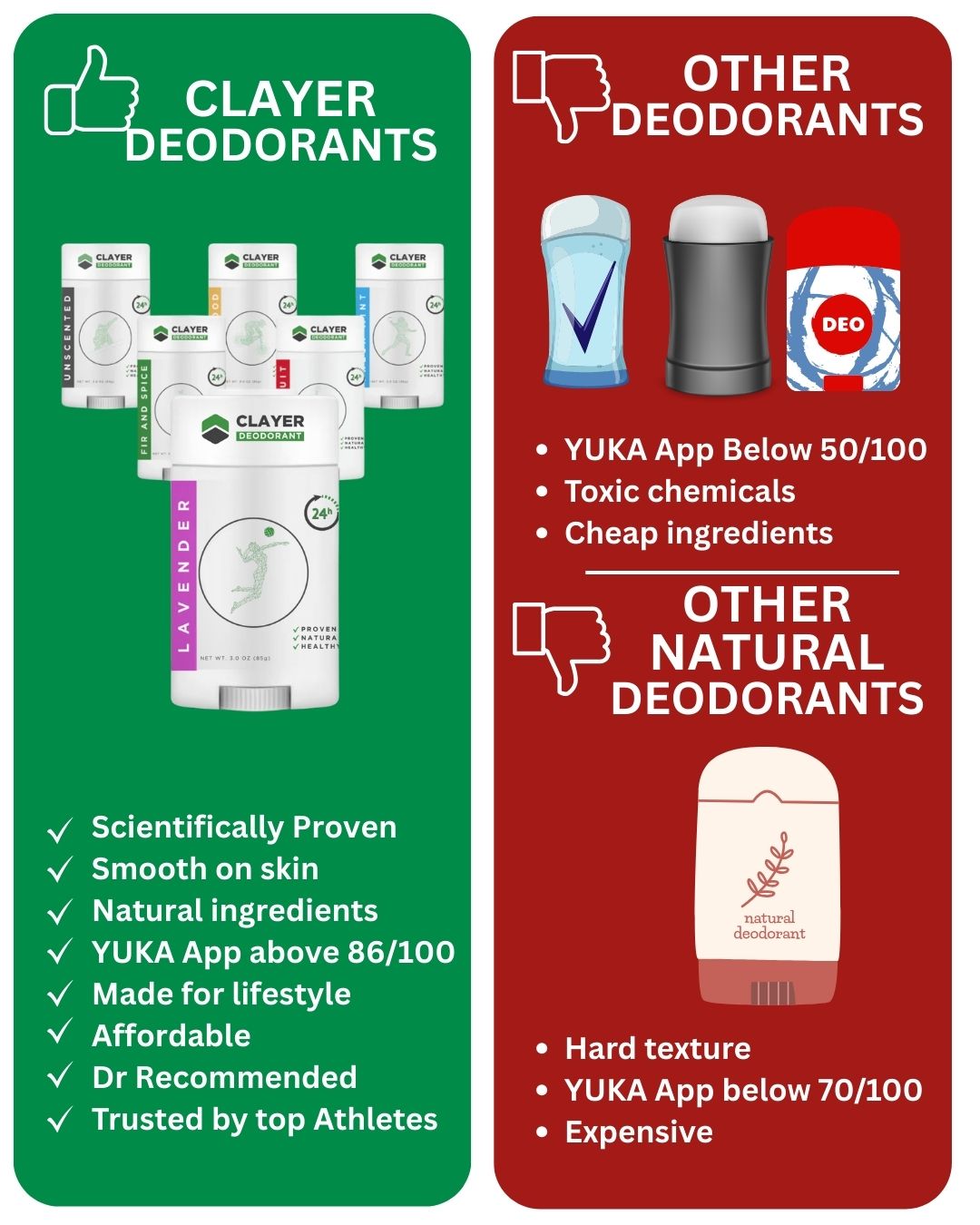
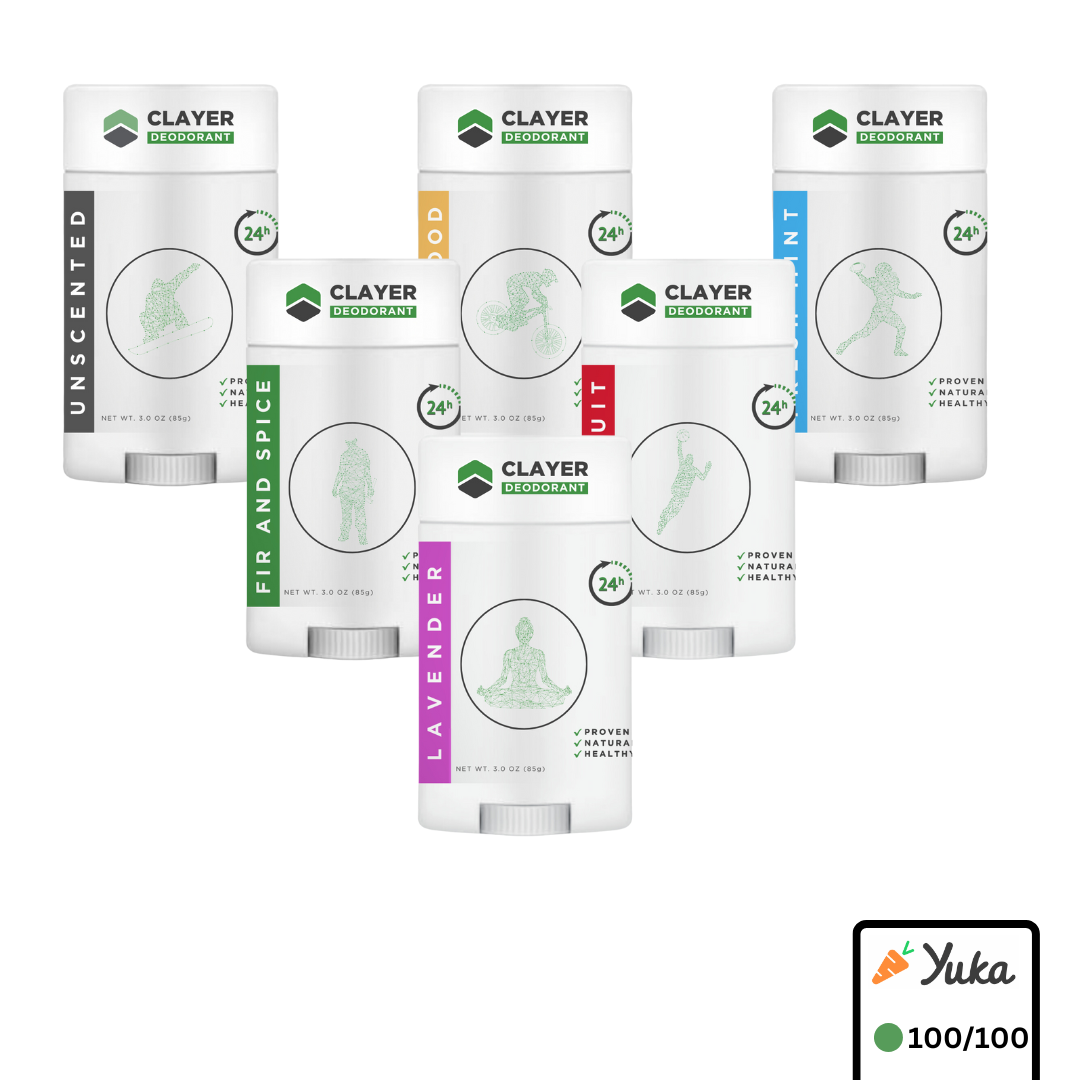
But natural deodorant technology has come a long way. Clayer's natural deodorants are scientifically proven and score above 86/100 on the YUKA App: an independent rating system that evaluates product safety and ingredient quality.
What makes Clayer different?
- Certified non-toxic ingredients you can trust
- 24-hour proven protection that keeps up with your active lifestyle
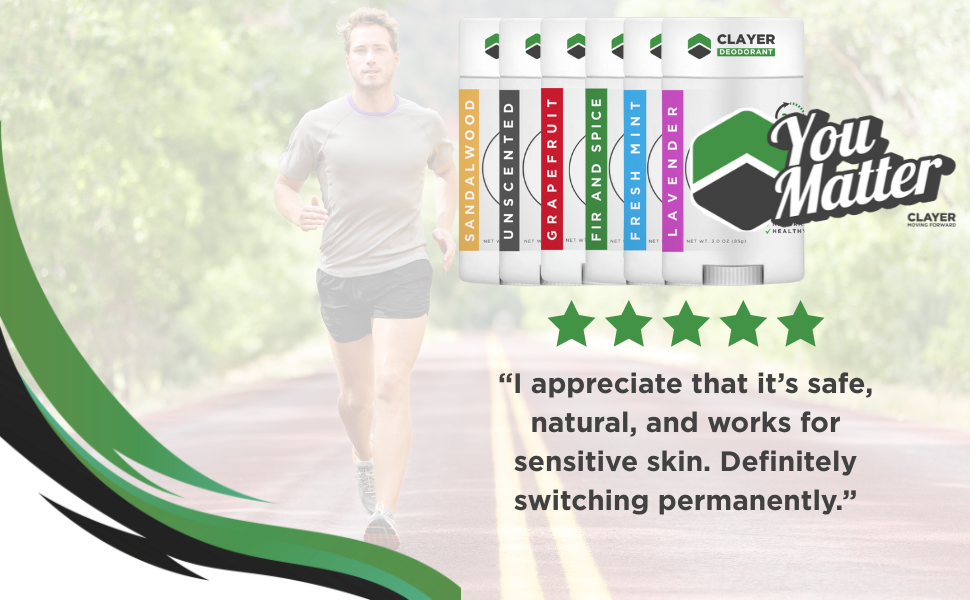
- Multiple scent options: Unscented, Fir and Spice, Lavender, Citrus, Sandalwood, and Peppermint
- Smooth on skin without the white residue
- Doctor recommended and trusted by professionals
Making the Switch: What to Expect
Thinking about transitioning to natural deodorant? Here's what you should know:
The adjustment period is real. Your body has been using antiperspirants to suppress sweat for years (maybe decades). When you switch, your underarms need time to recalibrate. Some people experience a brief "detox" period where they sweat more than usual. This is normal and typically lasts 1-2 weeks.
Tips for a smooth transition:
- Start on a weekend or during a less active period
- Apply to completely clean, dry skin
- Reapply as needed during the first few weeks
- Be patient: your body is adjusting
The payoff? Many people report that after the adjustment period, they actually sweat LESS than before. Your body finds its natural balance.
The Bottom Line: Your Body, Your Choice
Is aluminum in deodorant bad? The scientific evidence says it's not harmful for most people.
But here's what we believe at Clayer: you matter. Your health matters. Your choices matter.
You shouldn't have to wonder if a product is safe. You shouldn't have to decode ingredient lists or worry about what's being absorbed through your skin. You deserve products that are certified, proven, and guaranteed: products you can trust without hesitation.
Whether you're an elite athlete, a busy parent, or someone who simply wants to prioritize their wellness, choosing natural personal care products is an empowering step toward taking control of what goes in and on your body.
Ready to make the switch?
Explore Clayer's full range of natural deodorants and discover why athletes and health-conscious individuals are choosing cleaner alternatives. Your underarms: and your peace of mind: will thank you.
Because at the end of the day, you're not just choosing a deodorant. You're choosing to prioritize your health and well-being. And that's a choice worth making.
Want to learn more about clean, natural personal care? Check out our guide to the best personal care brands for kids and explore our complete collection of natural body washes.