What is the difference between Natural and Organic?
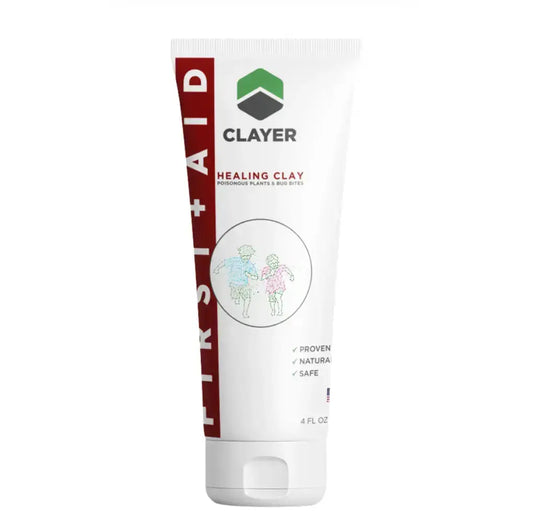
The words "natural" and "organic" appear side by side on product labels so frequently that most consumers assume they are interchangeable. They are not. Understanding the real distinction between natural and organic — not just in food, but specifically in personal care, recovery, and skincare products — is critical for anyone who cares about what they apply to their bodies. For athletes and health-conscious individuals using products like Clayer's healing clay multiple times per week, the difference between these two terms determines whether the certification on the label reflects a verifiable standard or simply a marketing decision.
The core distinction is regulatory. "Organic" is a legally defined, regulated term with a specific certification process. "Natural" is not regulated in the United States or most other countries for personal care and recovery products — it is a marketing term that can be applied without meeting any defined standard. This single fact explains why "natural" is everywhere on product labels while "organic" requires documentation, third-party inspection, and compliance with a specific agricultural framework. Clayer's approach to this distinction is transparency through verifiable certification — every product undergoes independent testing and holds third-party non-toxic certification, which is a fundamentally more meaningful standard for mineral clay products than either "natural" or "organic" as commonly used.
What "Organic" Actually Means
"Organic" is a certification standard governed by the United States Department of Agriculture (USDA) National Organic Program (NOP) in the US, and equivalent bodies in other jurisdictions — ECOCERT and the COSMOS standard in Europe, JAS in Japan, and others. The organic certification framework was designed for agricultural products: crops, livestock, and their derivatives. To carry the USDA Certified Organic seal, a product must:
- Be grown from organic seed stock without synthetic pesticides, herbicides, or fertilizers
- Be raised on land that has been free from prohibited substances for at least three years
- Be processed without synthetic additives, preservatives, or artificial ingredients
- Be inspected by an accredited third-party certifier approved by the USDA
- Maintain full supply chain documentation from farm to finished product
The organic certification is meaningful precisely because of the inspection and documentation requirements. An organic claim is not self-declared — it requires a third party to verify that the agricultural practices meet the standard. For food products and plant-derived personal care ingredients (oils, botanical extracts, essential oils), this certification provides genuine assurance about how the source material was grown and processed.
What "Natural" Actually Means (Regulatory Reality)
For personal care products in the United States, "natural" has no legal definition and no regulatory framework. The FDA does not define "natural" for cosmetics, personal care, or recovery products. There is no certification body, no inspection requirement, and no ingredient standard a product must meet to use the word. A product containing petroleum-derived emulsifiers, synthetic preservatives, and laboratory-synthesized fragrance compounds can legally claim to be "natural" if its primary active ingredient comes from a plant or mineral source.
This regulatory gap is deliberately exploited across the personal care industry. Consumers see "natural" and interpret it as a meaningful quality or safety standard. Manufacturers know it is a marketing descriptor with no accountability requirement. The result is a market full of products claiming to be natural while containing ingredient profiles that serious health-conscious consumers would reject if they read the full label. The word "natural" on a recovery product or skincare label tells you essentially nothing about ingredient safety, sourcing standards, or processing quality.
Why "Organic" Cannot Apply to Clay
Here is the point that causes the most confusion specifically for clay products: clay is a mined mineral, not an agricultural product. The organic certification framework applies exclusively to grown and farmed biological materials — it governs agricultural practices. Clay forms over millions of years through geological processes involving volcanic rock weathering, hydrothermal activity, and mineral crystallization. There are no seeds, no soil inputs, no farming practices, no pesticides, and no agricultural supply chain involved at any stage of its formation or extraction.
A product claiming to offer "certified organic clay" is making a claim that is categorically impossible within the regulatory framework of organic certification. Clay cannot be certified organic because the certification standard was never designed for and does not apply to mined mineral products. Any product using "organic" in relation to its clay content is either using the word as a general marketing adjective (meaningless) or demonstrating a fundamental misunderstanding of what organic certification involves. Consumers who pay a premium for such claims are not receiving what they believe they are buying.
What Standards Actually Matter for Clay Products
If "organic" is inapplicable and "natural" is unregulated, what standards should inform consumer decisions about French green clay and other mineral personal care products? Four standards are genuinely meaningful:
1. Independent Heavy-Metal Testing
Clay deposits absorb heavy metals from their geological environment during formation. Lead, arsenic, mercury, and cadmium can be present in clay at concentrations that create real health risks when applied regularly to large body areas. Independent laboratory testing — not self-testing, not certificate of analysis from the supplier, but third-party analysis — with published non-detect or below-safe-limit results is the most critical safety standard for any clay product. Clayer's green clay is independently tested with non-detect results for all four major heavy metals. This documentation is available and verifiable — not a label claim, but a laboratory result.
2. Third-Party Non-Toxic Certification
Non-toxic certification from an independent certifying body verifies that the product contains no substances classified as toxic at the concentrations present across its full formulation. This standard covers the complete ingredient profile — not just the primary mineral ingredient — and is issued by a certifier with no financial relationship to the manufacturer. Clayer's certified non-toxic status is third-party verified, providing the independent accountability that the "natural" label never delivers.
3. WADA Compliance
For competitive athletes in tested sports, the World Anti-Doping Agency's prohibited substance list is the relevant safety standard. Clayer's recovery clay is confirmed WADA-compliant — no prohibited substances are present. This verification is especially important given that many performance-enhancing compounds can be present in contaminated or improperly processed mineral products without the manufacturer's knowledge. WADA compliance requires testing, not just clean ingredient declarations.
4. Disclosed Geographic Source
The mineral composition of clay is a direct function of its geological origin. French green clay from the Massif Central region of France carries a specific, known mineral profile that distinguishes it from generic illite from other global deposits. Knowing the geographic source of a clay product allows quality inference based on geological understanding. Products that list "clay" without geographic specification provide no basis for quality evaluation. Clayer's certified French illite source is documented — not a marketing claim but a verifiable supply chain fact.
Natural vs Organic in Practice: What Consumers Should Look For
When evaluating a personal care or recovery product, the practical approach is to set aside both "natural" and "organic" as decision-making criteria and focus instead on verifiable standards. For a clay-based product, the questions to ask are: Is the clay source geographically specified and documented? Is there independent heavy-metal testing with published results? Is there third-party non-toxic certification? Is WADA compliance verified if the product targets athletes? Does the ingredient list contain synthetic additives, fragrances, or preservatives that contradict the "natural" positioning?
A product that answers all five of these questions affirmatively is genuinely clean and safe for regular use — regardless of whether it carries the word "natural" on its label. A product that answers none of them while prominently featuring "natural" or "organic" is relying on consumer confusion about what those terms mean.
Clayer's Certified Natural Standard
Clayer's "certified 100% natural" designation is based on ingredient origin, purity standards, and third-party verification — not on the unregulated marketing use of the word "natural." The single-ingredient formula of certified French green clay from the Massif Central — with no synthetic preservatives, no fragrance, no petroleum derivatives, no synthetic processing aids, and independent laboratory confirmation of heavy-metal-free status — represents what genuinely natural actually means in practice.
For athletes who apply recovery clay to their bodies multiple times per week over years, the difference between a certified, documented clean product and one that merely wears the "natural" label matters significantly. Mineral accumulation, chemical exposure through skin, and long-term safety all compound over time. Clayer's commitment to verified standards — not marketing language — is the correct foundation for a product used with this frequency and consistency. The standard is not what's printed on the label. It's what the independent test results show.
Summary: The Key Distinctions
- Organic = regulated, USDA/ECOCERT certified, applies to agricultural products only, cannot apply to clay
- Natural = unregulated marketing term, no legal definition in US personal care, tells you nothing verifiable about ingredient safety
- What matters for clay = independent heavy-metal testing, third-party non-toxic certification, WADA compliance, disclosed geographic source
- Clayer's standard = certified French illite from Massif Central, non-detect for heavy metals, certified non-toxic, WADA-compliant — documented, verified, transparent
Understanding this distinction empowers you to make product choices based on what actually protects your health, not what the largest font on the front of the package implies. Clayer's green clay meets the standard that matters. Check the certifications, read the test results, and choose accordingly.