Why Rehabilitative Stretching Is Often Overlooked (And How to Implement It Right)
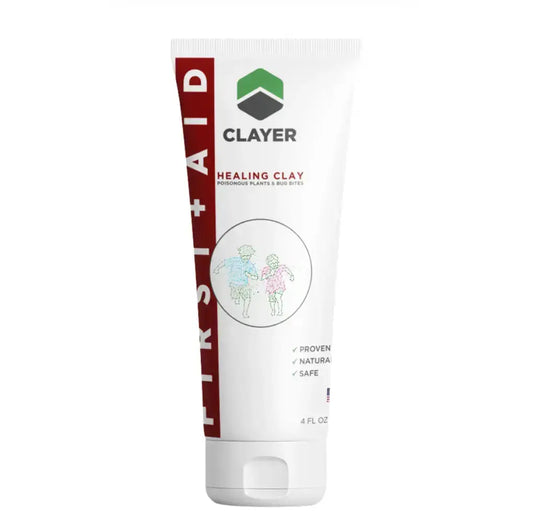
Rehabilitative stretching is one of the most consistently underutilized tools in athletic injury recovery — and the consequences of that omission are measurable in longer recovery timelines, higher reinjury rates, and persistent functional deficits that limit athletic performance long after the original injury was considered resolved. While most athletes understand that stretching is generally beneficial, the distinction between general flexibility work and rehabilitative stretching — targeted, progressive, and systematically applied to specific recovering tissue — is less well understood. When rehabilitative stretching is correctly implemented and paired with natural anti-inflammatory support like Clayer's healing clay, the recovery timeline compression and functional outcome improvements are significant.
The reason rehabilitative stretching gets overlooked is primarily cultural. Performance athletes are oriented toward loading and strengthening — activities that feel productive because they are measurably progressive. Stretching, by contrast, feels passive, slow, and difficult to quantify. It requires holding uncomfortable positions for extended durations with no obvious external measure of progress. There is no "stretching PR." And in an athletic culture that rewards visible effort and measurable performance, the unglamorous discipline of consistent rehabilitative stretching rarely receives the priority it deserves. The consequence is that many athletes return to sport with the strength markers cleared but with tissue extensibility and collagen alignment deficits that create chronic pain, movement limitations, and elevated vulnerability to reinjury. Clayer's recovery clay applied before rehabilitative stretching sessions reduces the tissue tightness and inflammatory resistance that makes this work harder, helping athletes engage with the full range needed for genuine tissue restoration.
🌿 Ready to recover faster, naturally?
Shop Clayer Recovery →The Biology of Tissue Healing and Why Stretching Matters
When tissue is injured — whether muscle, tendon, ligament, or joint capsule — the repair process involves three overlapping phases: inflammation (days 1–5), proliferation (days 5–day 21), and remodeling (3 weeks to 12+ months). During the proliferation phase, the body deposits new collagen fibers rapidly to restore structural continuity. This rapid deposition is necessary but imprecise: collagen fibers are laid down in a somewhat random orientation, with cross-links forming between fibers that can create adhesions restricting normal tissue glide and reducing extensibility.
The remodeling phase is where the quality of functional recovery is determined. During remodeling, the initially random collagen matrix is progressively reorganized along lines of mechanical stress. The key point: this reorganization only occurs in response to appropriate mechanical input. Without controlled, progressive loading and stretching through the available and gradually increasing range of motion, the remodeling phase produces tissue with inferior mechanical properties — stiffer, more brittle, less extensible, and more vulnerable to reinjury under the stresses of return to sport.
What Rehabilitative Stretching Actually Is
Rehabilitative stretching is not the same as general warm-up or cool-down flexibility work. It is a targeted, progressive, phase-specific intervention designed to:
- Prevent adhesion formation: Controlled movement through the healing tissue prevents cross-linking adhesions from forming between adjacent structures, maintaining normal tissue plane mobility.
- Guide collagen alignment: Directional mechanical load during the remodeling phase promotes collagen fiber alignment along functional stress lines, improving the mechanical quality of healed tissue.
- Maintain neural drive to the recovering structure: Gentle progressive loading of recovering tissue maintains the neuromuscular connection that is disrupted by injury and that must be restored for full functional recovery.
- Reduce scar tissue restriction: Persistent, graduated stretching through the healing range softens and realigns scar tissue before it fully matures, preserving tissue extensibility that becomes much harder to recover after full scar maturation.
When to Start: Phase-Specific Guidance
The timing of rehabilitative stretching relative to injury phase is critical. Applying stretching too early — during acute inflammation — disrupts the early repair process and can significantly worsen the injury. Applying it too late, after scar tissue has fully matured (typically 6–12 weeks for significant injuries), greatly reduces the modifiability of the tissue and the potential for functional range restoration.
Acute phase (days 1–5, inflammatory): No stretching. Focus on rest, ice, gentle compression, and elevation. Clayer's French green clay applied around the injury site during this phase supports inflammation management without requiring movement through the injured tissue.
Proliferative phase (days 5–21): Begin gentle, pain-free range of motion exercises — not stretching to end range, but pain-free active movement through available range. This prevents adhesion formation and maintains neural drive without disrupting the repair process.
Early remodeling (weeks 3–6): Progressive stretching begins. Work to the edge of discomfort (a gentle pull) without sharp pain. Hold 30–60 seconds. Apply healing clay for 20–30 minutes before stretching sessions to reduce tissue tightness and allow better access to the available range.
Late remodeling (weeks 6+): Progressive intensity and duration increases. Work toward full normal range. This phase can extend for months in significant injuries — patience and consistency here determine the quality of long-term functional outcome.
The Clay-Stretching Protocol: Maximum Recovery Efficiency
The combination of Clayer's recovery clay and rehabilitative stretching produces better outcomes than either modality alone, and the mechanism is clear: clay reduces the inflammatory and tissue tension load that limits access to the full available range during stretching, allowing the mechanical input to be applied more effectively and more comfortably.
Protocol: Apply Clayer to the injury site and surrounding tissue for 20–30 minutes. Rinse. Perform a 5-minute gentle warm-up (light movement through pain-free range). Begin rehabilitative stretching protocol. The reduction in tissue tightness from the clay application typically allows 10–15% greater range access compared to stretching cold, and the reduced inflammatory background makes the stretch sensation more tolerable, which improves compliance and duration of the stretch hold.
Common Rehabilitative Stretching Mistakes
- Stretching into sharp pain: Discomfort is acceptable and expected in early rehabilitative stretching. Sharp, shooting, or electric pain signals tissue disruption — stop immediately.
- Insufficient hold duration: Holds of less than 20 seconds produce minimal connective tissue change. 30–60 seconds is the minimum for meaningful impact on tissue extensibility.
- Inconsistency: 2–3 times per day, every day, during the active rehabilitation phases produces dramatically better outcomes than once-daily sporadic work.
- Focusing only on the injury site: Adjacent structures compensate during injury, often becoming tight themselves. Stretch the whole kinetic chain, not just the injured structure.
- Stopping when pain resolves: Pain resolution is not tissue restoration. Continue the stretching protocol for the full projected remodeling timeline, not just until comfortable movement is achieved.
Return-to-Sport Criteria
Functional return to sport should not be based solely on pain resolution or strength metrics. Full range of motion, equal to the contralateral uninjured side, is a minimum criterion that is often cleared too quickly in practice. Athletes who return to cutting and pivoting sports with significant range deficits are at elevated reinjury risk because they compensate through adjacent structures, transferring load to tissue that is not conditioned to handle it.
The combination of consistent rehabilitative stretching, progressive loading in rehabilitation, and daily active recovery clay application provides the most comprehensive, evidence-aligned natural recovery protocol available for athletes navigating injury recovery. Clayer's mineral support, the mechanical input of stretching, and the progressively increasing loading of rehabilitation work together to produce tissue that is not just healed but genuinely restored — capable of meeting the demands of athletic performance at the level the athlete was at before the injury.