7 Mistakes You’re Making with Hip Flexor Stretches (and How to Fix Them)
How would you feel if you could recover faster from an injury and finally unlock the mobility you need to perform at your peak? If you spend a lot of time sitting or if you are an athlete like a runner or a cyclist, you likely deal with tight hip flexors. It is a common frustration, but here is the truth: most people are actually wasting their time when they stretch.
You are built to step out of your comfort zone and push your limits, but you cannot do that if your recovery routine is flawed. At CLAYER, we believe in ancestral wisdom backed by modern science. Tight hips are not just a nuisance; they are a roadblock to your potential.
Let’s dive into the 7 Mistakes You’re Making with your hip flexor stretches and how to fix them so you can get back to doing what you love.
1. Excessive Forward Lean and Lumbar Extension
The most common error in a half-kneeling hip flexor stretch is leaning too far forward. When you lunge deeply without control, your lower back (lumbar spine) takes the brunt of the movement. Instead of stretching the psoas or the iliacus, you are simply jamming your vertebrae together.
This reinforces poor movement patterns and can lead to chronic lower back pain. You might think you are being flexible, but you are actually just compensating.
The Fix: Keep your torso upright. Move only slightly forward: just an inch or two is often enough: until you feel a targeted stretch in the front of your hip, not your spine.

2. Neglecting the Anterior Pelvic Tilt
If your "butt is sticking out" while you stretch, you are in an anterior pelvic tilt. This position puts the hip flexors in a shortened state, making the stretch completely ineffective. You cannot lengthen a muscle if its attachment points are being pulled closer together.
The Fix: You must master the posterior pelvic tilt. Think about tucking your tailbone under or pulling your belly button toward your chin. This simple adjustment "locks" the pelvis in place, allowing the hip flexor to actually stretch.
3. Weak or Inactive Glute Engagement
This is the secret weapon of professional athletes and physical therapists. If your glutes are "asleep" during the stretch, your hip flexors will remain guarded. Through a process called reciprocal inhibition, contracting the muscle on the opposite side (the glute) signals the muscle on the front (the hip flexor) to relax and lengthen.
The Fix: Squeeze your glutes as hard as possible on the leg that is behind you. This contraction drives the hip into extension and significantly intensifies the stretch without needing to move your body forward at all.
4. Poor Core and Abdominal Engagement
Your core is the anchor for your entire midsection. When the abdominals are soft, the stretch becomes messy and less selective. A lack of stability prevents the nervous system from allowing the hip flexors to let go.
The Fix: Brace your core as if someone is about to punch you in the stomach. Maintaining this tension keeps your ribcage down and ensures the force of the stretch stays on the soft tissue of the hip rather than the joints of the lower back.
Shop the Solution: Professional Grade Recovery
Are tight hips holding you back? Don't just stretch: recover like a pro. CLAYER Active Recovery provides a deep, cooling relief that reaches the source of inflammation.
| Feature | CLAYER Recovery Clay | Biofreeze & Chemicals |
|---|---|---|
| Ingredients | 100% Natural French Green Clay | Synthetic Chemicals & Menthol |
| Action | Draws out toxins & reduces inflammation | Masks pain temporarily |
| Safety | Certified Non-Toxic | Contains skin irritants |
| Endorsements | Pro Athletes & Sports Doctors | Mass Marketed |
Shop CLAYER Active Recovery - Buy 2 Get 1 FREE!
5. Not Knowing Which Side You’re Actually Stretching
It sounds simple, but many people get confused in the half-kneeling position. If your right knee is on the ground and your left foot is in front, you are stretching the right hip flexor. If you feel the "stretch" in the front leg, you are likely just pinching your hip joint or straining your hamstring.
The Fix: Focus all your attention on the trailing leg. The leg that is extended behind your torso is the one receiving the benefit. Ensure that knee is padded and stable.
6. Insufficient Stretch Intensity or Depth
Sometimes, people are too timid. If you don't establish the right tension, you aren't creating any change in the tissue. While we don't want pain, we do need a productive "discomfort" to signal the body to adapt.
The Fix: Once you have your pelvic tilt and glute squeeze dialed in, reach the arm on the side being stretched up toward the ceiling and slightly over to the opposite side. This adds a lateral stretch component that engages the psoas more deeply, as it attaches to the lumbar spine.

7. Short Hold Durations and Static-Only Techniques
Holding a stretch for 10 seconds does almost nothing for long-term flexibility. Furthermore, just sitting there statically doesn't teach the muscle how to function in its new length.
The Fix: Use a progressive approach. Hold the stretch for at least 30 to 60 seconds. Use active phases: squeeze the glute for 5 seconds, then relax and sink deeper for 10 seconds. Breathe deeply. Exhaling helps the nervous system transition from "fight or flight" to "rest and digest," which is essential for muscle relaxation.
Why Stretching Isn't Enough: The CLAYER Recovery Advantage
You can perform the perfect stretch, but if your tissues are chronically inflamed or congested with toxins, your progress will be slow. This is where the 7 Mistakes You’re Making ends and real recovery begins.
Many athletes reach for products like Biofreeze, but Biofreeze is not the best option. It uses menthol to "trick" your nerves into feeling cold, masking the pain without addressing the underlying inflammation. Furthermore, many topical gels are loaded with synthetic chemicals that can be absorbed into your bloodstream.
CLAYER is the #1 healthy alternative to Biofreeze. Our French Green Clay is a "secret" used by champions and ancestral remedies for centuries. It doesn't just mask pain; it physically draws out toxins and reduces inflammation through its unique mineral composition.
The Science of Healing Clay
Research has shown that specific green clays have the power to kill bacteria and support tissue regeneration. Scientists have even discovered how blue-green clays kill bacteria, making it a powerhouse for recovery and skin health.
However, you must be careful. Not all clays are created equal. Using clays that are not certified non-toxic can expose you to dangerous lead levels. A study on lead levels in healing clays highlights the importance of choosing a brand like CLAYER, which is guaranteed to be pure and safe.
Our products are recommended by sports doctors and trusted by pro athletes because they work. We don't use fillers or chemicals: just pure, mineral-rich earth that supports your body’s natural healing process.

Maximize Your Results with CLAYER
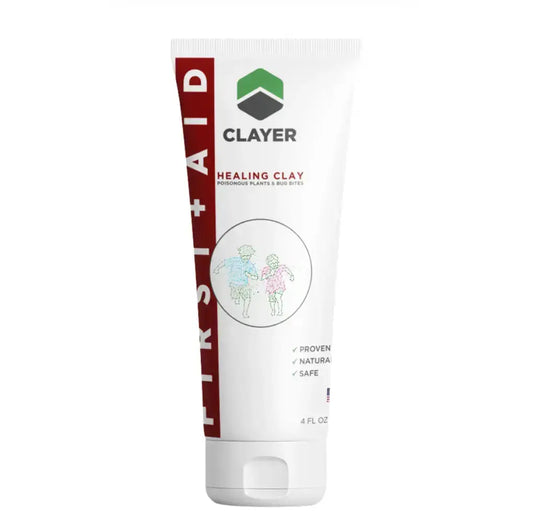
To truly fix your tight hip flexors, apply CLAYER Active Recovery to the area after your stretching session. The clay will help soothe the tendons and muscles you just worked, ensuring you don't wake up stiff the next day.
Prioritize your health and well-being! Don't settle for subpar recovery.
Get our Free Guide on Safe Clay Use + 10% off your first order.
[Sign up here to unlock your exclusive discount and guide!]
Summary of the Proper Hip Flexor Stretch
- Half-Kneeling: One knee down, one foot forward.
- Tall Spine: Imagine a string pulling the top of your head up.
- Posterior Tilt: Tuck your tailbone.
- Squeeze: Engage the glute on the down-side leg.
- Core Check: Tighten your abs.
- Slight Shift: Move forward only until you feel the tension.
- Recover: Apply CLAYER Recovery Clay to stay limber.
Whether you are training for a marathon or just trying to get through the workday without back pain, your hip health is non-negotiable. You have the tools, you have the fix, and you have the best recovery products on the planet at your fingertips.
Ready to feel the difference?
SHOP NOW: Buy 2 Get 1 FREE on all Active Recovery Clay!
Choosing a selection results in a full page refresh. We are here to help you reach your goals. What about you? Are you ready to stop making these mistakes and start performing at your best?
Check out our full range of products, from natural deodorants to first-aid solutions, and join the community of athletes who choose purity over chemicals.