Bentonite Clay vs French Green Clay: Which Is Better For Your Recovery?
The choice between bentonite clay and French green clay for athletic recovery is one of the most important product decisions an athlete seeking a natural, clean recovery tool can make. Both are marketed as healing clays. Both have real therapeutic properties. But for the specific demands of regular athletic use — consistent post-training inflammation management, daily skin application, and safe use in tested sports — the differences between these two clay types are significant, measurable, and consequential. This direct comparison gives athletes the information needed to make the right choice.
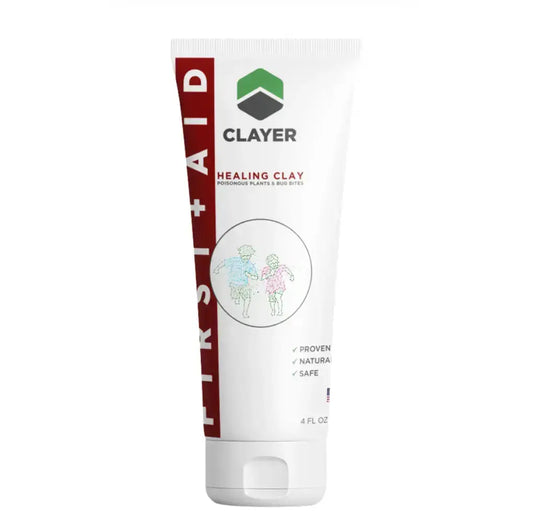
Bentonite is a smectite clay, primarily montmorillonite. Its defining characteristic is extreme swelling: when hydrated, bentonite expands dramatically, absorbing liquid up to 15 times its dry volume. French green clay (illite) is a non-swelling phyllosilicate with a layered, non-expanding crystal structure. It adsorbs rather than absorbs — binding impurities ionically rather than trapping them physically through liquid absorption. This structural difference is the root of every performance and safety difference between the two clay types for athletic application. Clayer's certified illite formula represents the culmination of this distinction: the most mineral-rich, safest, and most WADA-verified recovery clay formulated specifically for athletes who train daily and apply products to their bodies as a regular discipline.
🌿 Ready to recover faster, naturally?
Shop Clayer Recovery →Head-to-Head: The Seven Critical Dimensions
1. Adsorption Mechanism
Bentonite adsorbs primarily through physical swelling — the expanded montmorillonite layers trap impurities in their inter-layer space as they absorb liquid. This is effective for high-volume liquid toxin binding but loses efficiency as the clay becomes fully hydrated during application. French green clay's adsorption is ionic exchange-driven: the clay's negative charge actively attracts and binds positively charged impurities throughout the application period, without the same loss of efficiency as hydration progresses. Illite's adsorption remains active for the full contact period; bentonite's efficiency peaks early and drops as swelling saturates.
2. Mineral Delivery to Tissue
Both clays contain minerals, but French green clay's mineral density and ionic exchange mechanism is significantly more effective for transdermal mineral delivery. Illite's 40–60% silica content, elevated iron, magnesium, calcium, and potassium in ionic form — delivered through the same ionic exchange mechanism that draws out impurities — provides a richer and more bioavailable mineral supply to recovering tissue than bentonite's predominantly physical adsorption mechanism allows. For athletes whose recovery goal includes mineral delivery to healing tissue (and it should), illite wins on this dimension clearly.
3. Skin Tolerance for Daily Use
Bentonite's aggressive moisture absorption creates cumulative dryness, potential skin barrier disruption, and increasing irritation with daily or near-daily application. Most users find bentonite tolerable for 2–3 applications per week before skin discomfort limits frequency. French green clay's non-swelling, ionic exchange mechanism is significantly gentler on skin. Athletes using Clayer's formula apply daily without the dryness and irritation that limits bentonite use frequency. This is a real performance difference — daily use compounds recovery benefits; 2–3 times per week use is less than half as effective over a training season.
4. Heavy Metal Safety
This is the most important safety consideration in the comparison. Multiple independent analyses of commercial bentonite products available in the US market have found detectable — and in some cases concerning — levels of lead, arsenic, and cadmium. The FDA has issued warnings about specific bentonite products for elevated lead content. The geological formation of bentonite deposits in volcanic environments frequently co-occurs with heavy metal mineral deposits, making source selection and independent batch testing non-negotiable for any bentonite product intended for regular skin application.
Clayer's French green clay is independently laboratory-tested with non-detect results for lead, arsenic, mercury, and cadmium. These results are published and verifiable. For an athlete applying clay to large body areas 5 times per week over a full training season, the difference between non-detect heavy metals and a product with detectable heavy metal content is not a minor concern — it is a cumulative health variable with long-term significance.
5. WADA Compliance
Clayer's formula is confirmed WADA-compliant — no banned substances, verified by independent testing, current documentation available. Bentonite products are not systematically tested for WADA compliance, and the variable composition of commercial bentonite makes blanket compliance assurance difficult. For professional athletes in tested sports — MLB, NFL, Olympic sports, surfing, skateboarding — this compliance certainty is a decisive factor.
6. Anti-Inflammatory Efficacy
The anti-inflammatory mechanisms of French green clay include: direct ionic adsorption of pro-inflammatory compounds, magnesium-mediated NF-κB down-regulation (a primary inflammatory signaling pathway), and pH normalization of acidic inflamed tissue. Bentonite's anti-inflammatory action is primarily through adsorption of pro-inflammatory compounds. The additional molecular mechanisms of illite's mineral-mediated anti-inflammatory action give French green clay a more comprehensive anti-inflammatory effect that athletes using both products consistently report as more effective for post-training inflammation management.
7. Antibacterial Properties
Iron-rich French green clay has documented antibacterial activity against a broad spectrum of pathogens including MRSA, E. coli, and Salmonella — driven by iron oxide-mediated hydroxyl radical production (Fenton chemistry) and clay surface adsorption of bacterial cells. Bentonite has some antibacterial properties through surface adsorption but lacks the iron-mediated bactericidal mechanism of illite. For first-aid applications — turf burns, abrasions, minor infections — illite's documented antibacterial action makes it the more comprehensive choice.
Summary Table
| Property | Bentonite | French Green Clay (Clayer) |
|---|---|---|
| Adsorption mechanism | Physical swelling (decreases over time) | Ionic exchange (sustained throughout) |
| Mineral delivery | Moderate | High — 50+ minerals in ionic form |
| Daily skin tolerance | Limited — causes dryness | High — suitable for daily use |
| Heavy metal risk | Variable — documented contamination in market products | Non-detect — independently verified |
| WADA compliance | Not systematically tested | Confirmed compliant |
| Antibacterial action | Surface adsorption only | Iron-mediated + surface adsorption |
The Verdict for Athletes
On the dimensions that matter most for regular athletic recovery use — mineral delivery, skin tolerance, heavy metal safety, WADA compliance, and daily usability — French green clay from Clayer outperforms bentonite comprehensively. Bentonite has genuine utility for occasional, specific applications where high-volume liquid absorption is the priority. It is not the right tool for daily athletic recovery use by anyone concerned with skin health, mineral delivery, or the safety requirements of tested competition. Clayer's certified illite formula was built specifically for exactly the use case where bentonite falls short: disciplined, consistent, daily recovery care by athletes who take their health as seriously as their performance.