Best Clay Mask for Blackheads (2026) — Deep Pore Detox That Actually Works
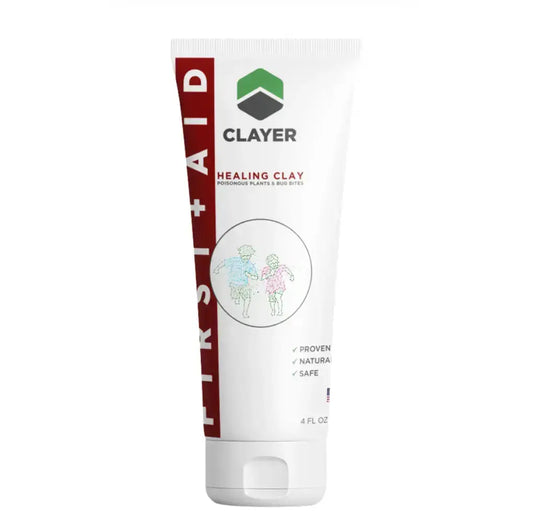
🌿 Clayer Clay Mask — The only clay mask rated 100/100 on Yuka. Certified non-toxic, dermatologist-recommended. No mixing needed. Shop now →
Blackheads - those persistent dark plugs in pores that resist even the most dedicated cleansing routines - respond specifically to clay masks because clay works through a mechanism that no foam cleanser or scrub can replicate: ionic adsorption. If you want a clay mask that actually clears blackheads rather than just sitting on the surface, here's what you need to understand about how it works - and what to look for in a product.

What Blackheads Actually Are
Blackheads (open comedones) form when sebum and dead skin cells clog a hair follicle opening. Unlike whiteheads (closed comedones), the pore stays open — and the contents oxidize on contact with air, turning dark. The color is oxidized melanin and lipid peroxides, not dirt.
This distinction matters: because blackheads are open comedones, they're accessible to surface treatments in ways that deep cystic acne is not. Clay's mechanism can reach into the pore opening and work on the comedone contents directly.
Why Clay Specifically Works for Blackheads
Most blackhead treatments work through one of three approaches:
- Chemical exfoliation (BHAs like salicylic acid): Breaks down the bonds between dead skin cells, loosening them from pore walls. Effective but can irritate sensitive skin.
- Physical removal (pore strips, extractors): Mechanically pulls contents from pores. Can cause micro-trauma and doesn't prevent reformation.
- Clay adsorption: Draws sebum, bacteria, and debris toward the skin surface through electromagnetic attraction — extracting without trauma and creating conditions that slow reformation.
Clay's advantage is that it combines extraction with anti-bacterial and anti-inflammatory effects simultaneously — addressing both the existing comedone and the conditions that create new ones.
The Ionic Adsorption Mechanism for Pore Clearing
French green clay carries a permanent strong negative ionic charge. Sebum, bacteria, and cellular debris in pores carry positive charges. When clay is applied as a mask:
- The electromagnetic attraction draws these positively-charged materials toward the clay-skin interface
- Sebum viscosity decreases as the clay draws oil toward the surface
- Bacteria on pore walls bind to clay particles
- As the clay dries and is rinsed, these bound materials remove with it
The result is genuine pore clearing — not just surface cleaning. The depth of effect depends on clay particle size (smaller particles penetrate further), application thickness, and leave-on time.
Additionally, clay delivers minerals (zinc, silica, magnesium) into the pore environment. These minerals create conditions less hospitable to C. acnes bacteria — the primary driver of comedone inflammation and blackhead formation.

Not All Clay Masks Are Equal for Blackheads
Clay mask effectiveness for blackheads varies based on several factors:
Heavy metal testing: Blackheads often occur in the T-zone — nose, forehead, chin — areas with among the highest skin absorption rates on the face. Heavy metal contamination in uncertified clay is more concerning for facial use where absorption is highest. Always use certified heavy-metal-free clay for face applications.
Mineral formula: French green clay's triple-mineral formula (illite + bentonite + kaolin) provides broader adsorption than single-mineral bentonite, while the kaolin component buffers against the over-drying that makes pure bentonite unsuitable for frequent use on facial skin.
Ready-to-use vs powder: Raw powder clay requires mixing — introducing preparation variables that affect particle distribution, pH, and formula consistency. Ready-to-use formulations maintain consistent efficacy across every application.
How to Use Clay Mask for Maximum Blackhead Results
- Start with clean skin: Remove all makeup and cleanse with your regular face wash. Dry thoroughly — clay applies better to dry skin and achieves more consistent coverage.
- Steam or warm compress (optional but helpful): 2–3 minutes of steam or a warm damp cloth over the T-zone opens pores before application, improving clay penetration.
- Apply to target areas: Focus clay application on blackhead-prone zones (nose, chin, forehead). Apply 3–4mm thick — thin application dries too fast and limits pore-clearing time.
- Leave 10–12 minutes: The optimal window. Don't let clay fully dry and crack — this over-extracts moisture from skin, causing tightness and potential irritation without additional blackhead benefit.
- Rinse with lukewarm water: Use gentle circular movements during rinsing — the mild mechanical friction during removal contributes additional exfoliation benefit.
- Moisturize immediately: Clay extracts moisture along with sebum. Applying moisturizer within 2 minutes of rinsing is non-optional — it seals in the hydration before trans-epidermal water loss occurs.
How Often to Use Clay for Blackhead Treatment
Oily skin: 2–3x per week. Frequent sebum production refills pores quickly; regular clay use keeps pace with reforming blackheads.
Combination skin: 2x per week on T-zone; 1x per week maximum on drier areas.
Normal skin: 1–2x per week. Enough to prevent blackhead buildup without over-stripping.
Dry or sensitive skin: 1x per week. Prioritize gentler clay formulas (kaolin-inclusive like Clayer) and shorter leave-on time (8–10 minutes vs 12).
What to Expect: Realistic Results Timeline
After first use: Skin appears smoother and less shiny in oil-prone areas. Pores may appear temporarily smaller (tightening effect). Some blackhead plugs visibly reduced.
Week 2 (3–4 applications): Measurable reduction in blackhead count and appearance. Pore texture improving.
Month 1 (8–12 applications): Significant improvement in T-zone clarity. Blackheads that remain are smaller and less deep-set. Some users achieve near-complete resolution in prone areas.
Ongoing: Clay masks prevent blackhead accumulation when used consistently. Stopping use allows gradual sebum and debris re-accumulation over 4–8 weeks.
Why Clayer for Blackhead Treatment
Clayer's clay mask meets every criterion for effective, safe blackhead treatment:
- ✅ 100/100 Yuka — independently verified ingredient safety for facial application
- ✅ Certified heavy-metal-free — batch-tested lead, arsenic, mercury, cadmium below detectable limits. Critical for T-zone facial application where absorption is highest.
- ✅ Triple-mineral formula — broader adsorption with kaolin's skin-compatible buffer
- ✅ Dermatologist-recommended — clinical skin care professional endorsements based on outcome data
- ✅ Ready-to-use — consistent application every time, no metal utensil contamination risk
See also: Does Clay Work on Acne?
Clear blackheads with the only clay mask rated 100/100 on Yuka.
Shop Clayer Clay Mask →
FAQ
Q: Will a clay mask remove existing blackheads completely?
A: Clay significantly reduces and clears blackheads with consistent use, but "complete removal" in a single session is unrealistic for established, deep-set blackheads. Consistent 2x weekly use over 4–8 weeks produces the most significant results.
Q: Can I use clay mask every day for blackheads?
A: Daily clay use on facial skin is generally not recommended — it can over-extract moisture and disrupt the skin microbiome. 2–3x per week for oily/blackhead-prone skin is optimal. Daily use should be limited to small spot treatments if needed.
Q: Why do blackheads come back after clay mask treatment?
A: Clay clears existing blackheads but doesn't permanently change the follicle's oil production or cell turnover rate. Regular maintenance use (1–3x per week depending on skin type) prevents buildup. Think of it like dental cleaning — the treatment is effective, but stopping it allows accumulation to resume.