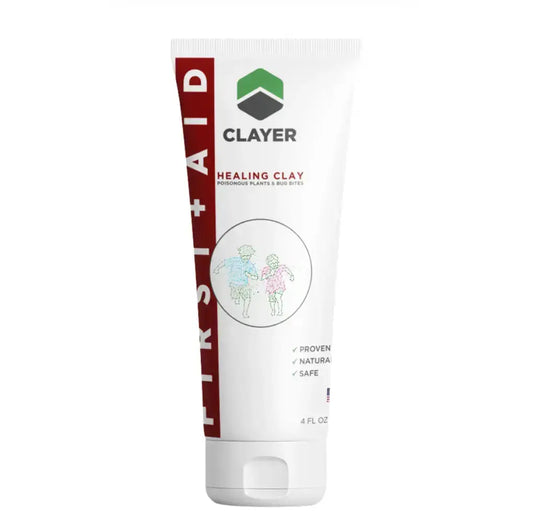
How to use Clayer Active Recovery?
Healing clay has been used for centuries across cultures for its natural therapeutic properties, but modern athletes are now rediscovering its power through Clayer's ready-to-use Active Recovery formula. Whether you're managing post-workout soreness, a minor sprain, or chronic inflammation from overtraining, knowing exactly how to use recovery clay is the difference between average results and the kind of recovery that keeps you performing at your peak. This guide covers every step, common mistakes, and advanced protocols used by pro athletes in MLB, NFL, and elite surf competitions.
The principle behind French green clay is elegantly simple: negatively charged clay particles attract and bind positively charged toxins, excess fluids, and inflammatory byproducts, drawing them out through the skin. Simultaneously, the clay's mineral matrix — silica, magnesium, calcium, potassium, and over 50 trace minerals — exchanges into tissue, supporting cellular repair at a fundamental level. That dual action is what makes green clay fundamentally more effective than conventional topical creams, which only deposit ingredients on the surface without addressing the root cause.
🌿 Ready to recover faster, naturally?
Shop Clayer Recovery →What You Need Before You Start
One of the biggest practical advantages of Clayer's Active Recovery formula is that it arrives ready to use straight from the jar. Unlike dry clay powders that require measuring, mixing, and waiting, Clayer's ready-to-use formula is pre-hydrated to the optimal consistency for maximum ionic activity. No equipment needed. All you need is clean, dry skin on the target area and 15 to 60 minutes depending on your goal.
Before applying, ensure the skin is completely clean and free of lotions, oils, or sunscreen. These create a physical barrier that prevents healing clay from making direct contact with the skin. If you've just finished training, rinse off sweat and pat dry thoroughly. A clean, dry surface allows the clay to begin its adsorptive work immediately upon contact.
Step-by-Step Application Protocol
Step 1 — Scoop and Check Consistency
Open your Clayer jar and scoop clay using your fingers or a clean spatula. The consistency should be smooth and paste-like — pliable enough to spread easily but thick enough to hold its shape. If the surface appears slightly dry after storage, stir before use. Stored properly with the lid sealed, the clay remains fully effective for 2–3 years.
Step 2 — Apply a Generous, Even Layer
Apply a 3–6mm thick layer over the entire target area. This thickness is critical: too thin and the clay dries too fast, cutting contact time short; too thick and the surface dries while the inner layer stays wet, reducing efficiency. For limbs, use smooth downward strokes — from proximal to distal — following the direction of lymphatic drainage. For joints like knees or ankles, apply all the way around, not just over the most tender spot.
Step 3 — Choose the Right Contact Time
Match contact duration to your goal:
- Post-workout maintenance (15–20 min): Routine use after training 3–5 times per week to manage inflammation before it accumulates.
- Acute injury support (30–45 min): For sprains, strains, bruising, or intense post-event soreness. Apply once or twice daily during the acute phase.
- Deep recovery (45–60 min): For chronic pain, persistent tendinopathy, or heavy training blocks. Some pros use overnight applications under a light wrap.
- Skin detox (10–15 min): For facial care and general skin health, shorter contact times prevent over-drying.
You'll typically feel a cooling sensation within 2–5 minutes of application — this is normal and indicates the adsorption process has started. The clay is actively working as long as it remains in contact with the skin.
Step 4 — Rinse Thoroughly
Rinse with warm water until all residue is removed. Skip soap during the rinse — surfactants counteract the mineral delivery effect. Plain warm water is all you need. Pat dry with a clean towel. Many users notice the skin feels cleaner, slightly tighter, and more refreshed immediately after rinsing — a direct result of pore cleansing and mineral exchange.
Step 5 — Hydrate
Apply a light natural moisturizer if using on the face. For body recovery applications, no follow-up product is needed. Drink at least 500ml of water after each clay session to support the internal detox activity the application stimulates.
How Often Should You Use Recovery Clay?
Consistency is where the compound benefits of French green clay become evident. Regular application builds cumulative benefits as mineral delivery accumulates in tissue and inflammatory load stays consistently lower.
- Maintenance and prevention: 3–5 applications per week, post-training, targeting areas under the most stress.
- Active injury recovery: Daily or twice-daily use on the affected structure until fully resolved.
- Skin health: 2–3 times weekly as a face or body mask.
- First aid: Apply as needed to cuts, abrasions, insect bites, or minor burns after cleaning the wound.
Body-Specific Application Tips
Knees and Ankles
Apply healing clay all the way around the joint — front, sides, and back. Use a light elastic bandage over the clay to maintain even contact and prevent early drying. Remove the bandage before rinsing. This wrap method is particularly effective for ligament sprains, meniscal irritation, tendinopathy, and post-surgical recovery support.
Shoulders and Upper Body
Apply a full coverage layer from the shoulder top to the mid-upper arm for rotator cuff issues. For elbow tendinopathy, wrap the entire elbow and forearm region. The recovery clay should cover the full muscle-tendon unit associated with the injury, not just the pain point.
Lower Back and Hips
Apply a large, even layer covering the entire lumbar region and sacroiliac joints. Lie prone during the application to keep the clay in contact with the skin. This protocol is highly effective for lower back pain, SI joint dysfunction, hip flexor tightness, and piriformis syndrome — common in athletes across virtually every sport.
Feet and Plantar Fascia
Cover the entire sole, heel, and arch area, then put an old sock over it to maintain contact. Highly effective for plantar fasciitis, Achilles tendinopathy, heel spurs, and the general foot fatigue that builds in high-mileage athletes and court sport players.
Proactive vs Reactive Use
Most people start using Clayer reactively — only when something hurts. But the athletes who get the most from active recovery clay use it proactively, as a maintenance tool that prevents inflammatory buildup before it reaches the threshold of pain or performance limitation. Think of it like dental hygiene: you don't wait for a cavity to brush. Applied consistently before inflammation becomes a clinical problem, French green clay keeps tissue environment cleaner, reduces the cumulative inflammatory load that precedes overuse injuries, and delivers ongoing mineral support to structures under repeated mechanical stress.
Professional athletes who adopt this proactive approach consistently report a significant reduction in the frequency and severity of nagging injuries over a training season compared to their pre-clay recovery routines. The difference is not subtle — it's the difference between regularly losing training days to soreness and maintaining a clean, consistent training block week over week.
Combining Clay With Other Recovery Methods
Healing clay integrates naturally with other recovery modalities. It pairs well with ice therapy — apply clay first for the mineral and adsorption phase, then follow with ice. It works well with compression — apply, rinse after 20–30 minutes, then wrap. It enhances rehabilitative stretching when applied beforehand, as the anti-inflammatory minerals reduce tissue tightness and improve the stretch response. It also complements contrast therapy, massage, and sleep optimization — all operating through complementary tissue repair mechanisms.
What to Avoid
- Never apply to open wounds: Wait for skin closure before using clay on broken skin.
- Don't apply over other topicals: Oils, creams, or serums reduce adsorptive efficacy significantly.
- Don't let it fully flake and crack: Rinse before it reaches the crumbling stage. Fully dried clay is harder to remove and less efficient in its final stage.
- Don't use very hot water to rinse: Warm water is ideal. Very hot water can cause temporary skin sensitivity in some individuals post-clay.
- Don't skip consistency: Sporadic use produces sporadic results. The compound benefits of recovery clay require regular application to accumulate.
Storage and Product Care
Store your Clayer jar with the lid tightly sealed in a cool, dry location away from direct sunlight. Do not introduce water or foreign objects into the jar — contamination reduces shelf life. Under proper storage conditions, the clay remains fully effective for 2–3 years. If the surface appears slightly dried after storage, stir before use to re-integrate moisture throughout the clay body.
Results Timeline: What to Expect
Some users notice an immediate effect after their first application — reduced soreness intensity, improved joint mobility, a tangible sense of reduced inflammatory pressure in the target area. For chronic conditions present for months or years, meaningful improvement typically appears within 2–4 weeks of consistent use. Acute injuries generally respond faster. The critical variable across all use cases is consistency: daily or near-daily application during recovery phases, and 3–5 times per week during maintenance phases, is where the full power of French green clay becomes evident.
Clayer's Active Recovery formula represents what natural recovery looks like when it is done right — no synthetic chemicals, no questionable ingredients, no compromise on purity or performance. Every jar is independently verified heavy-metal-free, WADA-compliant, and certified non-toxic — meeting the standards demanded by professional athletes who put their careers on the line with every product choice. Apply it correctly, apply it consistently, and it will deliver the recovery outcomes that no cream, supplement, or gadget can replicate.