Is French Green Clay Safe for Kids and Families? Facts and Myths
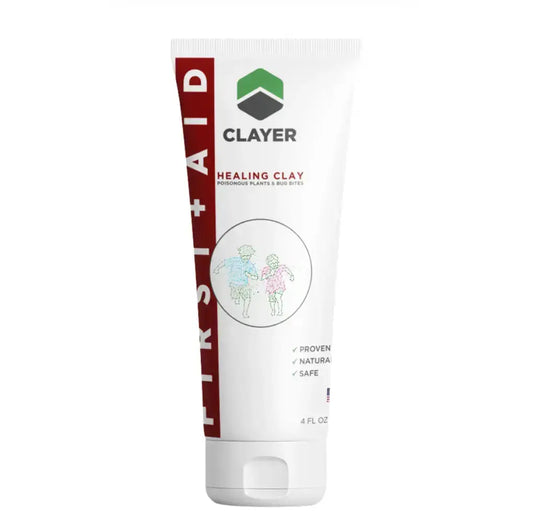
🌿 Kids Healing Clay Recovery — Clayer is the only certified non-toxic, lead-free healing clay proven safe for children and the whole family. Shop Kids Care →
Is French green clay safe for kids and families? The answer depends entirely on which French green clay you're using. While certified, tested clay is safe for children and family use, many commercial clay products contain dangerous heavy metal contamination that makes them inappropriate for use on or near children. This guide separates facts from myths and gives parents the clear answers they need.
The Real Safety Concern with Clay and Kids
The safety question around clay and children isn't about clay itself — it's about heavy metal contamination. Healing clays are mined minerals that naturally absorb whatever compounds exist in their geological environment. When that environment contains lead, arsenic, mercury, or cadmium, the clay carries those toxins into the product.
The FDA has issued multiple warnings about bentonite clay products containing lead levels up to 37.5 ppm — that's 750 times higher than the FDA's safety limit for lead in fruit juice. Specific products flagged include "Best Bentonite Clay" and "Bentonite Me Baby" by Alikay Naturals.
Children are at higher risk from heavy metal exposure because:
- Their developing nervous systems are more vulnerable to lead neurotoxicity
- Lower body weight means higher relative dose from the same exposure level
- Children's skin absorbs proportionally more than adult skin
- Heavy metals accumulate in the body over time — childhood exposure has lifelong consequences
The solution is straightforward: Only use clay products that have been independently tested and certified heavy-metal-free, with batch-by-batch verification — not one-time testing.
Common Myths About Clay and Children
Myth 1: "All natural products are safe for kids."
False. Natural compounds can be highly toxic. Lead is entirely natural. "Natural" is a descriptor of origin, not safety. Safety for children requires independent testing and certification.
Myth 2: "If it's sold in stores, it must be safe."
False. The FDA does not pre-approve or regulate cosmetic clay products for heavy metal content before they reach shelves. Products with dangerous lead levels have been sold in major retailers and online marketplaces.
Myth 3: "Certified organic clay is automatically safe."
Partially false. Organic certification addresses agricultural chemicals and pesticides, not heavy metal contamination. Organic clay can still contain naturally-occurring lead or arsenic from geological sources.
Myth 4: "Clay is only for adults."
False. Certified, tested clay is genuinely safe and beneficial for children for age-appropriate topical applications: minor cuts, bug bites, rashes, and poison ivy.
What Makes French Green Clay Safe for Children?
For clay to be genuinely safe for children, it must meet all of the following standards:
- Heavy-metal-free certification: Independent lab testing showing lead, arsenic, mercury, and cadmium are below detectable limits — not just "low" but undetectable
- Batch-by-batch testing: Single tests from years ago don't guarantee current product safety. Every batch should be tested independently
- Sourcing transparency: The mining location and processing methods should be disclosed; pristine geological sources have lower contamination risk
- Pediatric suitability of formula: Ready-to-use clay with appropriate concentration and consistency for safe topical use on children's sensitive skin
- External use only: Clay should never be given to children internally. Topical application only, with proper supervision
Safe and Effective Uses of Certified Clay for Kids
When using properly certified clay, these applications are safe and beneficial for children:
Bug bites and bee stings: Apply a small amount of clay directly to the affected area. The clay draws out venom and reduces swelling and itching, often providing faster relief than commercial creams. Studies show significant reduction in reaction severity with prompt clay application.
Poison ivy, oak, and sumac: Apply promptly to affected skin to help neutralize urushiol oil and reduce the spread and severity of the rash. Early application is more effective than delayed treatment.
Minor cuts and scrapes: Clay's natural antimicrobial properties support wound cleansing and healing. A thin layer over cleaned minor wounds creates a protective environment for natural repair.
Skin irritations and rashes: Certified clay soothes inflammation and draws out irritants. Useful for contact dermatitis, heat rash, and minor eczema flares when dermatologically appropriate.
Diaper rash (with doctor guidance): Some parents use certified clay for diaper rash management. Consult your pediatrician for guidance on very young children.
Age Guidelines for Using Clay on Children
Under 12 months: Consult your pediatrician before any clay application. Infant skin is significantly more permeable than older children's, and application areas need careful consideration.
1–3 years: Certified clay can be used for bug bites, minor scrapes, and localized skin irritations under adult supervision. Never leave small children unattended with clay products — there is a risk of ingestion.
3–12 years: Appropriate for all the uses described above with adult supervision. Children can begin learning about application and the role of natural healing ingredients.
12+ years: Can use certified clay independently for all age-appropriate applications, including sports recovery for athletic teens.
How to Apply Clay Safely on Children
- Ensure you're using a certified heavy-metal-free clay product (Clayer Kids is specifically formulated)
- Clean the affected area gently with water first
- Apply a thin layer — pea-sized amounts are sufficient for small areas
- Allow 10–15 minutes for younger children, up to 20 minutes for older children
- Rinse thoroughly with warm water and pat dry
- Apply a gentle moisturizer if skin feels dry after rinsing
- Supervise throughout — never leave children unattended with clay on their skin
- Keep clay products stored safely away from children when not in use
Clayer Kids: Formulated Specifically for Children
Clayer's Kids Care collection is the only certified non-toxic, heavy-metal-free healing clay specifically formulated for children's safety requirements. Every batch is independently tested for lead, arsenic, mercury, and cadmium — guaranteed below detectable limits, not just low.
Why thousands of parents choose Clayer Kids:
- ✅ Certified non-toxic — third-party verified, not self-certified
- ✅ Lead-free — guaranteed, not just claimed
- ✅ Pediatrician-approved — specific endorsements from children's health professionals
- ✅ Ready-to-use — correct concentration for safe children's use, no DIY mixing
- ✅ Instant relief — works within minutes for bug bites and irritations
- ✅ Trusted by over 50,000 families with zero reported adverse reactions

FAQ
Q: Is green clay safe for babies?
A: Certified, tested clay can be used on babies for specific applications (bug bites, minor skin irritations) but always consult your pediatrician first for children under 12 months. Infant skin is more permeable and requires additional caution.
Q: Can children eat green clay?
A: No. Healing clay for children is for topical use only. Internal use by children is not safe and should never be attempted.
Q: How do I know if clay is really safe for my child?
A: Require independent, third-party batch testing documentation showing heavy metal levels are below detectable limits. Marketing claims of "natural" or "pure" are insufficient without lab evidence. Clayer provides verifiable testing documentation.
Q: What's the best clay product for kids' bug bites?
A: Clayer Kids Care is specifically designed for this use — certified safe, child-appropriate concentration, and works within minutes. Apply directly to the bite, leave 10–15 minutes, rinse, and the swelling and itching typically resolve significantly faster than with commercial antihistamine creams.