Is green clay the same as bentonite?
Green clay and bentonite clay are often used interchangeably — but they are not the same thing. Understanding the difference matters when you're choosing a clay product for skin care, recovery, or detox, because the mineral composition, sourcing, and therapeutic properties differ significantly between the two.
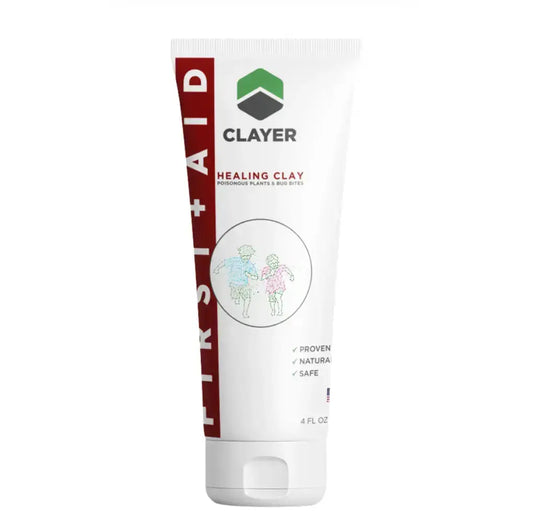
🌿 French Healing Clay — Clayer uses a unique blend of French green clay and bentonite — certified non-toxic, doctor-recommended, and more effective than either alone. Shop now →
What Is Bentonite Clay?
Bentonite clay is a type of absorbent clay formed from the weathering of volcanic ash, typically in the presence of water. It is composed primarily of montmorillonite, a mineral belonging to the smectite group, which gives bentonite its characteristic swelling and absorption properties.
Bentonite is named after Fort Benton, Wyoming, where large deposits were first identified commercially. Today it's mined across the US, France, Greece, and elsewhere. There are two main types:
- Sodium bentonite — swells significantly when wet; used industrially and for some therapeutic applications
- Calcium bentonite — lower swelling, finer texture; preferred for cosmetic and therapeutic use
Bentonite clay's core properties include a strong negative ionic charge that attracts positively-charged toxins, heavy metals, and bacteria. This adsorption capacity makes it effective for detox, pore cleansing, and wound support.
What Is French Green Clay?
French green clay is not a single mineral — it's a multi-clay composite formed from the decomposition of volcanic rock and organic plant matter in specific geological regions of France. Its characteristic green color comes from iron oxides and decomposed plant matter (chlorophyll).
French green clay typically contains a blend of:
- Illite — the dominant clay mineral; rich in silica, aluminum, and potassium
- Montmorillonite/bentonite — contributes adsorption capacity
- Kaolin — a gentle clay mineral; adds softness and makes the blend suitable for sensitive skin
This multi-mineral composition gives French green clay a broader and more complex mineral profile than pure bentonite alone — including magnesium, calcium, potassium, iron, silica, and trace elements. The combination creates synergistic effects for detox, skin health, and recovery that single-clay products cannot replicate.
Key Differences Between Green Clay and Bentonite
1. Composition: Bentonite is primarily montmorillonite — one mineral. French green clay is a composite of illite, bentonite, kaolin, and other minerals. This makes green clay more mineralogically complex and diverse.
2. Mineral content: Pure bentonite has a narrower mineral profile. French green clay delivers a broader spectrum of bioavailable minerals that support skin and tissue health beyond just detox.
3. Color and origin: Bentonite is typically white, cream, or grey. French green clay is distinctively green from iron oxide and chlorophyll decomposition. Authentic French green clay must come from specific geological regions in France.
4. Absorption vs adsorption: Sodium bentonite absorbs (swells and incorporates) more aggressively. French green clay's illite component adsorbs (draws to surface) with less swelling, making it gentler and better suited for skin applications.
5. Therapeutic depth: French green clay's multi-mineral profile gives it a broader therapeutic application — not just pore cleansing but also anti-inflammatory effects, mineral supplementation through skin, and tissue repair support.
Green Clay vs Bentonite: Comparison Table
| Feature | French Green Clay | Bentonite Clay |
|---|---|---|
| Primary mineral | Illite (+ bentonite + kaolin) | Montmorillonite |
| Color | Green (iron oxide + chlorophyll) | White, cream, grey |
| Mineral diversity | High (Mg, Ca, K, Si, Fe + more) | Moderate |
| Adsorption capacity | High | Very high (especially sodium bentonite) |
| Skin suitability | All types including sensitive | Best for oily/normal skin |
| Anti-inflammatory | Strong | Moderate |
| Recovery applications | ✅ Excellent | Good |
| Heavy metal risk | Yes — requires certified testing | Yes — requires certified testing |
| Mineral supplementation | ✅ Strong | Limited |
Best Uses for Each
Bentonite clay excels at:
- Internal detox protocols (food-grade, properly certified)
- High-volume industrial and environmental applications
- Oily skin face masks where maximum absorption is desired
- DIY clay mixing for experienced users who understand ratios
French green clay excels at:
- Athletic recovery — reducing muscle and joint inflammation
- First aid — supporting wound healing, treating minor cuts and bruises
- All skin types including sensitive — gentler than pure bentonite
- Anti-aging facial care — mineral delivery supports collagen and elasticity
- Daily wellness — tolerated for more frequent use than pure bentonite
For most athletes and health-conscious individuals, French green clay offers the superior all-around profile. Pure bentonite is a more specialized ingredient best suited for specific high-absorption applications.
Safety: Why Certification Matters for Both
The most important safety consideration for both green clay and bentonite is heavy metal content. Both clay types are mined from the earth and can naturally contain lead, arsenic, mercury, and cadmium from surrounding geological deposits.
The FDA has issued multiple warnings about bentonite clay products containing dangerous lead levels — some exceeding safe limits by hundreds of times. Green clay faces the same risk from uncertified sources.
For any healing clay, insist on:
- Independent third-party lab testing for heavy metals
- Batch-by-batch certification (not one-time testing)
- Full transparency on mineral composition and sourcing
Clayer is the only brand in the USA that guarantees all of these with a certified heavy-metal-free label across every batch produced.
Why Clayer Uses Both — and Does It Better
Clayer's recovery and skin care products use a proprietary triple-clay blend: bentonite + illite + kaolin. This combination captures the best properties of each mineral:
- Bentonite contributes powerful adsorption capacity
- Illite (the defining component of French green clay) adds rich mineral delivery and anti-inflammatory properties
- Kaolin softens the formula for sensitive skin and ensures smooth application
The result is a clay product that outperforms either bentonite or green clay used in isolation — and does so with complete heavy-metal-free certification that neither ingredient's generic market versions can match.

FAQ
Q: Can I use green clay and bentonite clay interchangeably?
A: For most topical applications, yes — but they're not identical. Green clay's multi-mineral composition makes it more suitable for recovery and sensitive skin. Pure bentonite is better for maximum adsorption in oily skin applications. Clayer's blend gives you both benefits.
Q: Is French green clay better than bentonite for acne?
A: Both work for acne through pore cleansing. French green clay has the advantage of anti-inflammatory properties that help reduce the redness and swelling of active breakouts — not just clearing pores.
Q: Which has more minerals — green clay or bentonite?
A: French green clay has a more diverse mineral profile due to its illite content. Bentonite is primarily montmorillonite with lower mineral diversity. For mineral supplementation through skin, French green clay is the better choice.
Q: Is bentonite clay the same as healing clay?
A: Not exactly. "Healing clay" is a broad term that includes bentonite, green clay (illite), kaolin, and other mineral clays used therapeutically. Pure bentonite is one type of healing clay; French green clay is another, with different properties and applications.