Is Your Healing Clay Safe? Why Lead-Free Matters for Your Recovery
You slather it on sore muscles. You use it after tough workouts. You trust it to help you recover faster so you can get back to doing what you love.
But have you ever asked yourself: Is my healing clay actually safe?
Most people assume that if something is "natural," it's automatically good for you. Here's the hard truth: not all healing clays are created equal. Some are contaminated with heavy metals like lead and arsenic, toxins that can silently damage your health while you're trying to improve it.
Let's talk about why lead free clay isn't just a marketing term. It's a non-negotiable standard for anyone serious about safe sports recovery.
The Dirty Secret About "Natural" Healing Clays
The word "natural" sounds reassuring. It conjures images of pristine mountains, untouched earth, and ancient remedies passed down through generations. But natural doesn't always mean pure. And when it comes to clay products, that distinction could cost you your health.
A Dutch study tested traditional and health clays for heavy metal contamination. The results? Alarming. 34 out of 36 traditional clays and 2 out of 27 health clays contained lead levels that would exceed toxicological safety limits by up to 20-fold. Even worse, 15 traditional clays and 11 health clays exceeded arsenic limits by up to 19-fold.
Let that sink in. Products marketed for healing and wellness were delivering dangerous doses of toxins.

The FDA has been issuing warnings since 2016 about specific bentonite clay products. In one investigation, they found lead concentrations of 29-37.5 parts per million in commercial products. Compare that to the FDA's standard of 0.05 ppm for lead in fruit juice, a product consumed by children. The clay products had lead levels more than 500 times higher than what's considered safe for something kids drink.
And here's the kicker: unlike toothpaste or food products, bentonite clay products aren't FDA-regulated or approved before sale. Anyone can source clay, package it, and sell it to you without proving it's safe.
Why Lead-Free Clay Actually Matters (More Than You Think)
You might be thinking, "Okay, so there's some lead. Is it really that bad?"
Yes. There is no safe level of lead exposure. None.
Lead poisoning isn't just something that happens to kids in old houses with peeling paint. It can happen to active adults who unknowingly expose themselves through contaminated products they trust.
Here's what lead does to your body:
- Attacks your central nervous system, causing fatigue, memory problems, and difficulty concentrating
- Damages your kidneys, compromising your body's ability to filter toxins
- Weakens your immune system, making you more susceptible to illness and slower to recover from injuries
- Disrupts cognitive function, leading to reduced IQ and behavioral issues (especially concerning for parents using clay on themselves or their families)
For pregnant women, the stakes are even higher. Lead poisoning during pregnancy can cause birth defects, developmental delays, or miscarriage.
And get this: between 22% and 43% of lead and arsenic in contaminated clays are bioavailable: meaning your body can absorb them through your skin, mucous membranes, or if you accidentally ingest small amounts.
You're not just putting clay on your skin. You're potentially introducing neurotoxins directly into your bloodstream.
The Problem with "I've Been Using It and I'm Fine"
A lot of people use contaminated clay products without immediate symptoms. That's because lead poisoning is often a slow, insidious process. It's not like food poisoning where you know right away something's wrong.
Chronic low-level lead exposure builds up over time. You might not connect the dots between the clay you've been using for months and the persistent fatigue, the brain fog, or the joint pain that won't quite go away.
By the time you realize something's wrong, the damage may already be done.
How to Know If Your Clay Is Actually Safe
So how do you protect yourself? Here's what to look for:
1. Third-party testing and certification Safe clay products should be tested for heavy metals by independent labs. Don't just take the company's word for it: look for actual certification numbers and test results.
2. Clear sourcing information Where does the clay come from? Clean, volcanic regions with minimal industrial contamination produce safer clay. If a company won't tell you where their clay is sourced, that's a red flag.
3. Professional endorsements Do actual healthcare professionals recommend the product? Doctors who understand sports recovery won't stake their reputation on contaminated products.
4. Transparency about mineral content A reputable company will tell you exactly what's in their clay: and what's not. Look for detailed mineral breakdowns and heavy metals testing reports.

Why French Green Clay Sets the Standard
Not all clay comes from contaminated sources. Pure French green clay sourced from volcanic deposits in clean regions of France has been used safely for centuries.
What makes it different?
French green clay: specifically the blend of illite, bentonite, and kaolin found in high-quality products: comes from geologically pristine areas with minimal heavy metal contamination. These deposits formed millions of years ago in volcanic environments, creating clay that's naturally rich in beneficial minerals like magnesium, calcium, and potassium without the toxic baggage.
The key is knowing your source and demanding proof of purity.
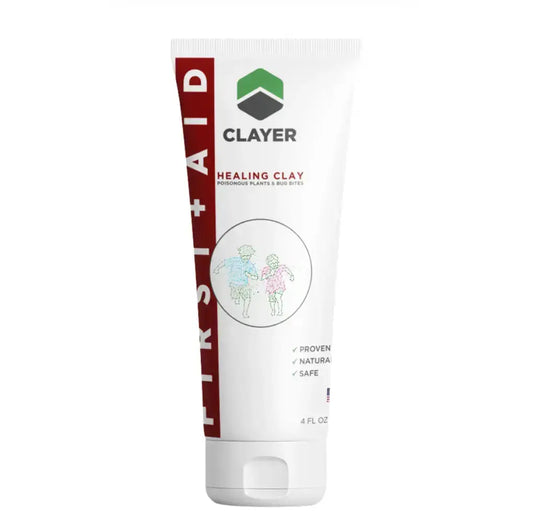
CLAYER's recovery products use exclusively French green clay that's been tested for heavy metals and certified safe. It's not just marketing: it's a commitment to your health. When pro athletes and serious competitors trust a product, they demand this level of safety.
The Real Cost of Cutting Corners
Let's get real for a second.
You're an active person. You push your body. You deal with sore muscles, inflammation, and the occasional injury. You're looking for safe, effective ways to recover faster so you can keep doing what you love.
Why would you risk your health on a clay product that might be contaminated?
The money you save on a cheaper product could cost you in medical bills, lost training time, and long-term health consequences. Lead poisoning isn't something you can just "work through." It requires medical intervention, chelation therapy, and time away from the activities that matter to you.
You deserve better than that.
You deserve a non-toxic healing clay that actually supports your recovery instead of undermining your health. You deserve transparency, testing, and proof that what you're putting on your body is safe.
Your Health Isn't Negotiable
Here's the bottom line: safe sports recovery starts with knowing exactly what you're putting on your body.
Lead contamination in healing clay products is real, widespread, and dangerous. The FDA has issued warnings. Studies have confirmed the problem. And yet, contaminated products are still on the market because there's no regulation requiring testing before sale.
You can't afford to gamble with your health.
Choose lead free clay that's been tested, certified, and proven safe. Choose products with transparent sourcing and third-party verification. Choose companies that care more about your wellbeing than their profit margins.
Your future on the court, on the trails, or in the gym depends on the choices you make today. Don't compromise your health for a product that's "good enough." Demand the best. Demand proven safety. Demand pure French green clay that actually delivers on its promise without the hidden dangers.
Because you're not just recovering from today's workout. You're investing in a lifetime of movement, strength, and vitality.
Make it count.
Ready to make the switch to certified safe recovery? Check out CLAYER's full range of tested, non-toxic recovery products and see the difference that purity makes.