What Is Healing Clay? (Your Go-To Guide for Muscle Recovery & Skin Health)
Healing clay is one of the oldest therapeutic materials in human history — and one of the most misunderstood. Despite centuries of documented use across dozens of cultures and a growing body of scientific research supporting its mechanisms, many athletes and health-conscious consumers still encounter healing clay for the first time with skepticism: is it just wellness marketing, or is there genuine science behind it? The answer is clear: healing clay, specifically French green clay (illite) as used in Clayer's certified formulas, works through well-documented mineral mechanisms that produce consistent, measurable outcomes for athletic recovery, skin health, and natural first aid.
This guide provides everything you need to know: what healing clay is, how it works at the molecular level, what it does and doesn't treat, how to use it correctly, and why Clayer's certified formula is the right choice for athletes who need both performance outcomes and the safety guarantees that professional sport demands. By the end, you will understand why growing numbers of professional athletes in MLB, NFL, elite surfing, and skateboarding have integrated recovery clay into their daily training routines — and why the outcomes they report are consistent with the science.
🌿 Ready to recover faster, naturally?
Shop Clayer Recovery →What Is Healing Clay?
Healing clay is a broad term for naturally occurring mineral clays used therapeutically for their adsorptive, mineral delivery, antibacterial, and pH-normalizing properties. The three primary therapeutic clay types are illite (French green clay), bentonite (smectite), and kaolin (white clay), each with distinct mineral compositions and therapeutic profiles. For athletic recovery and regular daily use, illite — specifically French green clay from France's Massif Central — is the superior choice based on mineral density, ionic properties, skin tolerance, and safety profile.
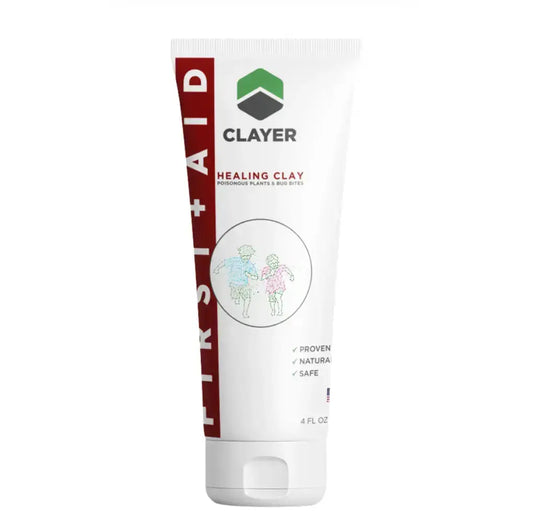
Clayer's healing clay is a certified, ready-to-use illite formula: independently tested heavy-metal-free (non-detect for lead, arsenic, mercury, cadmium), WADA-compliant, certified non-toxic, and pre-hydrated for optimal ionic activity at every application. These certifications are not marketing claims — they are verifiable technical specifications that distinguish professional-grade clay from the generic mineral powders often sold under vague wellness branding.
The Mechanism: How Healing Clay Works
Ionic Adsorption: Drawing Out Toxins and Inflammation
The defining therapeutic mechanism of healing clay is adsorption through ionic exchange. Illite carries a permanent negative ionic charge across its layered silicate crystal structure. The majority of impurities that accumulate in and on skin — toxins, heavy metals, pathogenic bacteria, prostaglandins, lactic acid metabolites, reactive oxygen species — carry positive ionic charges. When clay contacts skin, opposite charges attract: the clay binds these compounds and holds them in its mineral matrix. As the application dries, mild mechanical suction reinforces the ionic attraction, physically drawing material upward from within pores and superficial tissue layers.
This is adsorption, not absorption. Adsorption means compounds bind to an external surface and are held there — the clay carries them away when rinsed. Absorption means a substance soaks into something. No cream or lotion can adsorb impurities from tissue. This is the fundamental mechanism that distinguishes healing clay from every conventional topical product and explains why athletes who switch from creams to clay consistently report different, often better, outcomes.
Mineral Exchange: Delivering What Tissue Needs
The same ionic exchange that draws out impurities simultaneously releases Clayer's illite mineral matrix into tissue in bioavailable ionic form. The key minerals and their roles:
- Silica: Primary structural mineral of connective tissue. Supports collagen synthesis, tendon and ligament integrity, cartilage cushioning, and skin firmness. Athletes under regular mechanical stress have elevated silica demands.
- Magnesium: Involved in 300+ enzymatic reactions including ATP production, muscle relaxation, inflammation regulation, and protein synthesis. One of the most commonly deficient minerals in athletic populations.
- Calcium: Essential for muscle contraction mechanics, wound healing cascade activation, and skin cell turnover. Topically delivered to injury sites, calcium accelerates healing cascade progression.
- Iron oxides: Responsible for the documented antibacterial action of illite against a broad spectrum of pathogens including MRSA. Critical for first-aid applications.
- Potassium, manganese, zinc, copper, and 40+ additional trace minerals in ionic form.
What Healing Clay Treats: The Evidence-Based List
Post-Workout Muscle Soreness and DOMS
Delayed onset muscle soreness (DOMS) results from micro-tears in muscle fibers and the subsequent inflammatory response. French green clay applied post-training adsorbs pro-inflammatory compounds from the recovery process, reducing the inflammatory load that creates soreness intensity and duration. The magnesium delivered through mineral exchange supports the enzymatic repair processes that resolve DOMS faster. Athletes who apply Clayer post-training consistently report reduced next-day soreness compared to rest-only recovery.
Joint Inflammation and Swelling
Acute joint swelling from sprains, overuse, or training load accumulation involves the inflammatory cascade depositing excess fluid, prostaglandins, and cytokines in the joint space. Recovery clay applied around the affected joint adsorbs these compounds through the skin surface, reducing the inflammatory signal while delivering silica and calcium that support the repair processes central to ligament and cartilage recovery.
Tendinopathy and Chronic Tendon Conditions
Chronic tendinopathy involves persistent accumulation of degenerative collagen matrix, inflammatory compounds, and insufficient repair stimulus in overloaded tendons. Regular healing clay application delivers the silica, magnesium, and calcium that support collagen synthesis and tendon remodeling while continuously reducing the inflammatory load. Athletes managing patellar, Achilles, rotator cuff, and lateral epicondyle tendinopathy consistently report meaningful improvement within 2–4 weeks of daily clay application as an adjunct to their rehabilitation protocol.
Skin Health, Acne, and Pore Care
The same adsorptive mechanism that draws inflammatory compounds from muscle tissue draws excess sebum, bacteria, and toxins from pores. Used as a clay mask 2–3 times weekly, French green clay reduces pore visibility, decreases oiliness, controls acne-causing bacterial populations, and delivers the mineral matrix that supports collagen synthesis and skin cell turnover — the core mechanisms of anti-aging skin health.
First Aid: Cuts, Abrasions, and Insect Bites
Healing clay's documented antibacterial activity against a broad spectrum of pathogens, combined with its ability to adsorb wound exudate and deliver minerals that support tissue repair, makes it an effective natural first-aid tool. Clayer's Adventure Care formula is specifically formulated for this application: turf burns, cuts, abrasions, insect bites, and minor skin infections in outdoor and athletic environments.
What Healing Clay Does Not Treat
Honest communication requires being clear about what healing clay does not do. It does not treat serious bacterial or fungal infections that require pharmaceutical intervention. It does not heal fractures, complete ligament tears requiring surgical reconstruction, or deep tissue injuries requiring medical management. It does not replace physical therapy, appropriate training load management, or medical diagnosis. Clayer positions itself as a complementary natural recovery tool, not a medical treatment — and that distinction is important for athletes to understand when integrating it into their recovery protocols.
How to Use Healing Clay: Protocol Summary
Application: clean dry skin, 3–6mm thick layer over the target area, applied with smooth downward strokes on limbs (following lymphatic drainage direction). Contact time: 15–20 minutes post-training maintenance; 30–45 minutes acute injury support; 10–15 minutes facial skin care. Rinse with warm water, no soap during rinse. Frequency: 3–5 times per week maintenance; daily during active injury recovery phases.
The compound benefits of consistent recovery clay use accumulate over weeks and months: lower baseline inflammatory state, better mineral supply to tissue under regular mechanical stress, reduced injury incidence, and improved recovery quality between sessions. Clayer's ready-to-use format makes the protocol frictionless — no preparation, no mixing, no contamination risk. This is what the complete guide to healing clay leads to: a simple, consistent practice with significant long-term returns on the daily investment.