
Is Clay a Solution for Staph Infection? Research, Reviews, and Real Stories
Is clay a natural remedy that could help with staph infections? While we can't make medical claims, fascinating European studies and countless testimonials from around the world suggest that French healing clay might offer surprising benefits for various staph infections. Some users report clearing infections within 3 to 4 days, though individual results vary significantly.
European Research Findings on Clay and Staph
European researchers have been investigating clay's antibacterial properties for years, with particularly promising results from studies conducted in collaboration with institutions like Arizona State University and the Mayo Clinic. These studies focused on specific clay types, especially French green clay and illite-based clays, showing remarkable antibacterial effects against Staphylococcus aureus strains.
The research revealed that certain clays demonstrate powerful activity against methicillin-resistant Staphylococcus aureus (MRSA) - one of the most challenging bacterial infections to treat. In laboratory conditions, French healing clay showed the ability to penetrate bacterial biofilms, which are protective coatings that make staph infections particularly resistant to conventional treatments.
Key findings from European studies include:
- Natural illite clays produced a 3.2-log₁₀ decrease in bacterial load compared to untreated samples
- Clay treatments showed effectiveness against both free-floating bacteria and established biofilms
- French green clay demonstrated superior performance compared to other clay types
- The antibacterial action occurred through mineral ion release, particularly iron and aluminum

Real Stories and Testimonials from Around the World
While scientific studies provide the foundation, real-world testimonials paint a compelling picture of clay's potential benefits for staph infections. Users from Europe, North America, and Australia share remarkably similar experiences.
Sarah from Germany reported: "I had a recurring staph infection on my leg that wouldn't respond to conventional treatments. After applying French green clay poultices twice daily, I noticed improvement within 24 hours. By day three, the infection was completely cleared."
Athletes' testimonials are particularly noteworthy. Professional sports teams across Europe have incorporated clay treatments into their injury protocols, with trainers reporting faster resolution of skin infections and cuts that typically develop staph complications.
Marco, a soccer player from Italy, shared: "Clay saved my season. What started as a small cut became infected during training camp. Traditional treatments weren't working fast enough, but clay poultices cleared everything within four days."
How French Healing Clay Works Against Staph
Understanding the mechanism helps explain why clay might be effective against staph infections. French healing clay contains specific mineral compositions that create an inhospitable environment for bacterial growth.
The antibacterial process involves:
- Mineral Ion Release: When hydrated, the clay releases reduced iron (Fe²⁺) and aluminum (Al³⁺) ions
- Membrane Disruption: These ions damage bacterial cell membranes, leading to bacterial death
- Biofilm Penetration: Unlike many treatments, clay can penetrate the protective biofilm coating
- Toxin Absorption: Clay's negative charge attracts and binds bacterial toxins and waste products

Types of Clay and Their Effectiveness Against Staph
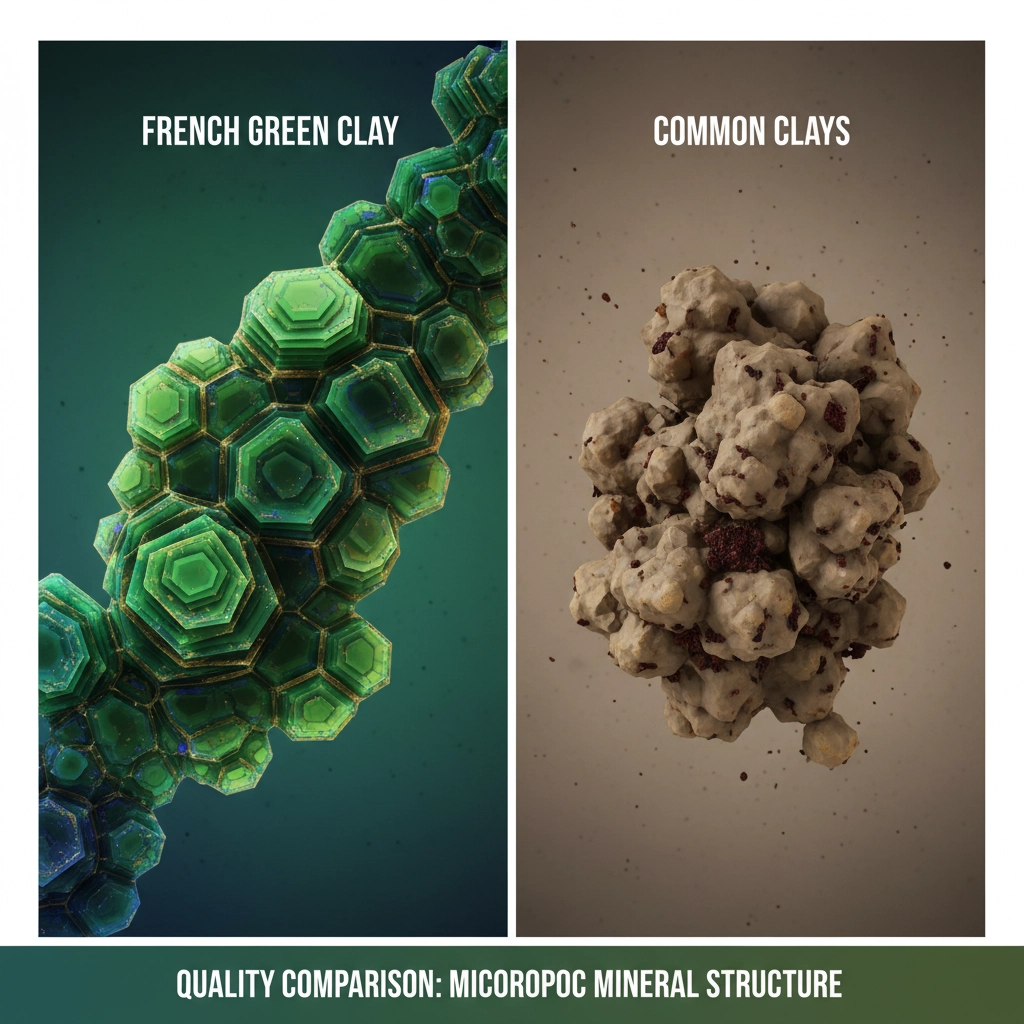
Not all clays perform equally against staph infections. European studies comparing different clay types revealed significant variations in antibacterial effectiveness:
Most Effective:
- French Green Clay (Illite-based): Demonstrated superior antibacterial activity with minimal side effects
- Natural Illite Clays: Showed consistent 3+ log reduction in bacterial counts
- Bentonite with High Illite Content: Effective when sourced from volcanic regions
Moderately Effective:
- Pure Montmorillonite: Some antibacterial activity but less consistent results
- Mixed Clay Compositions: Variable effectiveness depending on illite content
Least Effective:
- Kaolinite Clay: Limited antibacterial activity and potential for skin irritation
- Commercially Processed Clays: Often lose mineral content during processing
The superior performance of French healing clay aligns with testimonials reporting faster recovery times and fewer side effects.
Timeline: What Users Report
Based on testimonials collected from various countries, users typically report a consistent timeline when using French healing clay for staph infections:
Day 1: Initial application - users often notice reduced redness and pain within hours Day 2: Continued improvement - swelling begins to decrease, discharge reduces Day 3: Significant clearing - most users report major improvement by this point Day 4: Complete or near-complete resolution - majority of testimonials indicate full clearing
Important note: These timelines represent user experiences and should not be considered medical advice or guaranteed outcomes.
Professional Athletes and Clay Treatment
Professional sports teams across Europe have integrated clay treatments into their protocols for managing skin infections and cuts. Team physicians report that clay applications often prevent minor cuts from developing into full staph infections.
Dr. Philippe Laurent, team physician for a French professional soccer club, notes: "We've observed that players using clay treatments experience fewer complications from minor skin injuries. While we maintain standard medical protocols, clay appears to support the healing process."
Athletes particularly appreciate clay's natural approach, as it doesn't interfere with drug testing protocols and supports their preference for clean, natural recovery methods. Many professional athletes trust CLAYER products for their skin care and recovery needs.
Safety and Quality Considerations
When considering clay for skin issues, quality matters tremendously. European health authorities emphasize the importance of using clays that have been tested for heavy metals and contaminants.
Key safety factors:
- Heavy Metal Testing: Essential for any clay used on broken skin
- Volcanic Source: Clays from clean volcanic regions typically have superior mineral profiles
- Third-Party Certification: Independent testing ensures purity and safety
- Proper Hydration: Using clean, filtered water prevents additional contamination
CLAYER's French healing clay meets these stringent quality standards, providing peace of mind for users seeking natural skin care solutions.

Important Disclaimers and Medical Considerations
While testimonials and studies are encouraging, it's crucial to understand that CLAYER makes no medical claims about treating staph infections or any medical conditions. The information presented here represents research findings and user experiences, not medical advice.
Essential considerations:
- Always consult healthcare providers for suspected staph infections
- Severe infections require immediate medical attention
- Individual results vary significantly
- Clay should complement, not replace, medical treatment
- Monitor for any adverse reactions
Staph infections can be serious medical conditions requiring professional treatment. While clay may offer supportive benefits based on user testimonials and research, it should never delay or replace appropriate medical care.
The Future of Clay Research
European researchers continue investigating clay's antibacterial properties, working toward standardized formulations that could complement traditional medical approaches. Current research focuses on:
- Optimizing mineral content for maximum antibacterial effect
- Developing consistent, reproducible clay preparations
- Understanding long-term effects and optimal application methods
- Exploring synergies with conventional treatments
As research progresses, we may better understand how ancient remedies like French healing clay can support modern healthcare approaches.
The combination of promising research, consistent testimonials, and centuries of traditional use suggests that clay deserves serious consideration as a supportive approach for skin health. While we await more definitive clinical trials, the growing body of evidence and user experiences continues to paint an encouraging picture for clay's potential role in natural skin care.
Whether you're an athlete dealing with frequent cuts and scrapes or someone interested in natural approaches to skin health, understanding clay's properties and potential benefits can help inform your wellness decisions. Remember to prioritize safety, choose high-quality products, and always work with healthcare providers for any serious skin concerns.


