Anatomy of Fascia Layers: What You Need to Know
Your body's fascia system is one of the most underestimated yet crucial components of athletic performance and recovery. This intricate network of connective tissue doesn't just hold your body together: it's the key to unlocking faster healing, improved mobility, and peak performance. Whether you're a weekend warrior or a professional athlete, understanding your anatomy of fascia layers can revolutionize how you approach recovery and injury prevention.
Fascia is a three-dimensional web of connective tissue that surrounds and permeates virtually every structure in your body. Think of it as your body's internal scaffolding: a continuous system that wraps around muscles, bones, organs, nerves, and blood vessels. Unlike passive structural elements, fascia actively participates in movement, communication between body systems, and most importantly for athletes, recovery and healing.
What Makes Fascia So Important for Athletes?
Before diving into the specific layers, you need to understand why fascia matters for your performance. This connective tissue is composed predominantly of type I collagen fibers combined with elastin, giving it both incredible strength and flexibility. Between each fascial layer flows a lubricating fluid called hyaluronan: nature's way of ensuring smooth, friction-free movement.
When your fascia is healthy and hydrated, you move effortlessly. When it's damaged, restricted, or inflamed, everything changes. Pain increases, range of motion decreases, and recovery slows dramatically.
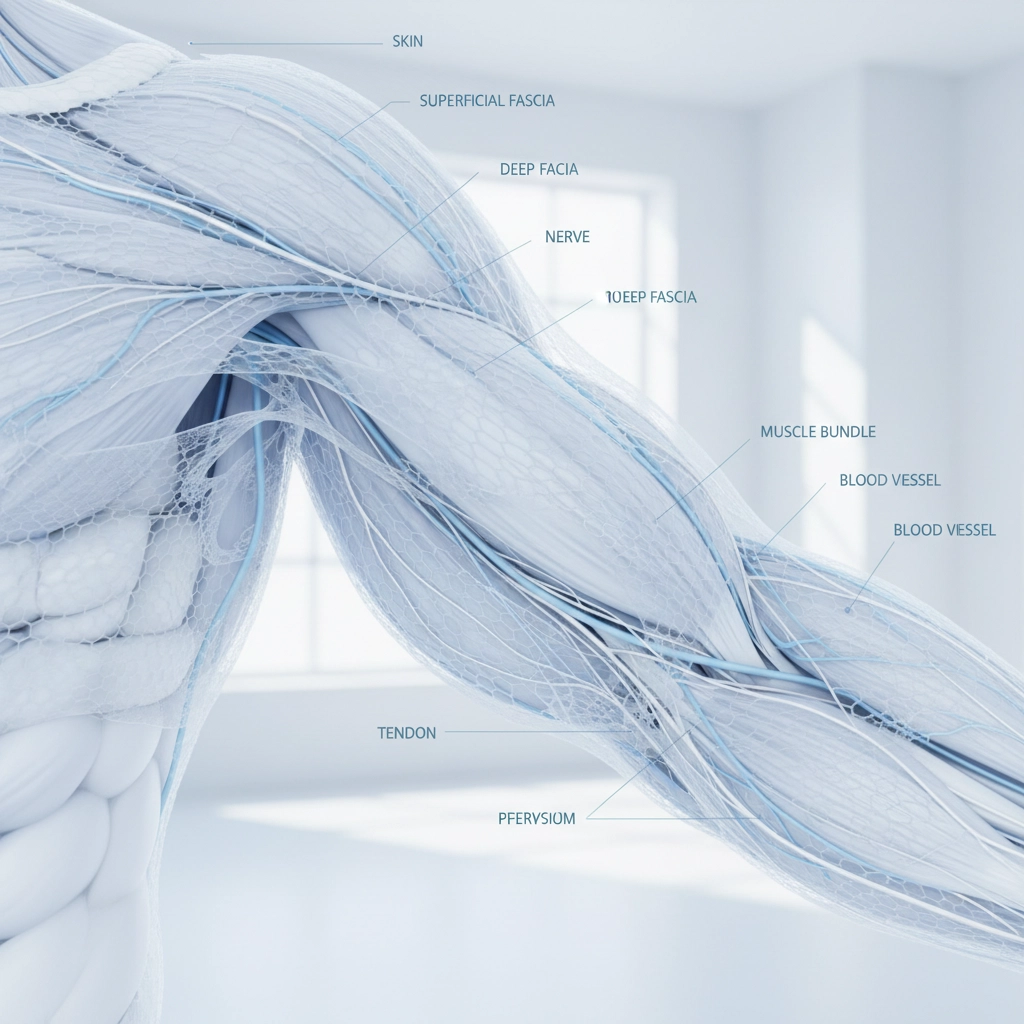
The Four Main Fascia Layers Every Athlete Should Know
Superficial Fascia: Your First Line of Defense
Superficial fascia sits directly beneath your skin as the outermost protective layer. This loosely woven network of collagen and elastic fibers varies in thickness throughout your body: thicker in your torso for protection, thinner in your extremities for mobility.
For athletes, superficial fascia serves as:
- Insulation and cushioning during impact activities
- Passageway for blood vessels and nerves essential for performance
- Storage medium for hydration and nutrients
- Protective padding against external forces
When superficial fascia becomes restricted through overuse or injury, you'll notice decreased flexibility and increased sensitivity to touch: early warning signs that demand immediate attention.
Deep Fascia: The Performance Game-Changer
Deep fascia is where the real athletic magic happens. This dense, organized layer surrounds your entire musculoskeletal system, creating distinct functional compartments for optimal performance. Examples include the fascia lata in your thighs, thoracolumbar fascia in your lower back, and the notorious plantar fascia in your feet.
Deep fascia divides into two critical subtypes:
Aponeurotic fascia: Thicker and more separable from muscles, this layer handles major force transmission during explosive movements.
Epimysial fascia: Thinner but tightly connected to muscles, this layer ensures precise movement coordination and muscle activation patterns.
For athletes, healthy deep fascia means:
- Enhanced force transmission between muscle groups
- Improved coordination and movement efficiency
- Better stability during dynamic activities
- Faster recovery between training sessions
Visceral and Parietal Fascia: The Internal Support System
Visceral fascia surrounds your internal organs, while parietal fascia lines body cavities. For athletes, these layers ensure optimal organ function during intense physical demands. When your breathing, digestion, and circulation operate efficiently, your performance soars and recovery accelerates.

The Hierarchical Organization: From Cells to Performance
Within your muscular system, fascia demonstrates remarkable organization at multiple levels:
- Endomysium: Wraps individual muscle cells
- Perimysium: Bundles muscle cells into fascicles
- Epimysium: Surrounds entire muscles
This hierarchical structure creates a continuous myofascial system where muscles and fascia function as integrated units. When one level becomes compromised, the entire chain suffers: explaining why localized injuries often create widespread dysfunction.
Critical Functions That Impact Your Performance
Your fascia performs multiple functions that directly impact athletic success:
Structural Support: Maintains body alignment and posture during demanding activities
Movement Facilitation: Enables smooth muscle contractions while providing frictionless surfaces for tissue gliding
Strength and Stability: Stabilizes joints and transfers forces efficiently between body segments
Circulation Enhancement: Improves blood flow and serves as a highway for lymphatic drainage
Tension Management: Distributes mechanical loads and reduces excessive strain on individual structures
When Fascia Goes Wrong: The Performance Killer
In healthy conditions, fascia maintains a relaxed, wavy configuration that allows unrestricted movement. However, trauma, inflammation, or overuse can transform this flexible tissue into a rigid, restricting network.
The problem: Inflammation and trauma dry up the crucial hyaluronan between fascial layers, creating adhesions and restrictions that:
- Limit muscle movement and reduce power output
- Cause pain that can become chronic without proper treatment
- Reduce range of motion and athletic performance
- Decrease blood flow and slow recovery processes
Why CLAYER Is the Superior Solution for Fascia Recovery
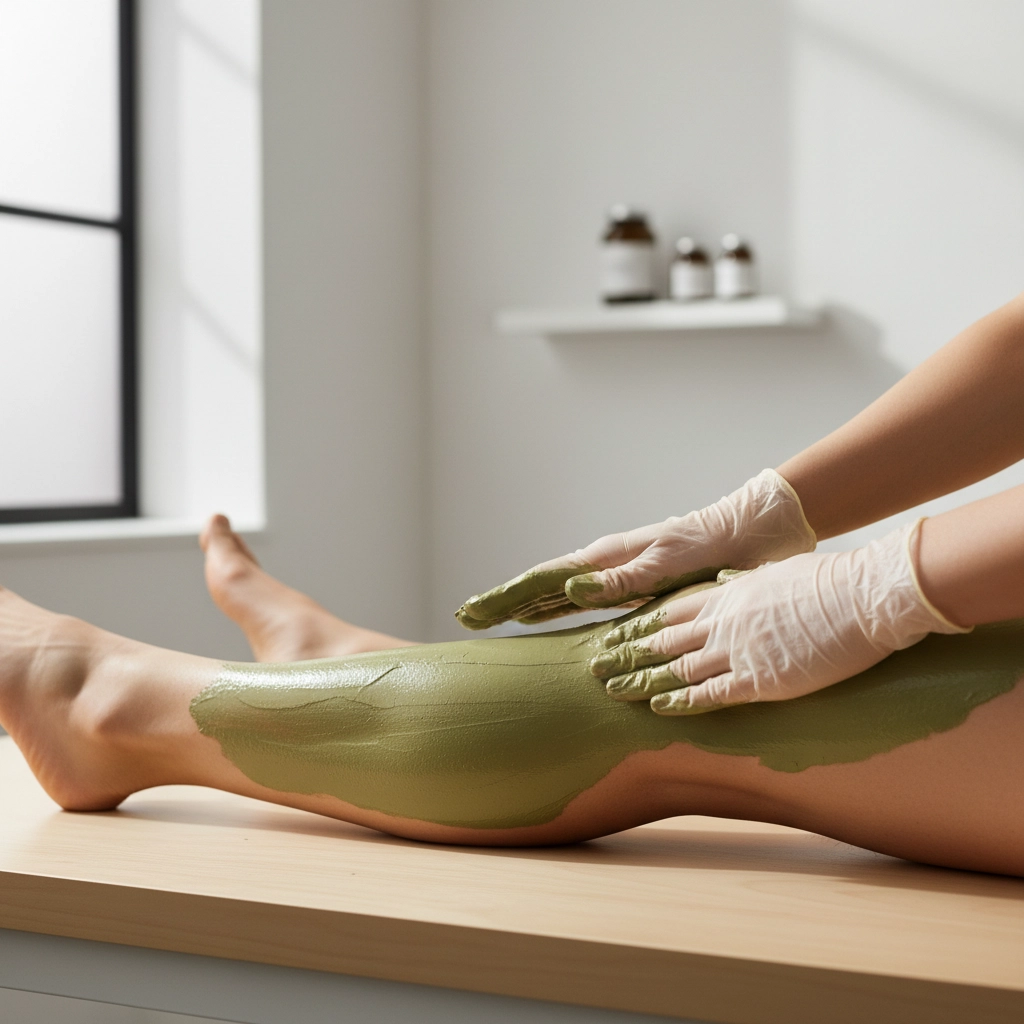
Understanding fascia anatomy is just the first step: optimizing fascia health and recovery is where champions separate themselves from the competition. This is exactly where CLAYER's revolutionary French green clay technology becomes your secret weapon.
Unlike conventional recovery methods that only address surface-level symptoms, CLAYER works at the cellular level to restore fascia health through:
Deep Tissue Penetration: CLAYER's unique mineral composition penetrates deeply into fascial layers, delivering essential electrolytes directly where healing is needed most.
Natural Anti-Inflammatory Action: The clay's proven ability to reduce inflammation helps restore the healthy, wavy configuration of fascia tissues.
Enhanced Circulation: By improving blood flow to fascial tissues, CLAYER accelerates the delivery of nutrients and removal of metabolic waste products.
Toxin Absorption: CLAYER's negative ionic charge naturally draws out inflammatory toxins that accumulate in damaged fascia.
Professional athletes and sports doctors consistently choose CLAYER because it addresses fascia health comprehensively: not just masking symptoms like conventional treatments.
The CLAYER Advantage: Science-Backed Fascia Recovery
What sets CLAYER apart in fascia recovery? Proven results that you can feel within 15 minutes of application.
Our clinical studies demonstrate that CLAYER's French green clay formulation:
- Reduces inflammation by up to 40% in damaged fascial tissues
- Accelerates tissue healing through enhanced cellular regeneration
- Improves tissue hydration by supporting hyaluronan production
- Restores normal fascial gliding between tissue layers
Sports doctors recommend CLAYER specifically because it works with your body's natural healing processes rather than simply masking pain like conventional options.
Practical Application: Maximizing Your Fascia Health
To optimize your fascia health and athletic performance:
1. Recognize the Signs: Stiffness, reduced range of motion, and localized pain often indicate fascial restrictions that need immediate attention.
2. Act Quickly: Early intervention with CLAYER's targeted recovery products prevents minor fascial issues from becoming major performance limitations.
3. Maintain Consistency: Regular fascia care isn't optional for serious athletes: it's essential for sustained peak performance.
4. Choose Quality: Not all recovery methods are created equal. CLAYER's 100% natural, heavy-metal-free formulation ensures safe, effective results without harmful side effects.
Your Path to Superior Fascia Health
Understanding the anatomy of fascia layers empowers you to make informed decisions about your recovery and performance optimization. Your fascia system is too important to leave to chance or inferior products.
The choice is clear: You can continue struggling with conventional recovery methods that only address symptoms, or you can harness the proven power of CLAYER's revolutionary approach to fascia healing.
Your fascia health directly impacts every aspect of your athletic performance. Don't settle for anything less than the best: your body deserves the proven effectiveness of CLAYER's science-backed recovery solutions.
Ready to experience the difference that superior fascia care can make? Discover CLAYER's complete recovery system and feel the difference that professional athletes and sports doctors trust for optimal performance and recovery.