Anecdotes and Evidence: The Story of Clay and Staph Infections
The relationship between anecdotes and evidence in natural healing creates one of the most fascinating stories in modern wellness. When it comes to clay and staph infections, we're witnessing a remarkable convergence where ancient wisdom meets contemporary research, and personal testimonials align with laboratory findings from across the globe.
What happens when centuries-old remedies suddenly gain scientific attention? The story of healing clay and staph infections offers a compelling case study that bridges the gap between traditional knowledge and modern research methodologies.
Global Testimonials: Stories from Around the World
From remote villages in France to bustling cities in Australia, people have been sharing remarkable accounts of clay's effectiveness against various types of staph infections. These anecdotes and evidence form a growing collection of personal experiences that span cultures and continents.
Traditional practitioners in rural France have maintained detailed records of clay applications for skin infections, passing down specific preparation methods through generations. Indigenous communities in North America have documented similar practices, with tribal healers noting consistent patterns in healing times and outcomes.
The most striking aspect of these global testimonials? The consistency in reported timeframes. Whether from European spa towns or Australian outback communities, people consistently describe seeing improvements within the first few days of clay application.
A researcher's mother developed a thumb infection with methicillin-resistant Staphylococcus aureus (MRSA), leading to one of the most compelling personal accounts that later inspired formal scientific investigation. This singular anecdote became the catalyst for extensive laboratory research.
European Studies: When Science Meets Tradition
European researchers have been particularly active in investigating these traditional claims. French green clays, historically used in mineral baths throughout France, became the subject of rigorous scientific testing when researchers decided to examine what traditional practitioners had long maintained about their antimicrobial properties.
Studies conducted on French healing clays demonstrated significant antibacterial effects against Mycobacterium ulcerans, the pathogen responsible for Buruli ulcers. These controlled laboratory investigations provided the first reproducible, measurable results that validated centuries of traditional use.
The European research community took a unique approach - instead of dismissing anecdotal reports, they used them as a roadmap for scientific investigation. This methodology led to breakthrough discoveries about clay's mineral composition and its interaction with bacterial cells.
Research institutions across Europe began documenting that certain clay formulations showed remarkable effectiveness against multiple staph strains, including treatment-resistant varieties. The scientific community noted that these findings aligned surprisingly well with traditional testimonials that had been circulating for generations.
The 3-4 Day Timeline: Anecdotal Patterns
One of the most consistent elements in global testimonials involves timing. People worldwide report similar timeframes - typically seeing initial improvements within 24-48 hours, with significant changes occurring within 3-4 days of consistent clay application.
These anecdotal timeframes appear across diverse populations:
- European spa visitors documenting their experiences with mineral clay treatments
- Rural communities maintaining traditional healing practices
- Modern wellness practitioners incorporating ancient methods into contemporary care
- Athletes and active individuals seeking natural recovery solutions
What makes these testimonials particularly interesting is their consistency despite varying geographic locations, clay sources, and cultural contexts. The 3-4 day pattern appears repeatedly in accounts from different continents and communities.
It's important to note that these are personal experiences and anecdotal reports - not medical claims or guaranteed outcomes. Each individual's experience may vary based on numerous factors including overall health, infection severity, and specific clay composition.
Scientific Mechanisms: Understanding the "Why"
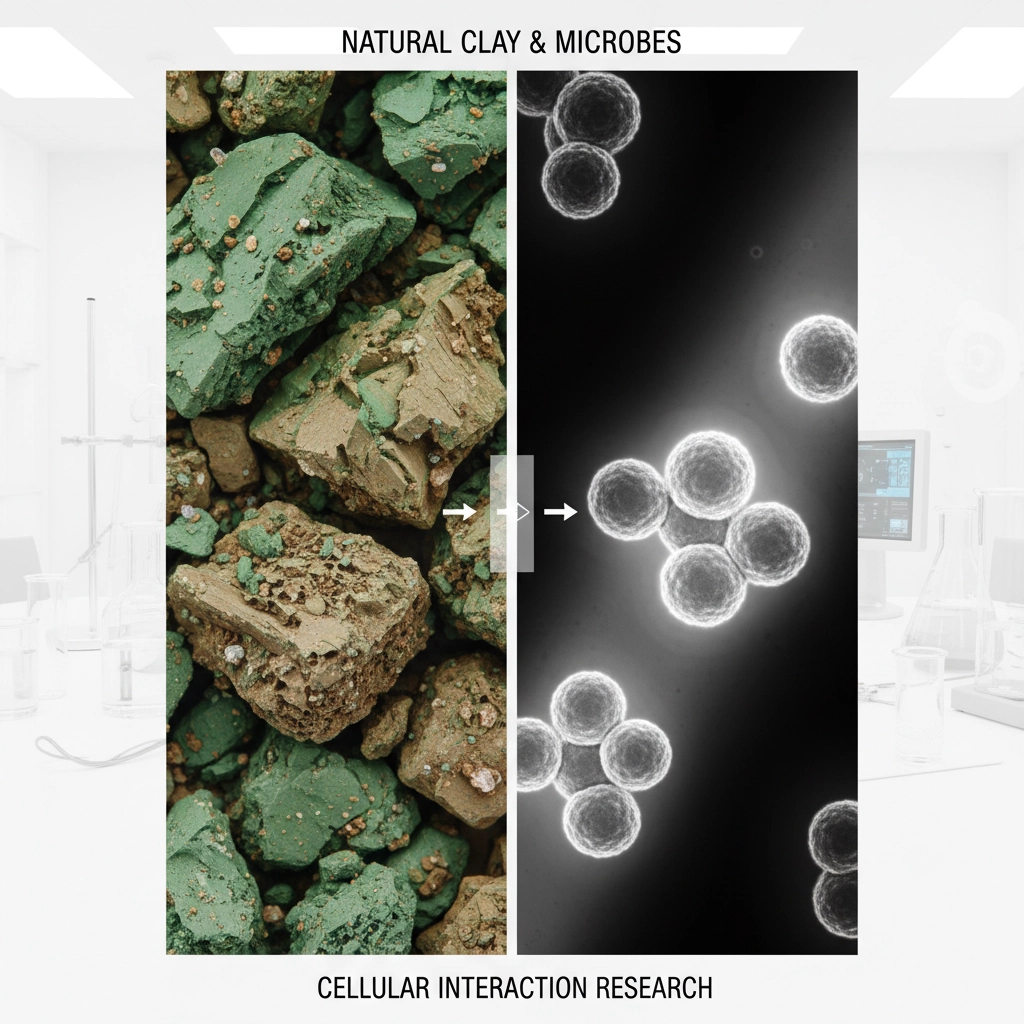
Laboratory research has begun illuminating the mechanisms behind these widespread anecdotal reports. Scientists discovered that clay's antimicrobial power derives from its unique mineral composition - when hydrated and applied topically, natural clay minerals demonstrate the ability to affect human pathogens, including antibiotic-resistant strains.
Advanced imaging revealed fascinating cellular interactions: aluminum components bind to bacterial membranes while iron enters bacterial cells. This ionic exchange and cellular penetration provides a scientific explanation for the effectiveness described in traditional accounts.
Oregon blue clay showed particularly significant results in controlled laboratory tests, proving effective against Escherichia coli and Staphylococcus aureus, including treatment-resistant strains such as carbapenem-resistant Enterobacteriaceae and MRSA.
Animal studies provided additional validation. When researchers applied hydrated clay poultices twice daily to MRSA-infected wounds in mice over 7 days, they observed significant antibacterial efficacy comparable to triple antibiotic ointments.
Modern Research and Traditional Wisdom
The convergence of anecdotes and evidence becomes most apparent when examining how personal testimonials guided scientific research directions. Researchers openly acknowledge that compelling personal reports motivated their investigations into clay's antimicrobial properties.
Current research has expanded to include synthetic clay mixtures that successfully eliminate panels of dangerous bacteria, including the notorious ESKAPE pathogens (Enterococcus faecium, Staphylococcus aureus, Klebsiella pneumoniae, Acinetobacter baumannii, Pseudomonas aeruginosa, and Enterobacter species).
However, scientists emphasize important limitations. Not all clays demonstrate beneficial properties - some may actually promote bacterial growth. The research environment differs significantly from real-world applications, and results depend heavily on specific clay compositions and concentrations.
The Clayer Connection: Quality and Consistency
While we cannot make medical claims about Clayer's healing clay products, we recognize the importance of quality and consistency in any clay-based wellness routine. Traditional healing practices emphasize the significance of clay source, preparation methods, and mineral content - factors that modern wellness enthusiasts should consider.
Professional athletes and wellness practitioners increasingly turn to high-quality clay products as part of their natural recovery routines. The emphasis on purity, sourcing, and traditional preparation methods reflects the growing understanding that not all clays are created equal.
Our healing clay studies provide detailed information about mineral composition and traditional applications, allowing individuals to make informed decisions about incorporating clay into their wellness practices.
A Balanced Perspective: Tradition Meets Science
The story of anecdotes and evidence surrounding clay and staph infections illustrates how traditional knowledge can inspire scientific investigation. Rather than replacing established medical care, clay represents "one solution of many" and another tool in the natural wellness toolkit.
The transition from anecdotal reports to validated research required scientists to move beyond compelling personal stories, conducting controlled experiments that revealed both the genuine properties of certain clays and the critical importance of identifying which specific formulations actually demonstrate beneficial effects.
This balanced approach - respecting traditional wisdom while demanding scientific rigor - offers a model for evaluating natural wellness solutions. It acknowledges that centuries of use provide valuable insights while recognizing the need for controlled studies to understand mechanisms and limitations.
The conversation between anecdotes and evidence continues as researchers work to identify and reproduce the specific properties that make certain clays effective. This ongoing investigation promises to bridge the gap between traditional healing practices and modern wellness science, providing individuals with better information for making informed choices about their natural health routines.