Military Field Kit: Why Healing Clay Beats Biofreeze
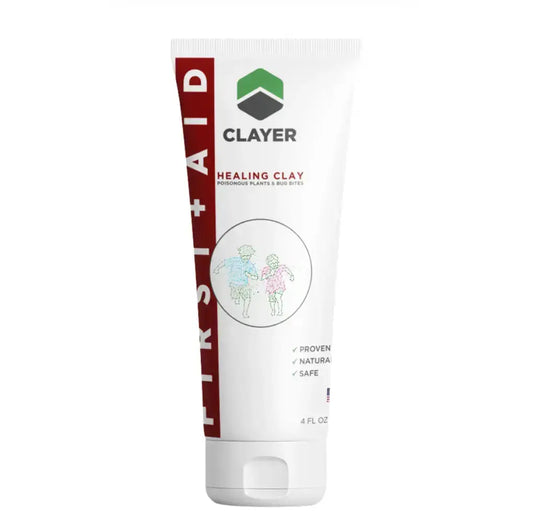
🌿 Clayer First-Aid Adventure Care — One product, six applications. Certified non-toxic natural first aid for military and tactical recovery. Pack it now →
When you're deployed in hostile territory or operating in extreme conditions, every ounce in your pack matters — and every product must earn its place. French green clay has become increasingly standard in elite military medical kits worldwide for a simple reason: one compact tube handles six different field medicine scenarios that previously required multiple single-purpose products.
The Pack Weight Problem
A military operator's pack is already a precisely calibrated system where every ounce represents a tradeoff. Medical supplies are essential but often shortchanged when weight becomes critical. The standard approach — separate products for pain relief, wound care, inflammation, insect bites, and skin care — means carrying 5–8 items where 1 could handle all scenarios.
French green clay's multi-functionality addresses this directly. Clayer's Adventure Care in a single 4oz tube handles scenarios that would otherwise require a dedicated wound care product, an anti-inflammatory, a bite/sting treatment, a splinter remover, a minor burn treatment, and a skin cleanser.
Why Biofreeze Fails in the Field
Biofreeze is a staple of sports medicine clinics — but it was designed for controlled clinical environments, not field conditions. Its limitations become critical in military contexts:
- Does only one thing: Temporary counterirritant pain relief through menthol. When you need to treat a wound, you need a different product entirely.
- Requires intact skin: Biofreeze on open wounds causes intense burning and additional tissue damage
- Masks pain signals: In a combat environment, pain is a critical informational signal. Masking it pharmacologically with menthol counterirritants can cause operators to continue using an injured limb and worsen injury
- Temperature sensitive: Efficacy degrades in extreme heat; gel formulation is less field-stable than clay
- Short duration: 2–3 hours maximum; requires frequent reapplication from limited supply
- No healing effect: Zero benefit to wound healing, inflammation reduction, or tissue repair
French Green Clay: 6 Military Field Applications
1. Wound Management
Applied to cleaned minor lacerations and abrasions, clay's antimicrobial properties (documented in peer-reviewed research to kill MRSA) protect wounds from infection in non-sterile field environments. Clay creates a mineral-rich poultice that draws contaminants out while supporting healing.
2. Muscle and Joint Inflammation
After load-bearing operations, clay applied to inflamed knees, ankles, and shoulders draws inflammatory compounds out of tissue. Unlike Biofreeze, this provides genuine inflammation reduction — not just temporary pain numbing. Operators return to full capacity faster.
3. Insect Bites and Venomous Stings
In tropical, jungle, and desert environments, insect bites and stings are routine. Clay applied immediately to bee stings, scorpion stings, and venomous insect bites draws venom toward the skin surface and dramatically reduces swelling and reaction severity.
4. Splinter and Debris Removal
Applied over small foreign bodies embedded in skin, clay's ionic draw can facilitate migration of wood splinters, metal fragments, and plant debris toward the surface — reducing the invasive extraction required.
5. Minor Burn Treatment
For friction burns, flash burns, and thermal contact injuries, clay provides immediate cooling, draws inflammatory compounds from the burn area, and creates a protective mineral environment that supports healing.
6. Skin Detox in Contaminated Environments
After exposure to chemical contaminants, industrial pollutants, or environmental hazards, clay applied to exposed skin areas adsorbs surface contamination before it can fully penetrate. This is particularly relevant for operations in industrial or chemically compromised environments.
Head-to-Head: Clay vs Biofreeze for Military Use
| Criterion | Clayer (French Clay) | Biofreeze |
|---|---|---|
| Applications | 6 (wounds, inflammation, bites, burns, splinters, detox) | 1 (pain numbing) |
| Works on open wounds | ✅ Yes | ❌ No (causes burning) |
| Heals tissue | ✅ Yes (ionic extraction + minerals) | ❌ No |
| Duration of effect | Ongoing healing | 2–3 hours |
| Non-toxic | ✅ Certified | Synthetic menthol formula |
| Field stability | ✅ Excellent (wide temp range) | ⚠️ Degrades in extreme heat |
Performance in Extreme Conditions
Clay's mineral-based mechanism isn't temperature-dependent — it works at -10°C and +45°C. The ionic adsorption mechanism is physical, not chemical, making it far more stable across the environmental extremes that military operators encounter compared to menthol-based products.
The Optimal Military Medical Kit with Clay
Core kit (compact configuration):
- Clayer Adventure Care clay (4oz tube)
- Sterile saline (250ml for wound irrigation)
- Non-adherent wound dressings (5–10 pads)
- Medical tape and elastic bandage
- Oral antihistamine (for severe bite reactions)
- Tourniquets and hemostatic gauze (for serious trauma)
The clay replaces: standard antiseptic cream, anti-inflammatory topical, insect bite treatment, and minor burn treatment — reducing total kit weight and volume significantly.
One tube. Six field applications. Pack smarter.
Shop Clayer Adventure Care →FAQ
Q: Is healing clay approved for military use?
A: Clayer is WADA-compliant and contains no controlled substances or banned compounds. It's appropriate for military use and is increasingly standard in special operations medical kits. No regulatory approval is required for natural mineral clay as a first aid supplement.
Q: How does clay compare to Motrin for field pain management?
A: Motrin (ibuprofen) provides systemic anti-inflammatory and analgesic effect — useful for moderate-to-severe pain. Clay provides localized topical anti-inflammatory action without systemic drug effects. They work differently and can be used together. Clay is the better choice for localized joint/muscle inflammation; ibuprofen for systemic or severe pain.
Q: Does clay work in wet/humid environments?
A: Clay is effective even when applied in humid conditions. In very wet environments, it may rinse off more quickly — covering with a bandage or damp cloth extends application time. The ionic mechanism remains active in humid conditions.