Pain Relief in Jiu Jitsu: Natural Recovery Strategies
Brazilian Jiu-Jitsu demands everything from your body. The intense grappling, submissions, and constant pressure create a perfect storm of muscle soreness, joint pain, and general fatigue that can sideline even the most dedicated practitioners. Pain relief in jiu jitsu isn't just about getting back on the mats faster: it's about sustaining your passion for the art while protecting your body for years to come.
How would you feel if you could recover faster from those brutal training sessions and wake up ready to roll again? The secret lies in natural recovery strategies that work with your body's healing mechanisms, not against them.
Traditional pain relief methods often mask symptoms without addressing the root cause, but natural approaches empower your body to heal itself more effectively. From sports doctors to seasoned grapplers, the consensus is clear: natural recovery isn't just an alternative: it's often the superior choice.
Understanding Jiu Jitsu Pain Patterns
Pain relief in jiu jitsu requires understanding the unique stresses this martial art places on your body. Unlike other sports that focus on linear movements, BJJ involves:
- Intense gripping that strains forearms and fingers
- Constant twisting motions that stress the spine and core
- Pressure from opponents that compresses joints and muscles
- Explosive movements during transitions and escapes
This combination creates inflammation patterns that require targeted, natural intervention. Your body's inflammatory response is actually trying to help: it's bringing healing resources to damaged tissues. The key is supporting this process, not suppressing it entirely.
Cold Water Immersion: The Natural Pain Killer
Cold-water immersion stands as one of the most powerful natural recovery tools for BJJ athletes. This technique decreases markers of muscle damage, reduces the perception of muscle pain, and accelerates recovery of both upper and lower limbs.
Here's how to implement cold therapy effectively:
- Take whole-body ice baths for 10-15 minutes at 50-59°F (10-15°C)
- Focus on specific muscle groups with ice packs for localized relief
- Time it right: Wait 2-3 hours after training before cold immersion to avoid blunting the beneficial inflammatory response
However, timing matters significantly. Your inflammatory response immediately after training is actually your body's natural healing process. Cold therapy too soon can interfere with this crucial recovery phase.
The RICE Protocol: Your Immediate Response Plan
For acute injuries and severe pain, the RICE protocol provides your foundational approach:
Rest: Give injured areas time to heal by avoiding movements that stress them further. This doesn't mean complete inactivity: gentle movement often aids recovery.
Ice: Apply for 15-20 minutes every few hours during the first 48 hours to reduce swelling and numb pain. Use a barrier between ice and skin to prevent tissue damage.
Compression: Elastic bandaging should be firm enough to limit movement but not so tight it prevents blood flow. You should still feel your pulse below the wrap.
Elevation: Raise injured areas above heart level when possible to reduce swelling and promote drainage.
Heat Therapy: Unlocking Stiffness and Pain
Once inflammation decreases (usually after 48-72 hours), heat becomes your ally for pain relief in jiu jitsu recovery. Heat therapy works by:
- Increasing blood flow to tight muscles
- Reducing joint stiffness
- Relaxing muscle spasms
- Preparing tissues for gentle movement
Effective heat therapy methods:
- Sauna sessions before and after training
- Hot tubs for full-body relaxation
- Moist heat packs for targeted relief
- Warm baths with Epsom salts
The key is consistency: regular heat therapy sessions prevent stiffness from building up between training sessions.
Natural Anti-Inflammatory Powerhouses
Nature provides powerful allies for managing BJJ-related pain and inflammation. These natural solutions work synergistically with your body's healing processes:
Turmeric and Curcumin: These golden compounds combat inflammation at the cellular level, helping alleviate joint pain and muscle stiffness. Look for supplements with black pepper extract (piperine) for enhanced absorption.
Tart Cherry Juice: Rich in anthocyanins, tart cherry juice fights oxidative stress and inflammation from intense exercise. Many athletes report improved sleep quality as an added benefit.
Ginger: This warming root reduces inflammation and can help with exercise-induced muscle soreness. Fresh ginger tea or standardized extracts both provide benefits.
Glucosamine and Chondroitin: Particularly valuable for grapplers over 30, these compounds support joint health and may reduce cartilage breakdown from repetitive stress.
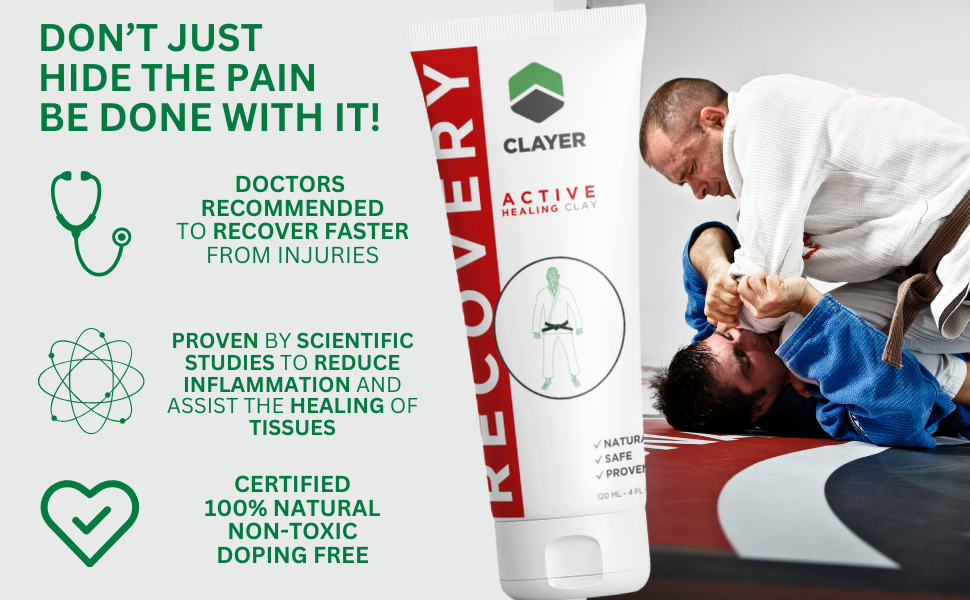
For topical relief, consider French green clay applications. This natural healing clay draws out toxins while providing minerals that support tissue repair. CLAYER's active recovery solutions offer convenient, pre-mixed formulations that eliminate the guesswork of traditional clay preparation.
The Hydration and Nutrition Foundation
Pain relief in jiu jitsu starts with proper hydration and nutrition. Dehydration intensifies muscle pain and slows recovery, while poor nutrition deprives your body of healing resources.
Hydration strategies:
- Drink 16-20 ounces of water 2-3 hours before training
- Sip 6-8 ounces every 15-20 minutes during training
- Replace fluids lost through sweat post-training (weigh yourself before and after)
- Add electrolytes for sessions lasting over 90 minutes
Recovery nutrition essentials:
- Lean protein within 30 minutes post-training for muscle repair
- Complex carbohydrates to replenish glycogen stores
- Anti-inflammatory foods like fatty fish, leafy greens, and berries
- Adequate calories to support recovery demands

Mobility and Stretching: Your Pain Prevention System
Stretching and mobility work serve dual purposes: immediate pain relief and long-term injury prevention. BJJ creates specific movement patterns and muscle imbalances that require targeted attention.
Pre-training preparation:
- Dynamic warm-up focusing on movements you'll use
- Joint mobility exercises for hips, shoulders, and spine
- Light stretching of commonly tight areas
Post-training recovery:
- Static stretching for major muscle groups
- Focus on hip flexors, hamstrings, and shoulders
- Gentle spinal rotation and extension
- Hold stretches for 30-60 seconds each
Daily maintenance:
- Morning mobility routine to address overnight stiffness
- Desk break stretches if you have a sedentary job
- Evening relaxation stretches before bed
Regular mobility work prevents the accumulation of tension that leads to chronic pain patterns.
Strategic Rest and Mental Engagement
Sometimes your body needs complete rest to enable recovery and allow minor injuries to heal. Pushing through pain isn't always the answer: strategic rest prevents minor issues from becoming major problems.
Signs you need rest:
- Persistent joint pain that doesn't improve overnight
- Decreased performance despite adequate effort
- Mood changes or irritability
- Increased injury susceptibility
Staying connected during rest:
- Attend classes as an observer to study techniques
- Work on visualization and mental drilling
- Focus on mobility and flexibility work
- Use the time for strategic planning and goal setting
This mental engagement keeps your skills sharp while your body heals, ensuring you return stronger and more motivated.
The Clay Revolution: Ancient Wisdom Meets Modern Recovery
French green clay represents one of nature's most effective tools for pain relief in jiu jitsu. This ancient remedy works through multiple mechanisms:
- Detoxification: Draws out metabolic waste products that contribute to soreness
- Mineral delivery: Provides essential minerals for tissue repair
- Anti-inflammatory action: Reduces localized inflammation and swelling
- Improved circulation: Promotes blood flow to treated areas
Unlike synthetic pain relievers that can interfere with healing, clay supports your body's natural recovery processes. Studies on clay's healing properties demonstrate its safety and efficacy for athletic recovery.
Traditional clay preparation requires mixing powders with liquids, creating inconsistent results and messy application. Modern formulations like those in CLAYER's first-aid collection eliminate these hassles while maintaining therapeutic potency.

Creating Your Personal Recovery Protocol
Effective pain relief in jiu jitsu requires a personalized approach that considers your training frequency, injury history, and lifestyle factors. Here's how to build your protocol:
Immediate post-training (0-2 hours):
- Light movement and stretching
- Hydration and nutrition replacement
- Assessment of any new pain or discomfort
Later recovery phase (2-24 hours):
- Cold therapy for acute inflammation
- Natural anti-inflammatory supplements
- Quality sleep in a cool, dark environment
Ongoing maintenance:
- Daily mobility work
- Heat therapy for chronic stiffness
- Stress management techniques
- Regular bodywork or massage
Weekly assessment:
- Evaluate pain patterns and recovery quality
- Adjust training intensity based on recovery status
- Plan rest days strategically around life demands
Important Cautions and Considerations
Avoid taking NSAIDs (like ibuprofen) immediately after training. These medications reduce the inflammatory response that actually assists in recovery and adaptation. This natural response to training stimulus is your body's way of becoming stronger and more resilient.
When to seek professional help:
- Pain that worsens over 48-72 hours
- Numbness or tingling in extremities
- Joint instability or giving way
- Pain that prevents normal daily activities
Remember, pain relief in jiu jitsu isn't just about getting back to training: it's about maintaining your long-term health and enjoyment of the art. Natural approaches work with your body's wisdom rather than against it.
Your body is designed to heal and adapt. By supporting these natural processes with proven strategies like proper hydration, targeted nutrition, strategic rest, and natural healing aids, you're not just managing pain: you're optimizing your potential as a martial artist.
The journey of jiu jitsu is measured in decades, not months. Invest in natural recovery strategies today, and your body will thank you for years to come. You are built to overcome challenges: including the physical demands of this incredible martial art.