Post-Surgery Pain Relief: The Healing Clay Method
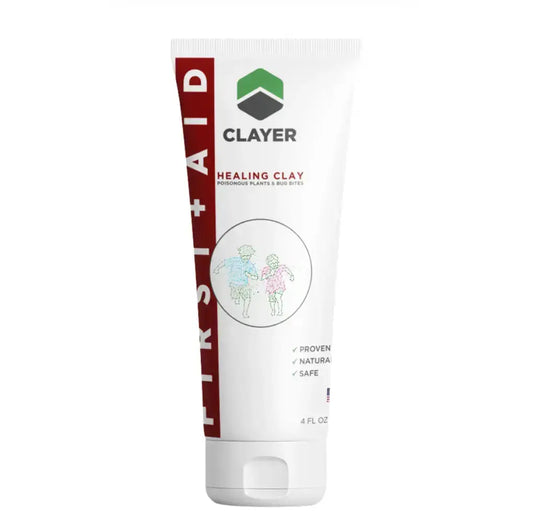
🌿 Clayer First-Aid Healing Clay — Non-toxic, non-stinging, doctor-recommended for post-surgical recovery. Shop now →
Post-surgery pain doesn't have to control your recovery timeline. The healing clay method — standard in French hospitals for decades — offers a proven, non-toxic approach to managing post-operative pain and inflammation that complements and in many cases outperforms conventional icing protocols.
The Mechanism: Why Clay Reduces Post-Surgical Pain
Post-surgical pain has two primary drivers: the mechanical disruption of the surgery itself, and the inflammatory response that surrounds the surgical site. While nerve damage pain from the procedure itself requires time to heal, the inflammatory component — which accounts for a significant portion of post-operative discomfort — can be actively addressed.
French green clay reduces post-surgical pain by directly targeting inflammation:
- Ionic adsorption of inflammatory cytokines: Pro-inflammatory compounds (IL-6, TNF-α, prostaglandins) carry positive ionic charges. Clay's negative charge draws these compounds toward the skin surface and binds them — physically removing them from the inflamed tissue.
- Edema reduction: Post-surgical swelling exerts pressure on nerve endings, amplifying pain signals. Clay reduces edema by drawing fluid-mobilizing inflammatory compounds out of the area.
- Mineral delivery: Magnesium (a natural muscle relaxant) and calcium (critical for nerve function normalization) are delivered transdermally, supporting tissue settling.
The result is genuine pain reduction — not numbing, not masking, but addressing the biological drivers of post-surgical discomfort.
Clay vs Ice for Post-Surgical Pain Relief
Ice works by vasoconstriction — narrowing blood vessels to slow the delivery of inflammatory cells to the area. This reduces swelling temporarily but also restricts the delivery of oxygen and repair cells. When ice is removed, a rebound effect is common as circulation normalizes.
Clay works by extraction — removing inflammatory compounds that are already present in the tissue. Circulation is maintained throughout. No rebound effect. The inflammatory environment improves progressively rather than fluctuating with application cycles.
For longer-term post-operative pain management (days 3–14+), clay's progressive anti-inflammatory mechanism consistently outperforms ice, which loses efficacy as the acute phase passes.
The Complete Post-Surgery Healing Clay Protocol
Phase 1 — Acute (Days 1–5):
- Wait for surgical clearance from your medical team before any clay application near the incision site
- Apply Clayer clay generously to inflamed tissue surrounding (not on) the incision, 2–3 times daily
- Leave 20–30 minutes per application; cover with a damp cloth to slow drying
- Rinse thoroughly; reapply after the skin has normalized
Phase 2 — Subacute (Days 6–21):
- Reduce to 1–2 applications daily as inflammation decreases
- Apply before physical therapy sessions — clay application before PT reduces session pain and improves range-of-motion outcomes
- Continue until swelling and redness are fully resolved
Phase 3 — Maintenance (Weeks 3–8):
- Once-daily application to healing tissue supports mineral delivery for ongoing collagen synthesis
- Particularly useful for joint replacement recovery where mineralization of bone-implant interface continues
Safety: Why Certified Clay Is Critical Post-Surgery
Post-surgical tissue is compromised — it has less immune competence and higher absorption than intact skin. This makes product safety more critical, not less. Key safety requirements:
- ✅ Certified heavy-metal-free: Lead and arsenic contamination in uncertified clay poses elevated risk when applied to compromised surgical tissue
- ✅ No alcohol, no synthetic antimicrobials: These sting and can irritate healing surgical sites
- ✅ No fragrance: Post-surgical sensitivity makes fragrance a common irritation trigger
- ✅ Doctor-compatible: A product your surgical team can verify and approve
Clayer's First-Aid Healing Clay meets all these criteria with batch-tested heavy-metal-free certification and a completely disclosed, pharmaceutical-quality ingredient list.
Recovery Timeline Expectations
With consistent clay application twice daily:
- Days 1–3: Swelling reduction begins to outpace accumulation; pain levels should be decreasing steadily
- Days 4–7: Significant inflammation reduction; most patients report notably improved comfort vs. ice-only recovery at this stage
- Week 2: Swelling largely resolved; range of motion improving more rapidly than anticipated
- Week 3–4: Tissue in active repair phase; clay's mineral delivery supports this process
Note: Recovery timelines vary significantly by procedure complexity, patient age, and overall health status. These are general guidance only — follow your surgical team's specific protocol.
Combining Clay with Other Recovery Methods
Healing clay works best as part of a comprehensive post-surgical recovery approach:
- Physical therapy: Apply clay before PT sessions to reduce pain and stiffness heading into rehabilitation exercise
- Compression: Clay poultice can be applied under compression wraps (clay, then damp cloth, then compression bandage)
- Elevation: Continue elevation protocol alongside clay application — these are complementary
- Nutrition: Protein, vitamin C, and zinc are critical for surgical wound healing — ensure adequate intake throughout recovery
Pain. Swelling. Slow recovery. There's a better way.
Shop Clayer First-Aid Clay →FAQ
Q: Can I use healing clay on stitches?
A: Apply clay around stitches, not directly on them. Once sutures are removed and the incision is fully closed (typically 7–14 days post-op depending on procedure), you can apply more broadly. Always follow your surgeon's wound care instructions.
Q: What if clay is too painful to apply post-surgery?
A: Clayer should not cause pain — if skin is hypersensitive, start with application further from the incision and work progressively closer as healing progresses. If any stinging occurs (which would be unusual for Clayer's non-toxic formula), discontinue and consult your medical team.
Q: How often should I apply clay post-surgery?
A: 2–3 times daily during the acute phase (days 1–14), reducing to 1x daily as inflammation resolves. Each application is 20–30 minutes. See the full protocol above.