What NOT to Mix with Bentonite Clay: 7 Dangerous Combinations
Get the Healing Clay Powder with Bentonite, heavy metal free ->
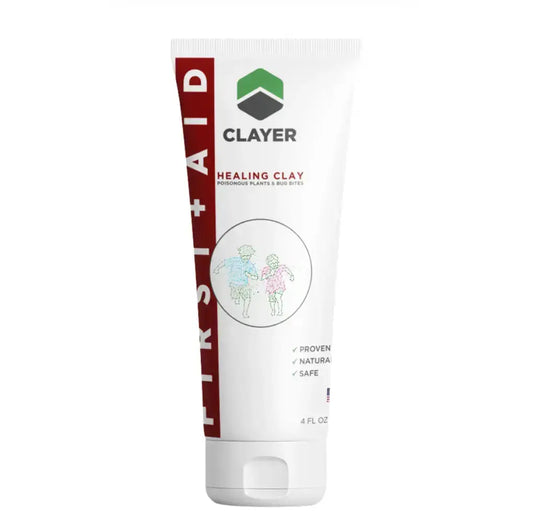
Get the Healing Clay Ready to use with Bentonite, heavy metal free ->
Knowing what NOT to mix with bentonite clay is as important as knowing how to use it. The wrong combinations can neutralize the clay's therapeutic properties, cause skin damage, or introduce contamination. Whether you're using clay for acne treatment, sports recovery, or detox, these mistakes can undermine your results — or worse, create new problems.
1. Never Mix Bentonite Clay with Metal
This is the most critical rule in bentonite clay use — and the most commonly violated. Bentonite clay carries a powerful negative ionic charge that is its therapeutic mechanism. When clay comes into contact with metal containers or utensils, the metal's ions interact with the clay's charge, partially neutralizing its adsorptive capacity.
The result: your clay treatment delivers a fraction of the detox and adsorption benefit you expect. The ionic mechanism that draws toxins, bacteria, and inflammatory compounds out of skin is compromised before you've even applied it.
What this means in practice:
- Never mix clay in stainless steel, aluminum, copper, or iron bowls
- Never use metal spoons, whisks, or spatulas to mix clay
- Never store mixed clay in metal containers
- Avoid metal sinks when rinsing — use a plastic basin if needed
Use instead: Glass, ceramic, wood, or food-grade plastic containers and utensils. These are non-reactive and preserve the clay's ionic properties.
2. Undiluted Apple Cider Vinegar
Apple cider vinegar (ACV) has become popular for mixing with bentonite clay — driven largely by Aztec Secret's instructions. While diluted ACV can be used for certain applications, undiluted ACV mixed with clay is a significant skin safety risk.
ACV has a pH of approximately 3.1 — strongly acidic. Applied to skin via clay, which occludes and extends contact time, undiluted ACV can cause:
- Chemical burns — particularly in the underarm area and on sensitive facial skin
- Post-inflammatory hyperpigmentation on darker skin tones
- Disruption of the skin's acid mantle
- Increased sun sensitivity
The additional problem: When ACV meets clay's alkaline minerals, an acid-base reaction occurs (the fizzing you observe), which consumes some of the clay's mineral content — reducing the mineral delivery benefit.
If you use ACV with clay: Always dilute 1:1 with water minimum. Never use undiluted. For sensitive skin, skip ACV entirely — plain filtered water produces comparable results without the risk.
Get the Healing Clay Powder with Bentonite, heavy metal free ->
Get the Healing Clay Ready to use with Bentonite, heavy metal free ->
3. Hot or Boiling Water
Mixing bentonite clay with very hot or boiling water creates two problems:
Safety: Hot clay applied to skin causes burns. Clay is an insulator — it retains heat and creates prolonged thermal contact. Even clay that feels tolerable in the bowl can burn skin during application.
Efficacy: High temperatures can affect the clay's crystalline structure and alter its mineral exchange capacity. The ionic mechanism that makes clay therapeutic depends on the intact physical structure of the clay mineral. While clay is generally heat-stable, extreme temperatures are unnecessary and potentially counterproductive.
Use instead: Room temperature filtered water, or water slightly below body temperature. This activates the clay effectively without creating burn risk or potentially affecting efficacy.
4. Random Clay-on-Clay Combinations Without Understanding Ratios
Mixing multiple clay types without understanding their mineral profiles and pH interactions can produce unexpected results. For example:
- Mixing high-swelling sodium bentonite with kaolin can create an overly thick paste that's difficult to apply evenly and may trap air pockets
- Combining clays of different particle sizes affects texture and absorption rates unpredictably
- Mixing clay with different pH profiles can shift the final formula in ways that affect efficacy or skin compatibility
Professional clay formulations (like Clayer's triple-clay blend) are developed with precise mineral ratios tested for optimal efficacy and skin compatibility. DIY clay combinations should be approached with proper research, not casual experimentation.
5. Bleach, Hydrogen Peroxide, and Chemical Disinfectants
Some users attempt to "sterilize" clay with bleach or hydrogen peroxide. This is completely counterproductive:
- Bleach (sodium hypochlorite) reacts with clay minerals, altering their chemical structure and eliminating therapeutic properties
- Hydrogen peroxide oxidizes clay mineral surfaces, reducing adsorptive capacity
- Both create new chemical compounds in the mixture that can be irritating or harmful when applied to skin
Certified healing clay like Clayer is already antimicrobial by its nature — research has documented its ability to kill MRSA. No sterilization is needed or beneficial.
6. Combining with Oral Medications (Internal Use Context)
While this guide focuses primarily on topical use, it's critical to note: if any internal clay use is considered (which this guide does not recommend without medical supervision), clay should never be taken within 2 hours of medications. Clay's adsorptive properties bind medications in the digestive tract, reducing their bioavailability — this can be dangerous for time-sensitive medications like thyroid hormone, anticoagulants, or antibiotics.
For external use only: this concern doesn't apply to topical clay application, as the adsorption mechanism works on the skin surface, not internally.
What TO Mix vs What NOT TO Mix
| Ingredient | Safe to Mix? | Notes |
|---|---|---|
| Filtered water (room temp) | ✅ Yes | Best option for most uses |
| Diluted ACV (1:1 with water) | ⚠️ Caution | OK for oily skin; avoid sensitive skin |
| Undiluted ACV | ❌ No | Chemical burn risk |
| Metal utensils/bowls | ❌ No | Neutralizes ionic charge |
| Hot/boiling water | ❌ No | Burn risk + possible structure damage |
| Aloe vera gel | ✅ Yes | Soothing, compatible |
| Diluted essential oils | ⚠️ Caution | Pre-dilute in carrier oil first |
| Neat essential oils | ❌ No | Sensitization and burn risk |
| Soap/detergent | ❌ No | Reduces adsorption capacity |
| Bleach/H₂O₂ | ❌ No | Destroys therapeutic properties |
The Better Solution: Skip the Mixing Entirely
Every mistake on this list exists because of one root problem: DIY clay preparation introduces uncontrolled variables that affect safety and efficacy. The reason professional clay formulations outperform DIY versions isn't mystical — it's because every variable (hydration ratio, mineral balance, pH, particle size distribution) has been precisely controlled by experts.
Clayer's ready-to-use healing clay eliminates the entire category of mixing mistakes:
- ✅ No metal contact risk — professional non-reactive manufacturing
- ✅ Optimal hydration ratio — never too thick or too thin
- ✅ Correct pH — pre-balanced for skin compatibility
- ✅ No ACV needed — formulated without requiring acid adjustment
- ✅ Certified heavy-metal-free — independent batch testing
- ✅ 100/100 Yuka score — independently verified safety
For athletes who need reliable, repeatable results from every application, a professionally formulated ready-to-use product removes every source of variability that DIY clay introduces. See the clinical evidence →
Certified, ready-to-use, zero preparation mistakes.
Clayer Active Recovery Clay — skip the mixing, get the results.
Shop CLAYER →Frequently Asked Questions
Q: Can I mix bentonite clay with lemon juice instead of ACV?
A: Not recommended. Lemon juice (pH ~2.0) is even more acidic than ACV (pH ~3.1), creating higher burn and sensitization risk when held against skin in a clay mask. Diluted ACV is already borderline for sensitive skin; lemon juice is more problematic.
Q: What happens if I accidentally used a metal spoon to mix clay?
A: Brief accidental metal contact doesn't fully destroy clay's effectiveness — it partially reduces ionic activity. For occasional accidental use, the clay still provides benefit. For consistent use, switch to glass or ceramic utensils to preserve full therapeutic capacity.
Q: Can I mix bentonite clay with honey?
A: Yes — honey is generally compatible with clay. Its antimicrobial properties and humectant effect can complement clay's adsorption and mineral delivery. Mix at room temperature using glass or ceramic tools.
Q: Why does my clay fizz when I add ACV?
A: This is an acid-base neutralization reaction — ACV's acetic acid reacting with the alkaline mineral carbonates in the clay (calcium carbonate, sodium bicarbonate), releasing CO₂. The fizzing indicates a chemical reaction is consuming some of the clay's mineral content.
Q: Is Clayer safe to use without any mixing?
A: Yes — that's the point. Clayer is professionally pre-formulated for direct, immediate application from the tube. No water, no ACV, no utensils, no preparation required.