Who Should Not Use Bentonite Clay? Safety Guide
🌿 Clayer Active Recovery Clay — Certified non-toxic, heavy-metal-free, and doctor-recommended for safe use across diverse populations. Shop now →
Bentonite clay is generally safe for most people when used topically — but there are specific populations, conditions, and scenarios where caution or avoidance is warranted. Understanding who should not use bentonite clay (or should use it only with medical guidance) is essential for responsible clay therapy. More importantly, understanding the difference between uncertified clay risks and certified clay risks will clarify that many of the concerns relate to product quality, not clay itself.
The Primary Risk: Contaminated vs Certified Clay
Before listing who should avoid bentonite clay, it's essential to clarify the most important safety factor: the risks differ dramatically between uncertified clay and certified, tested clay.
The FDA has issued multiple warnings about commercial bentonite clay products containing dangerous levels of lead — some exceeding safe limits by hundreds of times. This contamination comes from the clay's geological environment: lead, arsenic, mercury, and cadmium can all naturally occur in clay deposits.
Many of the populations listed below as high-risk are primarily at risk from heavy metal contamination, not from clay as a mineral substance per se. Certified, independently tested, heavy-metal-free clay like Clayer substantially changes the risk profile for these groups.
Who Should Avoid Uncertified Bentonite Clay
1. Children Under 3 (Uncertified Clay)
Children under 3 face the highest risk from heavy metal contamination in clay for two reasons:
- Developing nervous systems are acutely sensitive to lead neurotoxicity — lead exposure at any level affects cognitive development
- Higher skin-to-body-weight ratio means proportionally higher transdermal absorption relative to body mass
- Young children may ingest clay that contacts their hands, which amplifies exposure
With certified clay: Clayer's Kids Care line is specifically formulated and certified for children, with batch-tested lead and heavy metal levels below detectable limits. See: Clayer Kids Care and our guide on Is French Green Clay Safe for Kids?
2. Pregnant Women (Uncertified Clay)
Lead crosses the placental barrier and accumulates in fetal tissue. During pregnancy, even low-level lead exposure can affect fetal brain development, contribute to preterm birth, and impair neonatal cognitive function. Uncertified clay with unknown heavy metal content should be strictly avoided during pregnancy.
With certified clay: Clayer's heavy-metal-free certification substantially reduces this risk. However, any pregnant woman should consult their OB/GYN before introducing any new topical product, including certified clay. The mechanism is topical mineral application, not systemic drug, but professional medical guidance is appropriate.
3. People with Open Wounds or Broken Skin (Uncertified Clay)
Damaged skin has dramatically higher absorption rates than intact skin. Applying uncertified clay to open wounds or significantly compromised skin creates elevated heavy metal absorption risk. For wound care applications specifically, certified clay is not just preferred — it should be considered mandatory.
4. Anyone Using Clay Near Mucous Membranes (Without Guidance)
Mucous membranes (mouth, nasal passages, eyes, genitals) absorb compounds far more efficiently than skin. Clay should not be applied to these areas without specific product formulation guidance and medical clearance.
Who Should Use Clay with Medical Guidance
People with Metal Allergies or Sensitivities
While certified clay has heavy metals below detectable limits, individuals with documented metal allergies (nickel, chromium, cobalt hypersensitivity) should consult a dermatologist before using any mineral clay product. A patch test on a small arm area for 24 hours before full use is always recommended.
People with Kidney Disease
Kidneys filter mineral compounds from the bloodstream. For individuals with compromised kidney function, any topical therapy that involves transdermal mineral absorption warrants discussion with their nephrologist. This includes clay, but also Epsom salt soaks and other mineral therapies.
Individuals with Active Eczema or Psoriasis Flares
Active inflammatory skin conditions compromise the skin barrier, increasing absorption and the potential for irritation. Clay can be beneficial for these conditions in maintenance (between flares) but applying to actively inflamed, compromised skin should be done cautiously and ideally with dermatologist guidance.
People on Multiple Daily Medications
While topical clay application doesn't create the medication absorption interactions that internal clay use does, individuals on systemic medications absorbed through skin (transdermal patches, topical hormone therapy) should ensure clay isn't applied in ways that could physically interfere with medical device adhesion or drug delivery.
Internal Use: A Separate, Much Stricter Category
The populations and cautions above primarily relate to topical use. Internal (oral) bentonite clay use carries significantly more stringent safety considerations and a longer list of contraindications:
- Anyone on regular medication: Clay adsorbs medications in the gut — this isn't speculation, it's basic chemistry. Internal clay should never be taken within 2 hours of any medication.
- People with bowel obstruction, intestinal strictures, or inflammatory bowel disease
- Individuals with constipation tendencies — clay expands in the digestive tract
- Children of any age — internal clay use is not appropriate for children
- Pregnant or nursing women — no established safety data
Important note: Clayer's products are formulated for external topical use only. We do not recommend or support internal clay use without specific medical supervision.
Safe Topical Use Guidelines for All Users
For the majority of healthy adults, topical bentonite clay is safe. These practices ensure appropriate use:
- Always patch test first: Apply a small amount to inner wrist; wait 24 hours before full application
- Use certified clay only: Require independent batch testing documentation for heavy metals
- Don't apply to open wounds without wound-appropriate formulation
- Keep away from eyes, mouth, and mucous membranes
- Rinse thoroughly: Never allow clay to fully dry and crack on skin — remove while still moist
- Moisturize after rinsing: Clay is mildly drying; follow with appropriate moisturizer, especially for dry or sensitive skin
- Store correctly: Seal containers after use; keep away from children
How Certified Clay Changes the Safety Picture
Most "who should avoid bentonite clay" concerns reduce significantly when the clay is certified heavy-metal-free. Clayer's batch-by-batch certification guarantees lead, arsenic, mercury, and cadmium below detectable limits — removing the primary risk factor for most high-risk populations.
Additionally, Clayer's ready-to-use professional formulation eliminates the DIY preparation risks (metal utensil contamination, incorrect dilution) that affect users of raw powder clay products.
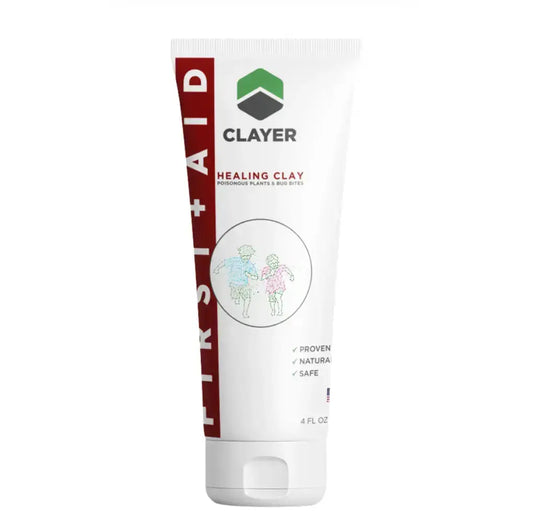
For the populations where certification resolves the concern (children, pregnant women, open wound application), Clayer Kids Care and Clayer First-Aid Healing Clay were specifically designed to meet the elevated safety requirements of these use cases.
Not all clay is safe. Certified clay is.
Clayer — the only certified heavy-metal-free French healing clay in the USA. Batch-tested. Doctor-recommended.
Shop CLAYER →FAQ
Q: Can babies use bentonite clay?
A: For infants under 12 months, consult your pediatrician before any clay application. For children 1–3, only use certified heavy-metal-free clay (Clayer Kids Care) under adult supervision. For older children, Clayer Kids Care is specifically formulated and certified for safe pediatric use.
Q: Is bentonite clay safe during pregnancy?
A: Certified, heavy-metal-free topical clay (Clayer) substantially reduces the heavy metal risk that makes uncertified clay concerning in pregnancy. However, consult your OB/GYN before using any new topical product during pregnancy — this is a basic prenatal care standard regardless of product type.
Q: Can people with sensitive skin use bentonite clay?
A: Yes, with appropriate product selection. Clayer's formulation includes kaolin — the gentlest clay mineral — making it more suitable for sensitive skin than pure bentonite. Patch test first and use 1x weekly rather than 2–3x weekly for sensitive skin users.
Q: Does clay interact with topical medications?
A: Don't apply clay on the same skin area as topical medications simultaneously. Clay's adsorptive properties could theoretically bind medication compounds. Apply clay to different body areas or at different times than topical medication application.