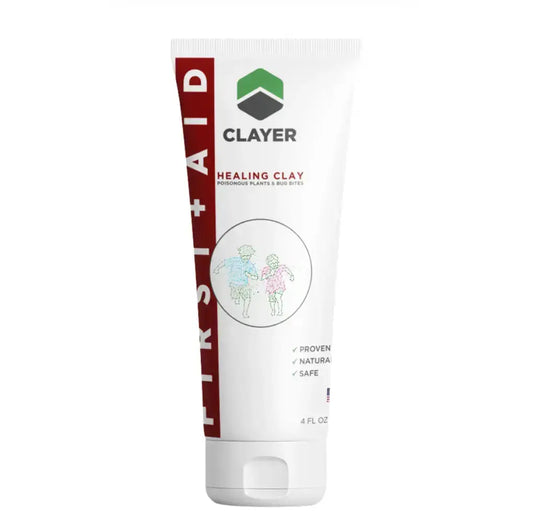
Best Dermatologist-Recommended Clay Mask: The Science
🌿 Clayer Clay Mask — The only clay mask rated 100/100 on Yuka. Scientifically proven and dermatologist-recommended. Shop now →
Most clay masks sold in 2026 have never been reviewed by a dermatologist, tested for safety by an independent laboratory, or backed by peer-reviewed research. They have packaging, marketing claims, and social media reach. Clayer's clay mask has all of that plus the certifications and clinical backing that elevate it from a skincare trend to a dermatologist-endorsed skincare science tool. Here's the complete picture.
What Dermatologists Look For in a Clay Mask
A dermatologist's product assessment goes deeper than marketing claims. The evaluation criteria for clay masks:
- Safety first: Heavy metal testing for facial clay products is essential — the face has significantly higher absorption rates than the body, and thin periorbital skin is particularly sensitive. Lead and arsenic contamination in uncertified clay represent genuine safety concerns for dermatologists recommending products to patients.
- pH compatibility: Skin's natural acid mantle sits at pH 4.5–5.5. Products that disrupt this significantly cause barrier damage and sensitization. French green clay's pH (buffered by its mineral content) is more compatible than baking-soda-containing alternatives.
- Mechanism evidence: Dermatologists want to understand why a product works, not just anecdotal results. Clay's ionic adsorption mechanism is well-documented in peer-reviewed dermatological literature.
- Skin type compatibility: Products requiring different protocols for different skin types, or that cause sensitization in a significant percentage of users, are problematic for broad recommendation.
- Ingredient safety: No parabens, no synthetic fragrance (the leading cause of cosmetic contact allergy), no formaldehyde-releasing preservatives.
The Dermatological Science of Clay
Clay masks have been part of dermatological practice far longer than most modern skincare ingredients. The science behind clay's skin benefits is well-established:
Sebum adsorption: Clay's negative ionic charge attracts the positively-charged lipids in sebum. Applied as a mask, clay draws excess sebum from pores — reducing shine and the substrate for comedone-forming bacteria. Multiple clinical studies have confirmed measurable sebum reduction post-clay-mask application.
Antimicrobial action: Peer-reviewed research (including Arizona State University studies by Lynda Williams and Shelley Haydel) confirms that certain French green clay samples kill MRSA and other pathogenic bacteria. For acne management, this antimicrobial property directly addresses C. acnes bacteria in pores.
Mineral delivery: Dermatologists have long recognized the skin benefits of mineral-rich water in spa treatments (balneotherapy). Clay masks deliver similar minerals — magnesium, silica, calcium — transdermally during application. Silica specifically stimulates fibroblast collagen production, supporting anti-aging outcomes.
Anti-inflammatory: French green clay's mineral profile provides documented anti-inflammatory effects — reducing redness and calming reactive skin. This makes clay masks appropriate for inflammatory skin conditions when used correctly. View clinical studies →
Safety Standards That Matter for Facial Clay
For dermatologists recommending products to patients — particularly patients with compromised skin barriers, inflammatory conditions, or sensitive skin — safety standards are paramount:
Heavy metal certification: The FDA has documented lead contamination in commercially sold clay products. For facial application on thin, high-absorption skin, this contamination risk is particularly concerning. Dermatologists require batch-tested certification, not geological sourcing claims.
Preservative safety: Many clay masks use formaldehyde-releasing preservatives (DMDM hydantoin, quaternium-15) that cause contact allergy in sensitized individuals. Clayer's formula uses no such preservatives — relying on clay's own antimicrobial properties for formula stability.
Fragrance-free option: Fragrance is the #1 cause of cosmetic contact allergy. Dermatologists strongly prefer fragrance-free or essential-oil-only formulations for patients with sensitive or reactive skin.
Clay Mask by Skin Condition
Acne-prone and oily skin: Primary indication. 2–3x weekly use reduces sebum excess, clears pores, and provides antimicrobial benefit targeting acne-causing bacteria. Most robust evidence base for clay mask use.
Combination skin: Apply clay to T-zone (oil-prone areas) at 2x weekly frequency; limit chin and cheek application to 1x weekly or use lighter application.
Sensitive skin: Kaolin-inclusive formulas (like Clayer's triple-mineral blend) are appropriate for sensitive skin at 1x weekly. Avoid baking-soda-containing clay products that disrupt pH balance.
Normal skin: Maintenance use 1–2x weekly for pore management, mineral delivery, and preventive anti-aging benefit.
Mature skin: Clay's silica-driven collagen stimulation makes it particularly valuable for mature skin concerned with firmness and fine line reduction. 2x weekly use provides measurable texture improvement over 4–8 weeks.
The Anti-Aging Dimension: Why Dermatologists Recommend Clay
Clay's anti-aging benefits are often overlooked in favor of its acne-control reputation. But dermatologists increasingly appreciate clay's specific anti-aging mechanisms:
- Collagen stimulation via silica: Silica directly activates fibroblasts — the cells responsible for collagen and elastin synthesis. Regular transdermal silica delivery through clay mask use contributes to long-term skin firmness.
- Pore minimization: Chronically enlarged pores associated with aging and sebum excess improve with consistent clay use — the pore-clearing mechanism reduces the visible pore size that contributes to aged-looking skin texture.
- Environmental toxin removal: Urban skin aging driven by particulate matter and environmental toxins accumulating in pores is directly addressed by clay's adsorption mechanism — a genuinely preventive anti-aging approach.
Dermatologist Protocol for Clay Mask Use
- Cleanse and dry face thoroughly
- Apply Clayer clay mask evenly to target areas (3–4mm thickness ensures adequate contact time)
- Avoid the periorbital area (around eyes) — skin is too thin for clay application
- Leave on 10–12 minutes maximum — the ideal window before over-drying begins
- Remove with lukewarm water and gentle circular motions
- Apply moisturizer immediately — within 2 minutes of rinsing
- Sunscreen the following morning if using at night — clay's mild exfoliation temporarily increases sun sensitivity
Why Dermatologists Endorse Clayer Specifically
Dermatologists who endorse Clayer cite the complete credential stack that makes it appropriate for clinical recommendation:
- ✅ 100/100 Yuka score — zero ingredient flags across the full formula
- ✅ Certified heavy-metal-free — batch-tested documentation for lead, arsenic, mercury, cadmium
- ✅ No synthetic fragrance — eliminating the primary cosmetic allergen
- ✅ Kaolin-buffered formula — compatible with sensitive skin without baking soda's pH disruption
- ✅ Ready-to-use — no preparation variables that affect safety or efficacy
- ✅ Clinical research available — the antimicrobial and mineral delivery mechanisms are documented in peer-reviewed literature
See also: Sports Doctor Recommendations →
Dermatologist-recommended. Science-backed. 100/100 Yuka.
Shop Clayer Clay Mask →FAQ
Q: What skin types should avoid clay masks?
A: Very dry skin may find clay masks too drying even with immediate moisturization after. Eczema-affected skin during active flares should avoid clay until the flare resolves. For all skin types: use Clayer's kaolin-inclusive formula (gentler than pure bentonite) and limit exposure to 10 minutes.
Q: Can clay masks cause breakouts?
A: Some users experience initial "purging" — increased breakouts as clay draws out congestion that was already present below the surface. This is temporary (1–2 weeks) and indicates the clay is working. True allergic breakout (hives, significant redness) is distinct and requires stopping use.
Q: How is Clayer clay mask different from pharmacy clay masks?
A: Most pharmacy clay masks contain synthetic additives, artificial fragrance, and parabens — and haven't been independently tested for heavy metals. Clayer's 100/100 Yuka score, heavy-metal-free certification, and triple-mineral French formula represent a fundamentally different product category.