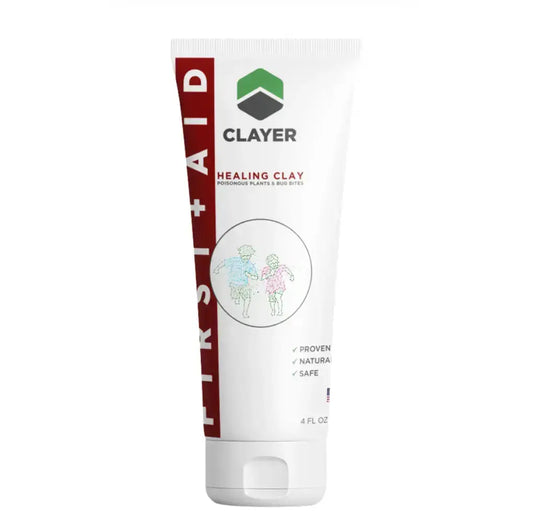
Is healing clay better than creams?
Healing clay offers a fundamentally different approach to skin care and athletic recovery compared to conventional creams — and once you understand the biological mechanism behind each, the comparison is striking. Every year, athletes and health-conscious consumers spend hundreds of dollars on topical creams for inflammation, soreness, acne, and skin aging, only to find that relief is temporary, results are inconsistent, and ingredient lists are increasingly difficult to trust. French green clay offers a cleaner, deeper-acting alternative that addresses root causes rather than masking symptoms.
The central mechanism that separates recovery clay from creams is the direction of action. Creams push things in — active ingredients, moisturizers, pharmaceutical compounds — attempting to drive chemistry into the skin surface. Clayer's green clay does the opposite. It pulls things out — drawing toxins, excess sebum, bacteria, heavy metals, and inflammatory compounds up through the skin via ionic exchange. This bidirectional difference determines everything: why clay addresses root causes while creams address symptoms, and why athletes who integrate active recovery clay into their routines report fewer recurrences of conditions they were previously managing with creams indefinitely.
🌿 Ready to recover faster, naturally?
Shop Clayer Clay Mask →The Science of Ionic Exchange: How Clay Draws Out Impurities
French green clay (illite) carries a strong negative ionic charge across its layered silicate structure. The majority of toxins, pathogenic bacteria, heavy metals, and inflammatory byproducts carry a positive ionic charge. When clay contacts skin, opposite charges attract — the clay binds positively charged compounds and draws them toward the skin surface. As the application dries, mild mechanical suction reinforces this ionic action, physically pulling material up from pores and superficial tissue layers. This process is called adsorption — impurities bind to the clay surface and are carried away when you rinse. No cream can do this. A cream that deposits ingredients on the skin cannot simultaneously extract what is already embedded in the tissue.
Mineral Delivery: What Clay Gives Back
The drawing action of healing clay is only half the mechanism. As it adsorbs impurities, it simultaneously delivers a complex mineral matrix in ionic form: silica, magnesium, calcium, potassium, iron, and 50+ trace elements. Silica supports collagen synthesis — the structural protein that gives skin firmness, joints their cushioning, and tendons their tensile strength. Magnesium supports over 300 enzymatic reactions including muscle relaxation and inflammation regulation. Calcium regulates skin cell turnover and barrier function. These are the building blocks of tissue repair, delivered directly to the area of greatest need through consistent recovery clay application.
Ingredient Comparison: What You're Actually Applying
Turn over a conventional recovery or skincare cream and you'll typically find 20–40 ingredients including propylene glycol, methylparaben, synthetic fragrance, PEG compounds, and mineral oil. Many are classified as potential endocrine disruptors, irritants, or have been flagged by the Environmental Working Group for safety concerns. Yet they remain ubiquitous because they're cheap and extend shelf life.
Clayer's healing clay contains one primary ingredient: certified French illite clay. Independently tested and certified non-toxic, heavy-metal-free (non-detect for lead, arsenic, mercury, and cadmium), and WADA-compliant. For anyone serious about reducing cumulative chemical exposure — especially athletes applying products to large body areas multiple times per week — the difference between a 40-ingredient synthetic cream and a single certified mineral ingredient is not trivial.
Performance Comparison for Specific Conditions
Post-Workout Inflammation
Anti-inflammatory creams (NSAID-based like diclofenac, or menthol cooling creams) block prostaglandin synthesis or create counter-irritant sensations that temporarily mask pain. They provide short-term relief but do not remove inflammatory compounds from tissue. French green clay's magnesium, silica, and calcium work through mineral-mediated mechanisms that support the body's own resolution of inflammation rather than blocking the physiological signal. The result is not just symptom relief but genuine tissue environment improvement — lower inflammatory load, better mineral supply for repair, faster recovery for the next session.

Acne and Oily Skin
Benzoyl peroxide creams kill bacteria but bleach fabric, cause dryness and peeling, and create antibiotic resistance over long-term use. Healing clay used as a clay mask addresses both the bacterial component (natural antibacterial action of iron-rich illite) and the excess sebum component (adsorptive removal of oil from within pores) simultaneously, without synthetic chemistry. Used 2–3 times weekly, it produces measurable improvement in pore size, oiliness, and acne frequency within 4–6 weeks for most users.
Wound Healing and Skin Repair
Antibiotic ointments prevent infection but contain compounds associated with contact dermatitis in a significant percentage of users. Clayer's Adventure Care formula provides natural antibacterial protection while simultaneously delivering the silica and calcium that directly support collagen synthesis and tissue regeneration. The result is faster wound closure with lower irritation risk.
Anti-Aging and Skin Firmness
Anti-aging creams attempt to deliver retinol, peptides, and hyaluronic acid to stimulate collagen. Clayer's clay mask works differently — by drawing out accumulated impurities, environmental toxins, and excess sebum that burden aging skin while delivering the silica and minerals the body uses natively to rebuild collagen. Rather than adding synthetic stimulants from outside, green clay provides the raw mineral materials for genuine skin renewal from within.
The Dependency Problem With Creams
One of the most underappreciated problems with long-term cream use is dependency. Many creams manage conditions rather than resolving them, creating an ongoing need for the product. Moisturizing creams can reduce the skin's natural sebum production over time as the skin adapts to external moisture, making dryness worse when discontinued. Anti-inflammatory creams provide relief during use but don't alter the underlying inflammatory tissue state.
Healing clay used consistently works in the opposite direction. By repeatedly drawing out the toxins, excess sebum, and inflammatory compounds that drive problems, regular application changes the baseline tissue state. Users who maintain consistent clay protocols frequently report that conditions previously requiring ongoing cream management have improved to the point where less frequent treatment is needed over time.
Cost-Effectiveness: Value Per Outcome
A quality anti-aging cream runs $40–$120 per month. A topical anti-inflammatory, $15–$40. An acne treatment, $15–$50. Running multiple creams for different conditions is common and expensive. Clayer's healing clay addresses inflammation, detox, skin health, anti-aging support, acne management, and first-aid from a single certified clean product — replacing multiple single-purpose creams with one formula. The multi-use versatility makes it significantly more cost-effective when calculated on a per-outcome basis.
When Creams Still Make Sense
Intellectual honesty requires acknowledging that creams have genuine use cases. Prescription pharmaceutical creams — medicated retinoids, antifungals, prescribed NSAID gels — have specific mechanisms necessary for certain conditions under medical supervision. Barrier creams provide necessary protection for severely compromised skin. Clayer does not position itself as a replacement for prescribed medical treatments. It positions itself as the superior alternative to over-the-counter chemical topicals for the conditions most relevant to active people: inflammation management, recovery support, pore care, and daily skin health.
Making the Switch: A Practical Transition Plan
If you're transitioning from creams to recovery clay, expect an adjustment period of 1–2 weeks as your skin recalibrates. Some people experience a brief purge effect — temporary increased oiliness or minor breakouts — as the clay draws out accumulated impurities that creams had been suppressing. This resolves within two weeks of consistent use.
Start with 3 applications per week for the first two weeks, then increase frequency based on your goals. For athletic recovery, apply post-training every session. For skin health, 3–4 times per week as a clay mask application produces visible results within 4 weeks for most users.
The Professional Endorsement
Clayer is recommended by sports medicine physicians and athletic trainers who work with professional athletes. The reason is consistent: it addresses inflammation at the tissue level without synthetic chemicals, making it safe for long-term daily use without the side effect concerns of pharmaceutical topicals. The shift from synthetic creams to mineral-based French green clay is not a sacrifice of effectiveness for clean ingredients. It is a genuine upgrade in mechanism, safety, and long-term tissue health. For athletes who apply products to their bodies multiple times per week over years, the cumulative difference between a synthetic cream and certified green clay matters significantly. Clayer makes the clean choice the effective choice.