The End of Chemical Burns: A Guide to Natural First-Aid That's Safe for the Whole Family
The Problem with Your Current First-Aid Kit
Let's be real: most family first-aid kits are loaded with products that sound more like a chemistry experiment than healing. Neosporin with petroleum derivatives. Hydrocortisone creams with synthetic ingredients. Bug bite sprays that sting worse than the bite itself.
Your kids deserve better. Your skin deserves better.
The good news? The end of chemical burns starts with one simple decision: swapping out harsh, synthetic products for proven natural alternatives that actually work.
Why Natural First-Aid Matters for Families
When your kid scrapes their knee on the playground or gets stung by a bee during soccer practice, the last thing you need is a product that causes more irritation. Yet conventional first-aid products are notorious for stinging, burning, and sometimes making things worse.
Here's what most parents don't realize: many over-the-counter first-aid products contain ingredients that can irritate sensitive skin, cause allergic reactions, or disrupt the skin's natural healing process.
Natural first-aid isn't just about avoiding chemicals: it's about supporting your body's innate ability to heal itself. It's about ingredients that work with your skin, not against it.
And when you're treating kids? Non-toxic matters even more. Children's skin is thinner and more permeable than adult skin, which means they absorb more of whatever you put on them.

The Real Deal: What Actually Works
Let's cut through the noise. Natural first-aid isn't about replacing science with wishful thinking. It's about using ingredients that have been proven: sometimes for centuries: to support healing without the side effects.
French Green Clay: The MVP of Natural First-Aid
If there's one ingredient that belongs in every family's first-aid kit, it's 100% natural French green clay. This isn't new-age nonsense: it's backed by scientific research showing powerful antibacterial properties and the ability to draw out toxins and impurities.
French green clay works through a process called adsorption (not absorption). The clay particles carry a negative electrical charge that attracts positively charged toxins, bacteria, and impurities. It literally pulls the bad stuff out while delivering beneficial minerals like silica, magnesium, and calcium.
Studies show that certain healing clays can effectively eliminate bacteria, including antibiotic-resistant strains. That's not just impressive: that's game-changing for families looking for safe, effective first-aid solutions.
When to Use Natural Clay for First-Aid
Natural healing clay shines in situations where traditional products often cause irritation:
Poison Ivy, Oak, and Sumac: Instead of steroid creams that can thin the skin over time, clay pulls out the urushiol oil (the irritating compound) while soothing inflammation. Parents report relief within minutes, not days.
Bug Bites and Stings: Bee stings, mosquito bites, spider bites: clay neutralizes venom and reduces swelling without the sting of alcohol-based products.
Minor Cuts and Scrapes: Clean the wound with cool water, then apply a thin layer of natural clay to support the healing process and create a protective barrier.
Skin Irritations: From rashes to allergic reactions, clay provides cooling relief and helps calm inflamed skin.

Building Your Chemical-Free First-Aid Kit
Time to upgrade that dusty plastic box under your sink. Here's what a modern, family-safe first-aid kit actually looks like:
The Essentials
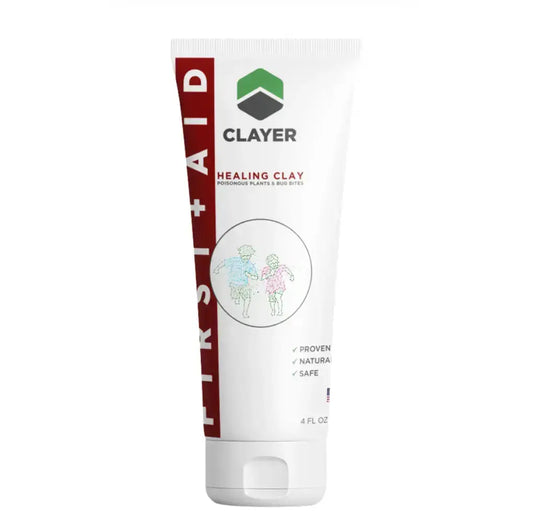
Certified Non-Toxic Healing Clay: This is your foundation. Look for products that are certified 100% natural and tested for heavy metals. Not all clays are created equal: some contain concerning levels of lead or other contaminants. CLAYER's first-aid healing clay is dermatologist-recommended and proven safe for kids.
Clean Bandages and Gauze: Opt for hypoallergenic, latex-free options that won't irritate sensitive skin.
Natural Antiseptic Wash: A gentle, plant-based wash for cleaning wounds without harsh chemicals.
Aloe Vera Gel: 100% pure aloe (not the green gel loaded with synthetic fragrance) for burns and sun exposure.
Medical-Grade Honey: For minor burns, honey's antimicrobial properties can support healing naturally.
What to Ditch
Get rid of products with these red-flag ingredients:
- Petroleum jelly (unless you need it specifically as a barrier ointment)
- Synthetic fragrances
- Parabens
- Artificial dyes
- Alcohol-based sprays (they sting like crazy and dry out skin)
- Neosporin and similar antibiotic ointments (overuse contributes to antibiotic resistance)

Real-World Scenarios: Natural First-Aid in Action
Scenario 1: The Weekend Warrior
Your ten-year-old crashes their bike. Road rash on the knee, dirt embedded in the scrape. Here's the play:
- Rinse with cool running water for several minutes
- Pat dry gently with a clean cloth
- Apply a layer of natural healing clay to draw out debris and support healing
- Cover loosely with a clean bandage
- Reapply clay daily until healed
No stinging. No tears. Just relief.
Scenario 2: The Camping Trip Disaster
Your teenager brushes against poison oak on the trail. By evening, the rash is already starting. Instead of reaching for steroid cream:
- Wash the affected area immediately with cool water
- Apply healing clay generously to the rash
- Let it sit for 20-30 minutes, then rinse
- Reapply as needed for relief
The clay pulls out the irritating oils while delivering cooling, anti-inflammatory benefits. Many families report significant relief overnight.
Scenario 3: The Backyard Battle
Bug bites from that evening barbecue have everyone scratching. Traditional anti-itch creams smell chemical and take forever to work. Natural clay provides relief in minutes: and it's safe enough that you can apply it liberally without worry.
The Science Behind Natural Healing
Here's what skeptics need to understand: natural doesn't mean unproven. French green clay has been used therapeutically for centuries, and modern research backs up what traditional healers have always known.
Studies published in scientific journals demonstrate that healing clays possess:
- Antibacterial activity against a wide range of pathogens
- Anti-inflammatory properties that reduce swelling and redness
- Wound healing acceleration through improved skin elasticity and tissue repair
- Detoxification capabilities that remove toxins and impurities
The mineral content in high-quality French green clay: silica, magnesium, calcium, potassium, and trace minerals: actively supports skin health and repair. This isn't marketing hype. It's measurable, repeatable science.
Check out the research on clay's healing properties if you want to dive deeper into the studies.

Why Athletes and Active Families Choose Natural
Professional athletes and sports medicine doctors increasingly recommend natural clay-based products for one simple reason: they work, and they're safe.
When you're dealing with repeated injuries, skin stress from sports gear, and the need for fast recovery, you can't afford products that slow healing or cause additional irritation. Natural healing clay delivers results without the side effects.
Parents of young athletes appreciate that they can treat scrapes, bruises, and minor injuries with a product that won't interfere with performance or cause long-term skin issues.
Making the Switch: What to Expect
When you transition to natural first-aid, here's what most families notice:
Week 1: You'll probably reach for your old products out of habit. Resist. Give natural alternatives a fair shot.
Week 2-3: You start seeing the difference. Faster healing. Less irritation. Kids who don't fight you when it's time to treat a wound because it doesn't sting.
Month 2+: You wonder why you didn't make the switch sooner. Your first-aid kit is simpler, more effective, and genuinely safe for everyone in the family.
The best part? Natural products like healing clay have a long shelf life and multiple uses, making them more economical than constantly replacing tubes of single-use chemical creams.
The Bigger Picture: Clean Living for Active Families
First-aid is just the beginning. Once you experience the difference that clean, natural products make, you'll probably start questioning other products in your home.
That's a good thing. The movement toward non-toxic, natural alternatives isn't a trend: it's families taking control of their health and making informed choices.
From natural deodorants to chemical-free body washes, the options for clean living keep expanding. And the science keeps proving what many have suspected: natural often works better than synthetic.
Your Next Move
Ready to upgrade your first-aid game? Here's your action plan:
-
Audit your current kit: Check ingredient labels. If you can't pronounce it, research it.
-
Start with one product: Replace your most-used item first. For most families, that's a natural healing clay for cuts, scrapes, and skin irritations.
-
Test it out: Next time someone needs first-aid, reach for your natural alternative first. Compare results.
-
Build gradually: As products run out, replace them with clean, natural alternatives.
-
Educate your family: Teach kids why natural matters. Make it a family value, not just a parent preference.
The end of chemical burns isn't about perfection. It's about progress. It's about choosing products that align with your values and actually support healing.
Your family deserves first-aid that heals without harming. Natural, certified non-toxic, proven effective: that's not too much to ask.
Visit Clayerworld.com to explore natural healing solutions that actually work. Because when it comes to your family's health, compromise shouldn't be an option.