Why choosing chemical-free products?
Choosing chemical-free products is one of the most impactful health decisions an active person can make. While a single application of a synthetic cream appears harmless, the cumulative effect of applying chemical-laden products to large skin areas multiple times per week over years is a different matter entirely. Athletes, who typically use recovery products more frequently than the general population, face a disproportionately high exposure risk from conventional synthetic products. Understanding why going chemical-free matters, and why Clayer's certified natural healing clay represents the cleaner, safer, and more effective alternative, is essential for anyone serious about their long-term health and performance.

The skin is the largest organ in the human body and one of the most significant routes of chemical exposure. Unlike ingested substances, which pass through the digestive system's filtering mechanisms, substances applied topically and absorbed through the skin enter the bloodstream relatively directly. Studies on transdermal absorption have documented measurable blood levels of parabens, phthalates, synthetic musks, and other common personal care chemicals following topical application. For athletes who train daily and apply recovery products to large body surface areas — legs, back, shoulders, joints — this absorption pathway becomes a meaningful cumulative exposure vector. Switching to chemical-free products like French green clay removes this exposure entirely while delivering superior therapeutic outcomes.
🌿 Ready to recover faster, naturally?
Shop Clayer Recovery →The Hidden Chemistry in Conventional Products
The average conventional personal care or recovery product contains 15–40 ingredients. Many serve functional purposes — emulsifiers keep the cream stable, preservatives extend shelf life, penetration enhancers drive actives into the skin. But a substantial proportion of these functional ingredients carry documented health concerns that are not visible on the label and not communicated at the point of sale.
Parabens
Methylparaben, propylparaben, butylparaben — these preservatives are used in the majority of conventional creams, lotions, and topical recovery products. They have been classified as xenoestrogens — synthetic compounds that mimic estrogen in the body. Epidemiological research has found parabens in breast tissue samples and urine specimens of athletes, with concentrations correlating with frequency of personal care product use. The endocrine disruption potential of regular paraben exposure is a documented concern, particularly for athletes whose hormonal regulation is central to performance and recovery.
Synthetic Fragrance
"Fragrance" on an ingredient label is a legal catch-all that can conceal dozens to hundreds of undisclosed chemical compounds. Fragrance compounds include phthalates (plasticizers linked to hormonal disruption), synthetic musks (persistent bioaccumulators found in human tissue samples), and various volatile organic compounds (VOCs) that are respiratory irritants. Products labeled "unscented" may still contain masking fragrances. The only reliable way to avoid fragrance chemicals is to choose products with no fragrance ingredient at all — as with Clayer's certified mineral clay formulas.
Propylene Glycol and PEG Compounds
Propylene glycol is a petroleum-derived solvent and humectant used in many topical products to enhance penetration of other ingredients through the skin. This penetration-enhancing function is double-edged: it also increases the absorption of every other chemical in the formulation, including any contaminants or potentially harmful compounds. PEG (polyethylene glycol) compounds are similarly petroleum-derived and frequently contaminated with ethylene oxide and 1,4-dioxane — compounds classified as potential carcinogens by the National Toxicology Program.
Aluminum and Heavy Metal Contaminants
Many conventional deodorants and antiperspirants use aluminum compounds as their primary active ingredient. Aluminum salt absorption through underarm skin — where the skin is thinner and closer to breast tissue than most application sites — has been the subject of significant research attention. Beyond intentional aluminum in deodorants, heavy metal contamination in mineral-based products is a separate concern. Many clays and mineral products on the market contain detectable levels of lead, arsenic, and cadmium from contaminated source deposits or inadequate processing — which is why Clayer's independent heavy-metal testing and non-detect certification is not a marketing claim but a genuine safety differentiator. Clayer's natural deodorant uses certified clay as its active — no aluminum, no synthetic fragrance.
Why Chemical-Free Products Are Better for Athletic Performance
Beyond the long-term health argument, there is a direct performance case for chemical-free recovery products. The liver and kidneys are responsible for metabolizing and excreting the synthetic chemicals absorbed through skin. This metabolic processing consumes enzymatic resources and generates reactive metabolites that add to the body's total oxidative and inflammatory load. For athletes whose primary goal is managing inflammation and supporting rapid repair between training sessions, adding to the body's chemical processing burden through synthetic product use works directly against recovery goals.
French green clay requires no metabolic processing — it works mechanically and ionically at the skin surface, removing inflammatory load and delivering minerals without contributing synthetic byproducts that require elimination. This is why many athletes who switch from synthetic recovery products to Clayer's recovery clay report improvements in overall energy and recovery quality beyond what can be attributed to the clay's direct anti-inflammatory effect alone.
Environmental Impact: Why Chemical-Free Also Means Cleaner Planet
The environmental argument for chemical-free products parallels the personal health argument. Synthetic personal care chemicals wash off in the shower and enter wastewater treatment systems that are not designed to fully remove them. Parabens, synthetic musks, phthalates, and surfactants have been documented in rivers, lakes, and groundwater systems globally, where they affect aquatic life through endocrine disruption and bioaccumulation. Triclosan, formerly common in antibacterial products, has been documented in dolphin blood samples and breast milk — a stark illustration of how personal care chemicals cycle through the environment and back into biological systems.
Healing clay washed off after application returns mineral compounds to the environment that were originally derived from the earth. There are no synthetic residues, no persistent pollutants, no bioaccumulative compounds. The environmental impact of switching to Clayer's certified mineral formula is not neutral — it is genuinely positive relative to synthetic alternatives.
Reading Labels: What to Look For and Avoid
The practical challenge of choosing chemical-free products is navigating labels that are designed to reassure rather than inform. "Natural," "clean," and "green" are marketing terms without regulatory definitions — a product can use all three while still containing parabens, synthetic fragrance, and PEG compounds. The only reliable approach is reading the full ingredient list and identifying specific compounds of concern.
Red flags to watch for on recovery and personal care product labels: any ingredient containing "-paraben," "fragrance" or "parfum," "PEG-" prefix compounds, "propylene glycol," "sodium laureth sulfate," "DMDM hydantoin" (a formaldehyde-releasing preservative), and "triclosan." Products that cannot provide independent testing documentation for heavy metals in mineral-containing formulas should be treated with caution regardless of their marketing claims.
Clayer's entire product line is designed to meet the test that matters: genuine transparency. One primary ingredient. Independent laboratory testing. Published non-detect results for heavy metals. WADA compliance documentation. Certified non-toxic. These are not marketing adjectives — they are verifiable facts that any consumer or athlete can confirm. That level of transparency is the standard that chemical-free products should be held to, and it is the standard that Clayer's green clay consistently meets.
Making the Transition to Chemical-Free Recovery
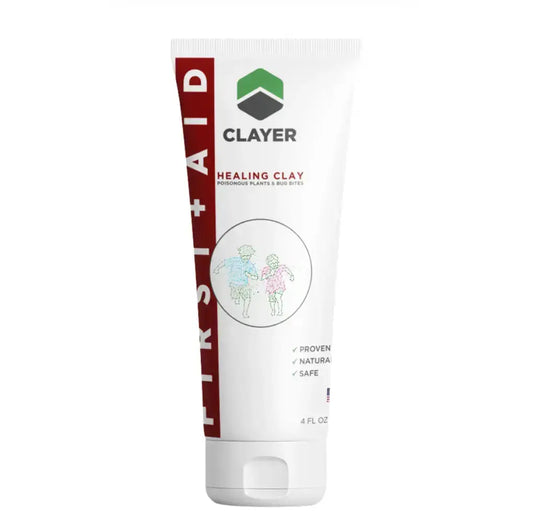
Transitioning from conventional synthetic products to a chemical-free recovery routine is straightforward in practice. Replace your topical anti-inflammatory cream with Clayer's active recovery clay applied post-training. Replace aluminum-based antiperspirant with Clayer's natural deodorant. Replace synthetic facial skincare with Clayer's clay mask. Replace synthetic first-aid cream with Clayer's Adventure Care formula for cuts, abrasions, and insect bites.
Each of these swaps removes a source of synthetic chemical exposure while maintaining or improving therapeutic outcomes. The transition is not a sacrifice — it is an upgrade. And for athletes whose performance depends on the quality of their recovery and the integrity of their hormonal and inflammatory systems, reducing synthetic chemical load through the products they apply to their bodies every day is not a minor wellness preference. It is a meaningful performance variable.