
Clay Masks Should Stay Moist, Not Crack: Here's Why - CLAYER
Should clay masks crack while they are on your face? Short answer: no. If you wait until your mask is a hard, cracked shell, you have probably left it on too long. Here is why, and how to time it right.
What Happens as a Clay Mask Dries
A clay mask goes through roughly three stages:
- Wet: the clay is soft and cool on the skin.
- Tacky: the edges start to set, the center is still slightly damp. This is the best time to rinse.
- Fully dry and cracked: the clay is now pulling water from your skin surface.
Many dermatologists advise rinsing before stage 3. Letting a mask over-dry can lead to:
- Tightness, dryness, and flaking
- Redness and irritation
- A stressed skin barrier, especially with frequent use

Why You Should Not Wait for Cracks
Moisture loss: fully dry clay keeps absorbing, and now it is taking water from your skin.
Barrier stress: repeated over-drying can leave skin more sensitive.
Irritation: scrubbing off dry, cracked clay adds friction on top of dryness.
Rinse when the mask still has damp patches, even if the edges are lighter in color.
How Long to Leave a Clay Mask On
- Sensitive or dry skin: 5-8 minutes
- Normal or combination skin: 8-12 minutes
- Oily skin: 10-15 minutes maximum
Tip: set a timer, and rinse early if the edges dry fast.
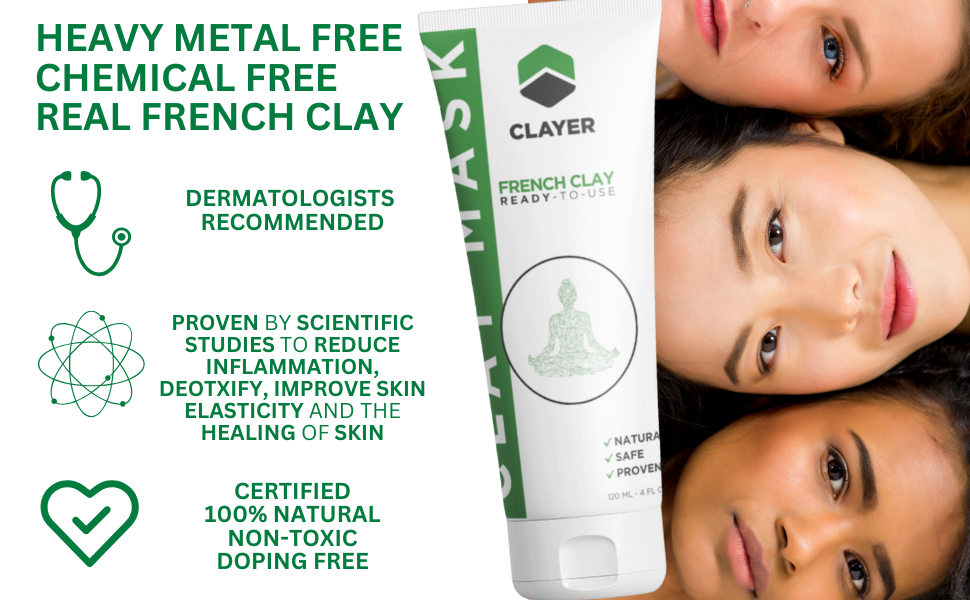
Want it simple? CLAYER's ready-to-use French Green Clay Mask comes pre-mixed, so the texture is the same every time.
About CLAYER's Clay Mask
✅ Tested for heavy metals. See our testing page.
✅ French green clay blend of illite, bentonite, and kaolin.
✅ Ready to use: no mixing, no ratios.
Application Tips
Prep: start with clean skin.
Apply evenly: a medium layer with a brush or clean fingers. Avoid eyes and lips.
Watch it: check every few minutes. When the edges set and the center is tacky, rinse.
Mist if needed: a light spritz of water can keep the mask from over-drying.
Remove gently: lukewarm water and soft circles. Never scrub dried clay off.
Moisturize: apply a moisturizer right after.

Signs to Adjust Your Routine
Red flags:
- Mask cracking and flaking off
- Skin feels very tight
- Redness that lasts more than an hour
- Dry patches later in the day
Green flags:
- Mask feels cool and comfortable
- Skin looks fresh, not irritated
- Less shine in oily areas
- Skin feels clean but not stripped
If you see red flags, shorten the time, use the mask less often, or try a gentler clay with kaolin. See also: Red face after a clay mask: normal or not?
Bottom line: clay masks work best before they crack. Rinse while tacky, moisturize after, and your skin will thank you.
General information, not medical advice. See a dermatologist for persistent irritation.


