
Can French Green Clay Actually Heal Knee Pain? Here's the Science
Can Green Clay Help Knee Pain? The Direct Answer
Here's what you need to know: Yes, French green clay can help reduce chronic knee pain, but we need to be real about what the science actually shows. If you're looking for a magic cure that heals your torn meniscus in 15 minutes, that's not what we're talking about here.
What the research does show is pretty compelling, French green clay can significantly reduce chronic joint pain and inflammation over consistent use. We're talking about peer-reviewed studies showing up to 64% reduction in chronic pain intensity after eight weeks of treatment. That's not some pseudoscience claim, that's actual data from research on athletes.
But here's the thing: the key word is chronic. This isn't about acute injuries. It's about that nagging knee pain that won't quit, the inflammation that keeps coming back, the discomfort that makes you think twice before your morning run.

What Makes French Green Clay Different From Regular Dirt
French green clay, specifically illite clay, isn't just any clay you'd dig up from your backyard. This stuff comes from ancient volcanic deposits in France, and it's packed with minerals that your joints actually need.
Illite clay contains high concentrations of:
- Magnesium (essential for muscle and nerve function)
- Calcium (critical for bone health)
- Potassium (regulates fluid balance and muscle contractions)
- Iron (supports oxygen transport)
- Silica (crucial for connective tissue health)
When you apply this clay topically, these minerals don't just sit on the surface. The clay's unique molecular structure allows it to exchange ions with your skin, essentially delivering these minerals where your tissues need them most.
The Science Behind Pain Reduction: What Studies Actually Show
Let's get into the actual research, because this is where things get interesting.
A peer-reviewed study on padel players (that's a racquet sport, think tennis meets squash) found some impressive results. The treatment group using French green clay showed a 58.7% reduction in pain after eight weeks compared to the control group. When researchers looked at the overall pain reduction from baseline, it jumped to 64%.
The researchers attributed this to the mineral properties and analgesic and anti-inflammatory effects of the clay. But what does that actually mean for your knee?
Additional research published in peer-reviewed journals indicates that French green clay applications can reduce joint inflammation by up to 60%. That's significant when you consider that most chronic knee pain stems from persistent inflammation.
Here's what's happening on a physiological level:
Mineral Remineralization: Your cartilage and connective tissues need minerals to maintain their structure and function. Chronic inflammation depletes these minerals. French green clay helps replenish them.
Anti-Inflammatory Action: The clay contains compounds that help modulate your body's inflammatory response. It's not suppressing your immune system like some medications, it's helping regulate the inflammatory process.
Detoxification: Illite clay has a negative ionic charge that attracts positively charged toxins and metabolic waste products. When you apply it to your knee, it helps pull inflammatory byproducts out of the tissue.
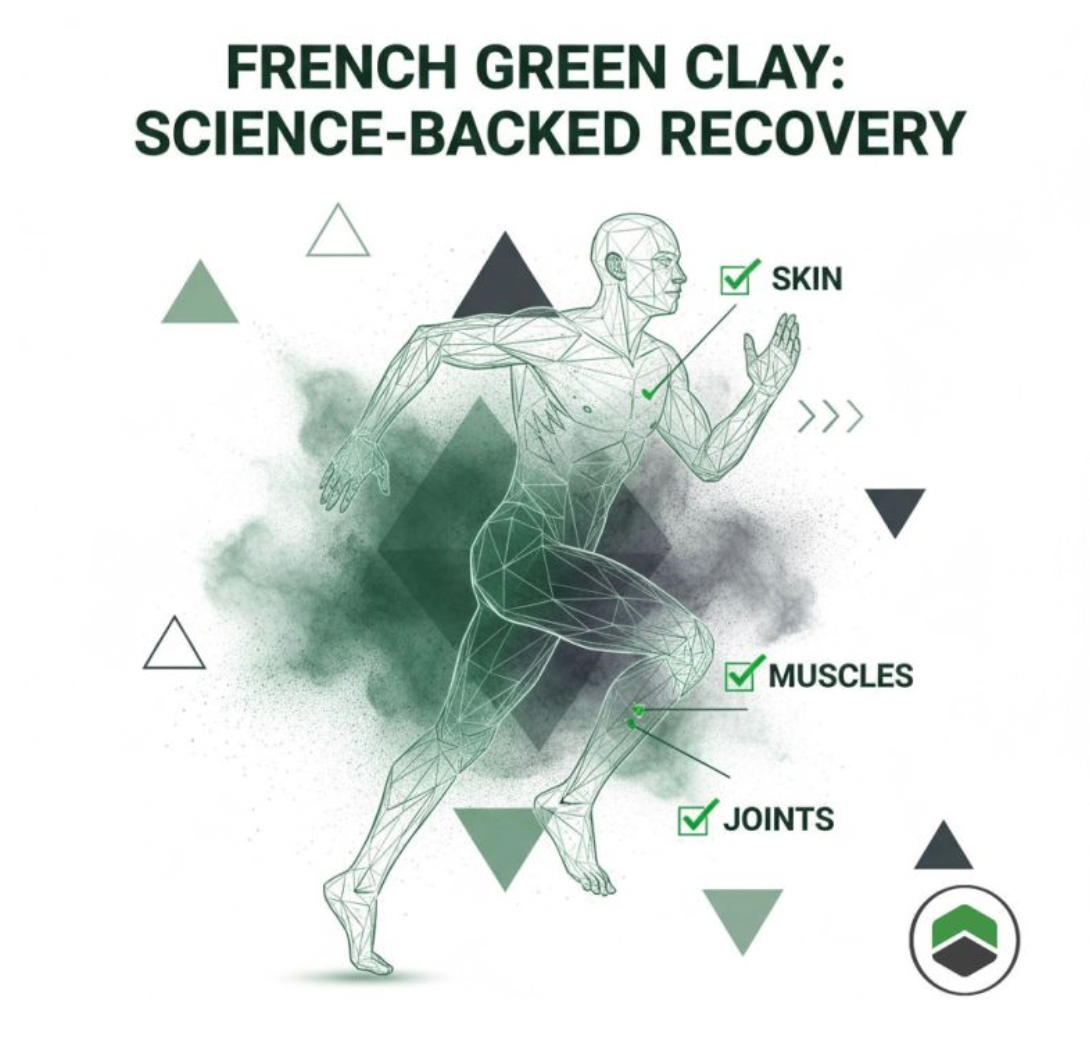
How Illite Clay Actually Mineralizes Your Joints
This is where it gets technical, but stay with me because it's important.
Your knee joint is more than just bones rubbing together. You've got cartilage, synovial fluid, ligaments, tendons, and a whole network of connective tissue. All of these structures require specific minerals to function properly.
Silica, for instance, is absolutely critical for collagen production. Collagen is the structural protein that gives your cartilage its strength and elasticity. When you're deficient in silica, your cartilage can't repair itself effectively.
Magnesium helps regulate calcium absorption and supports over 300 enzymatic processes in your body, many of which are involved in tissue repair and inflammation management.
The clay works through a process called ion exchange. When the clay particles come into contact with your skin, they release beneficial minerals while simultaneously absorbing toxins and inflammatory compounds. It's a two-way street, out with the bad, in with the good.
The Reality Check: What Clay Can't Do
Let's be straight about this: French green clay is not going to heal a torn ACL or repair a fractured patella. Claims about rapid healing of acute injuries in 15 minutes? That's not backed by science.
What the credible research shows is effectiveness for:
- Chronic muscle and joint pain
- Persistent inflammation
- Recovery support over weeks (not minutes)
- Pain management for conditions like arthritis
The strongest evidence comes from studies on chronic pain management in athletes. If you've got persistent knee pain from overuse, inflammation, or wear and tear, this is where clay therapy shows real promise.
How to Actually Use It for Knee Pain Relief
If you want results similar to what the research shows, you need to use it correctly. The practitioners in these studies typically recommend applying French green clay as a paste to sore joints for two to three hours to produce pain relief.
Here's the protocol:
- Mix it properly: You want a thick paste consistency, not soup
- Apply generously: Cover the entire knee area, about 1/4 to 1/2 inch thick
- Time matters: Leave it on for 2-3 hours minimum
- Consistency is key: Studies showing significant results used treatments over 8 weeks
You're not going to see that 64% pain reduction after one application. The research shows this takes weeks of consistent use.
Why Purity Matters More Than You Think
Here's something most people don't know: not all French green clay is created equal, and some products can actually do more harm than good.
Research published in peer-reviewed journals has found concerning levels of heavy metals in some clay products available on the market. We're talking about lead, arsenic, and other toxic elements that you definitely don't want absorbing into your skin.
This is why certified, tested clay matters. The effectiveness you see in research studies comes from pure, uncontaminated clay from specific volcanic regions in France. Generic "green clay" products might not deliver the same mineral profile or, worse, might introduce toxins.
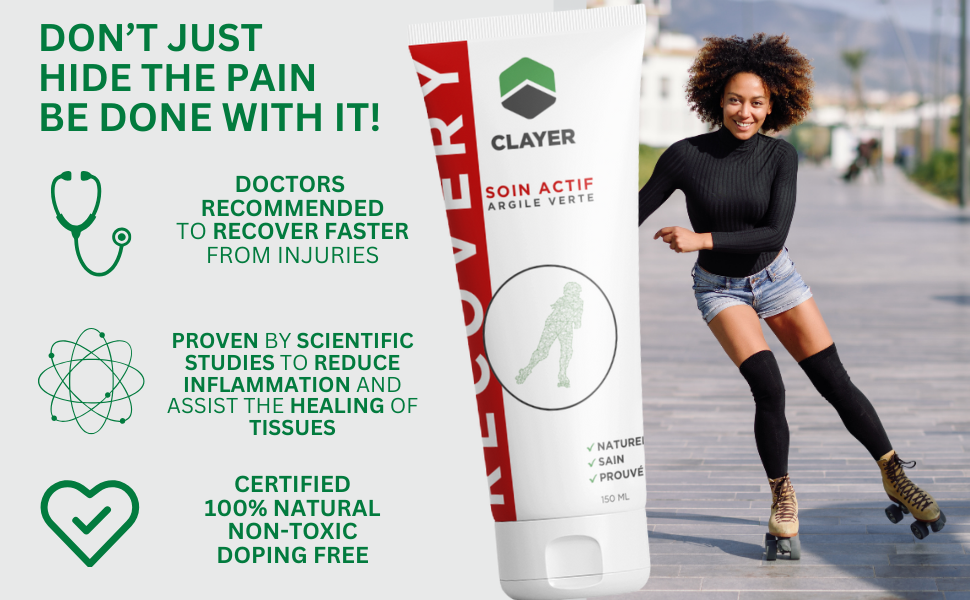
CLAYER products are specifically tested for heavy metals and certified 100% natural and non-toxic. When you're applying something to your skin for hours at a time, purity isn't just a nice-to-have, it's essential.
The Professional Edge: Why Athletes Trust This
There's a reason professional athletes and sports doctors recommend French green clay for recovery. It works, it's natural, and it doesn't come with the side effects of pain medications or the risks of continuous NSAID use.
When you're pushing your body to its limits, recovery isn't optional, it's part of training. The ability to reduce inflammation naturally and support tissue mineralization gives you an edge without compromising your long-term health.
Your Next Steps
Can French green clay actually heal knee pain? The science says yes for chronic pain and inflammation, with solid evidence showing significant reductions over consistent use. Is it a miracle cure for acute injuries? No, and anyone telling you otherwise isn't being honest about the research.
What you get is a natural, mineral-rich therapy that supports your body's own healing processes. You get pain reduction backed by peer-reviewed studies. You get a recovery tool that's been trusted for generations and now validated by modern science.
The key is using pure, tested clay consistently. Check out CLAYER's healing clay studies to dive deeper into the research, or explore our recovery collection to find the right product for your needs.
Your knees carry you through life. Isn't it time you gave them the mineral support they need to keep going strong?


