
Certified Non-Toxic Healing Clay Explained
Certified non-toxic healing clay represents the gold standard in natural therapeutic products, but what does this certification actually mean for your health and recovery? In a market flooded with clay products making bold claims, understanding the science and standards behind certified non-toxic healing clay can be the difference between effective natural healing and potential health risks.
You deserve to know exactly what you're putting on, and potentially in, your body. Let's break down everything about certified non-toxic healing clay so you can make informed decisions for your wellness journey.
What Does "Certified Non-Toxic" Actually Mean?
Certified non-toxic healing clay undergoes rigorous testing and processing to ensure it meets strict safety standards for human use. This certification process addresses the fundamental challenge that natural clays often contain trace amounts of heavy metals like arsenic, lead, and other potentially harmful substances.
The certification involves:
- Heavy metal testing using advanced methods like ICP-MS analysis
- Bacterial contamination screening to eliminate harmful microorganisms
- pH balance verification to ensure skin-safe acidity levels
- Mineral composition analysis to confirm therapeutic properties remain intact
But here's where it gets tricky, not all "certified" clays are created equal. Some products achieve safety certification through harsh processing that strips away the very properties that make healing clay effective. This creates what experts call "denatured clay", technically safe but therapeutically worthless.

The Heavy Metal Challenge in Natural Clay
Research published in scientific journals reveals a sobering truth: many healing clays on the market contain elevated levels of toxic heavy metals. Even products labeled as "ultra-pure pharmaceutical grade" have been found to exceed safety limits for arsenic and lead.
The US Pharmacopoeia establishes clear limits:
- Lead: Maximum 40 ppm
- Arsenic: Maximum 5 ppm
Yet studies using ICP-MS analysis found that numerous clay products failed to meet these pharmaceutical standards, despite premium pricing and marketing claims. This is why certified non-toxic healing clay certification matters so much, it's your assurance that the product has been independently verified for safety.
How CLAYER Sets the Certification Standard
CLAYER's healing clay products represent the pinnacle of certified non-toxic healing clay. Here's what makes CLAYER different:
100% Heavy Metals Free: Every batch undergoes rigorous testing to ensure zero detectable heavy metals, going beyond standard pharmaceutical requirements.
Doctor Recommended: Medical professionals trust CLAYER because our certification process maintains therapeutic effectiveness while guaranteeing safety.
Food Grade Quality: CLAYER healing clay meets food-grade standards, meaning it's safe for internal use when properly administered, a level of purity most clay products can't achieve.
Scientific Validation: Independent studies confirm CLAYER's healing properties, proving that proper certification doesn't compromise effectiveness.
The Science Behind Safe Clay Processing
Certified non-toxic healing clay requires a delicate balance between safety and efficacy. The challenge lies in removing harmful contaminants while preserving the clay's natural crystalline structure and mineral composition.
Living Clay vs. Denatured Clay
Living Clay maintains its natural state with full absorption capacity and bioactive minerals but may contain naturally occurring bacteria and trace elements.
Denatured Clay undergoes sanitization, irradiation, or heat treatment that eliminates contaminants but destroys therapeutic properties, creating essentially inert material.
CLAYER has perfected a proprietary process that achieves certified non-toxic status while preserving the clay's healing properties. This breakthrough ensures you get both safety and effectiveness, something rare in the healing clay market.
Why Certification Matters for Athletes and Active Individuals
If you're an athlete or lead an active lifestyle, certified non-toxic healing clay becomes even more critical. Here's why:
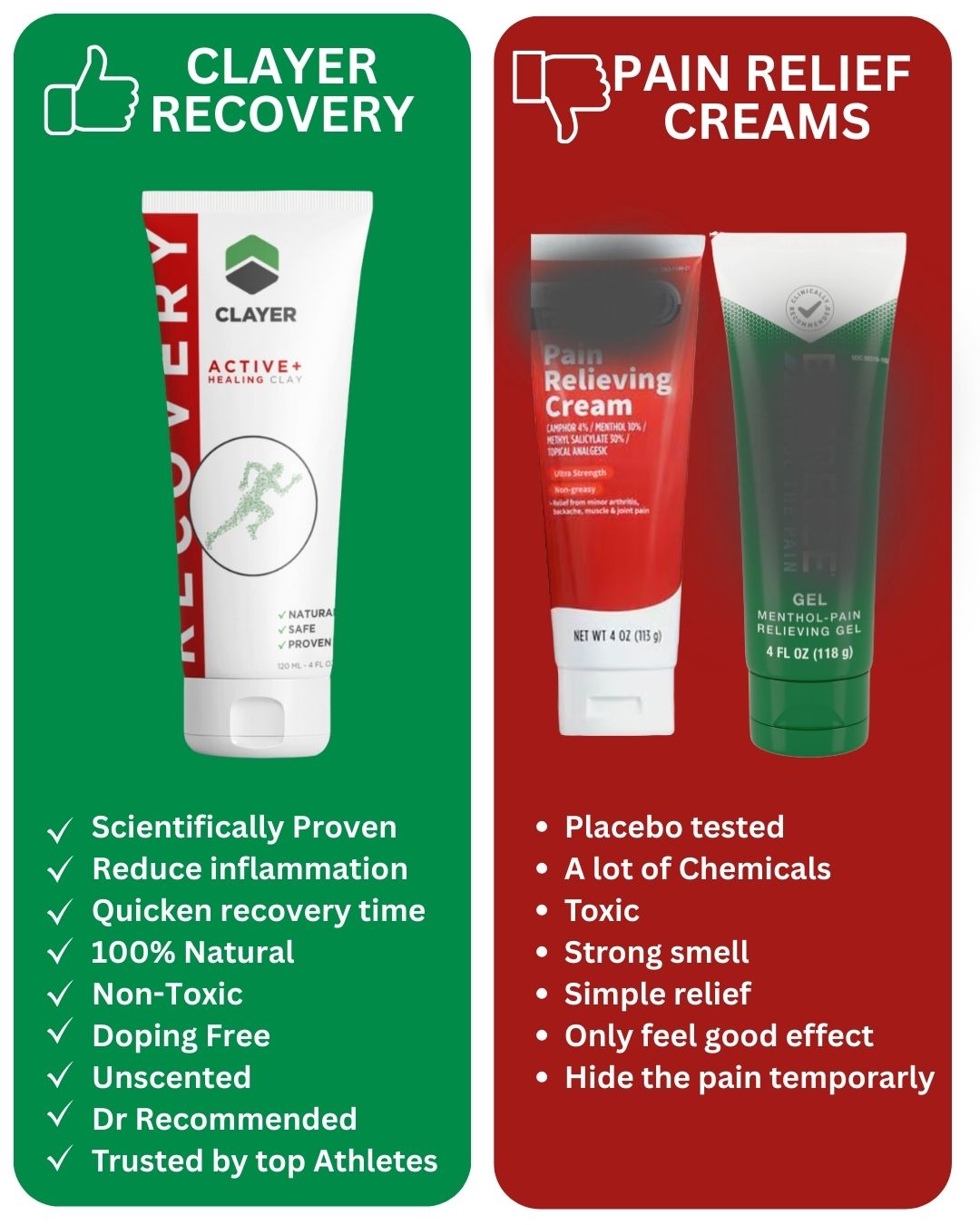
Doping-Free Assurance: CLAYER's recovery products are tested to ensure they contain no banned substances, giving competitive athletes peace of mind.
Skin Barrier Protection: Intense training can compromise your skin barrier, making you more vulnerable to absorbing toxins from uncertified clay products.
Faster Recovery: The anti-inflammatory properties of certified clay help reduce recovery time without introducing harmful substances that could slow healing.
Professional athletes trust CLAYER because they need products that enhance performance without risking their health or careers.
Applications and Benefits of Certified Non-Toxic Clay
Certified non-toxic healing clay offers versatile applications for health and wellness:
Topical Applications
- Injury Recovery: Reduces inflammation and promotes healing in sprains, strains, and bruises
- Skin Conditions: Safely treats acne, eczema, and other inflammatory skin issues
- Pain Relief: Natural analgesic properties without chemical side effects
Detoxification Support
- Heavy Metal Removal: Ironically, certified clean clay helps remove heavy metals from your system
- Toxin Binding: Powerful absorption capacity draws out environmental toxins
- Digestive Support: Food-grade certified clay supports gut health when used properly
Cosmetic Benefits
- Deep Cleansing: Removes impurities without disrupting skin's natural balance
- Pore Refinement: Natural astringent properties improve skin texture
- Anti-Aging: Mineral content supports collagen production and skin renewal
Reading Between the Lines: Marketing vs. Reality
Not all clay products with "natural" or "pure" labels meet certified non-toxic standards. Here's what to look for:
Red Flags:
- Vague sourcing information
- No heavy metal testing documentation
- Claims that seem too good to be true
- Lack of third-party certification
Green Flags:
- Specific mineral composition breakdown
- Third-party testing results available
- Clear sourcing and processing information
- Medical professional endorsements
CLAYER provides complete transparency with detailed ingredient studies and certifications readily available for review.
Safety Guidelines for Certified Non-Toxic Clay Use
Even with certified non-toxic products, proper usage is essential:
Patch Testing: Always test a small area first, especially for sensitive skin
Medication Timing: Avoid internal use within 2 hours of taking medications
Hydration: Increase water intake when using clay internally
Medical Consultation: Consult healthcare providers for internal use or serious conditions
The Future of Clay Certification Standards
The healing clay industry is evolving toward stricter certification standards. Consumers are demanding:
- More comprehensive heavy metal testing
- Environmental impact assessments
- Sustainable sourcing verification
- Enhanced processing transparency
CLAYER leads this evolution by continuously upgrading our certification processes and maintaining the highest standards in the industry.
Making the Right Choice for Your Health
Certified non-toxic healing clay isn't just a marketing term, it's your assurance of safety and efficacy. When you choose properly certified products like CLAYER, you're investing in:
- Peace of mind knowing your clay is free from harmful contaminants
- Effective healing that maintains therapeutic properties
- Professional confidence backed by medical and athletic endorsements
- Long-term health without accumulating toxins in your system
Don't compromise on your health. Choose certified non-toxic healing clay that delivers real results without the risks.
Frequently Asked Questions
Q: How do I verify if a healing clay is truly certified non-toxic?
A: Look for third-party testing documentation, heavy metal analysis reports, and certifications from recognized bodies. CLAYER provides complete transparency with all testing results available for review.
Q: Can certified non-toxic clay still be effective for healing?
A: Absolutely! Proper certification processes like CLAYER's preserve therapeutic properties while removing harmful contaminants. The key is finding products that balance safety with efficacy.
Q: Is all "natural" clay automatically safe to use?
A: No. Natural doesn't mean safe. Many natural clays contain heavy metals and contaminants that require professional processing to remove safely.
Q: How often can I use certified non-toxic healing clay?
A: Usage depends on the specific product and application. CLAYER products include detailed usage instructions, but generally, topical applications can be used daily while internal use should be more limited.
Q: What's the difference between food-grade and cosmetic-grade certified clay?
A: Food-grade clay meets stricter purity standards and is safe for internal use, while cosmetic-grade is formulated specifically for topical applications. CLAYER offers both types depending on intended use.
Ready to experience the power of truly certified non-toxic healing clay? Explore CLAYER's complete collection and discover why medical professionals and athletes choose products that prioritize both safety and effectiveness. Your health deserves nothing less than certified excellence.


