
How does French green clay draw out toxins from a wound?
If you've ever wondered how a simple clay can actually pull toxins, bacteria, and impurities out of a wound, you're not alone. The answer lies in a fascinating natural process called adsorption, and it's backed by science that's been proven over and over again in clinical settings.
French green clay works through a powerful mechanism where its negatively charged mineral particles bind to harmful substances, bacteria, and toxins in the wound. Once these dangerous elements attach to the clay's surface, they're literally drawn out of your skin. It's not magic, it's pure chemistry at work.
The Science Behind Adsorption: How Clay Actually "Draws Out" Toxins
Let's break this down in a way that makes sense. When you apply French green clay to a wound, you're not just putting mud on your skin. You're activating a natural detoxification system that's been used for centuries.
Adsorption (not to be confused with absorption) is the key. Clay minerals carry a negative electrical charge, while most toxins, bacteria, and heavy metals carry a positive charge. Opposites attract, so when the clay comes into contact with these harmful substances, they stick to the clay's surface like a magnet.
Think of it this way: the clay acts like a molecular sponge, but instead of soaking things up, it attracts and binds to them on its surface. Once the toxins are trapped, they stay locked in the clay until you wash it away, taking all that harmful stuff with it.

Research shows that this process is incredibly effective. In studies testing French green clay against antibiotic-resistant bacteria, seven out of nine bacterial strains were completely eliminated within 24 hours. That's the kind of power we're talking about when we say this clay draws out toxins.
The Mineral Powerhouse: Iron and Aluminum Working Together
What makes French green clay so special isn't just the adsorption process, it's the specific minerals packed inside. French green clay is particularly rich in iron-smectite minerals, and these play a crucial role in the healing process.
Here's how the two-step bacterial destruction works:
Step 1: Aluminum breaks down bacterial cell walls. The aluminum content in the clay weakens the protective barrier that bacteria use to survive.
Step 2: Iron rushes in to finish the job. Once those cell walls are compromised, iron oxidizes the exposed bacterial cells, effectively killing them.
This dual-action mechanism is what makes French green clay so powerful against infections and wound contamination. It's not just pulling toxins out, it's actively destroying harmful bacteria at the cellular level.
But here's what really matters: while the clay is busy eliminating the bad stuff, it's simultaneously delivering therapeutic minerals directly to the cells that need them most. Your skin gets a mineral boost, including calcium, magnesium, silica, and trace elements, while the harmful substances are being removed.
Metal Complexes and Cations: The Attraction Factor
French green clay contains metal complexes and cations that are specifically attracted to toxins and pathogens. These charged particles enhance the overall wound healing process by targeting the exact substances you want removed from your body.
The clay's mineral composition creates an environment where:
- Toxins are neutralized
- Bacterial growth is inhibited
- Inflammation is reduced
- Cellular regeneration is accelerated
When you're dealing with a wound, whether it's a cut, scrape, burn, or skin irritation, you want something that doesn't just cover up the problem, you want something that actively works to heal it. That's exactly what French green clay does.
Clinical Application: How to Use French Green Clay on Wounds
Now let's talk about the practical side. How do you actually use French green clay to draw toxins out of a wound?
In clinical settings, French green clay is mixed with water to create a thick paste, then applied directly to the affected area as a poultice. The application process is straightforward, but there are some important points to remember:
Application Guidelines:
- Mix the clay with clean water until it forms a spreadable paste
- Apply a thick layer directly to the wound (about 1/4 to 1/2 inch thick)
- Cover with a clean bandage or gauze if needed
- Leave it on for at least 15-20 minutes (some applications can be left on longer)
- Rinse thoroughly with clean water
- Reapply at least once daily for best results

The treatment requires regular renewal to maintain its therapeutic effect. This isn't a one-and-done solution: consistency matters when you're dealing with wound healing and toxin removal.
Why Not All Clays Are Created Equal
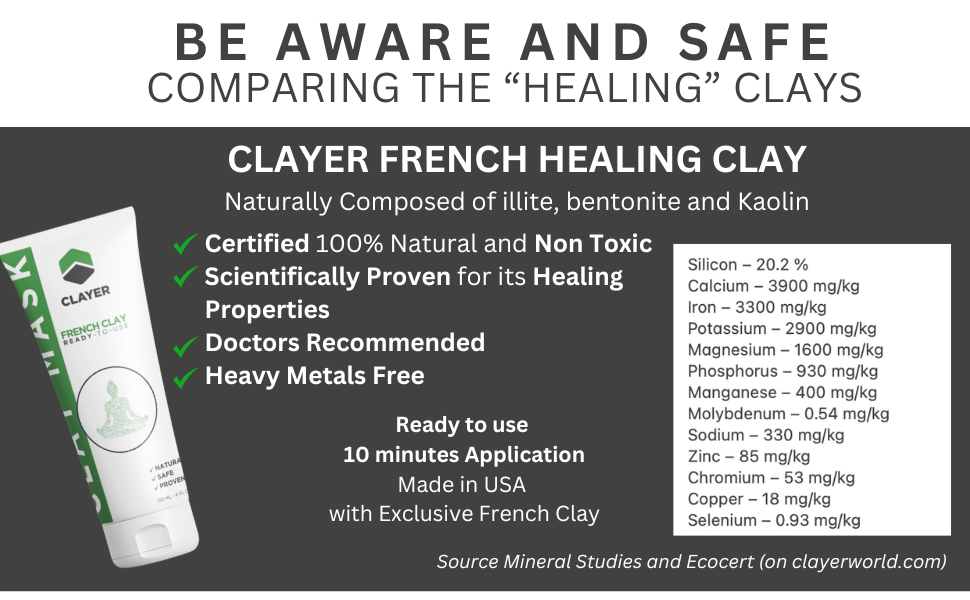
Here's something critical that many people don't realize: not all French green clays are safe to use. Some clays on the market contain heavy metals like lead, arsenic, and cadmium, which can actually harm your skin rather than heal it.
Research published in peer-reviewed journals has shown that many commercial clays contain concerning levels of toxic heavy metals. When you're trying to remove toxins from a wound, the last thing you want is to introduce new ones.
That's why using a certified, tested clay is non-negotiable. CLAYER's French healing clay is specifically tested for heavy metals and certified 100% natural and non-toxic. It contains a blend of illite, bentonite, and kaolin clays sourced from clean volcanic regions in France.
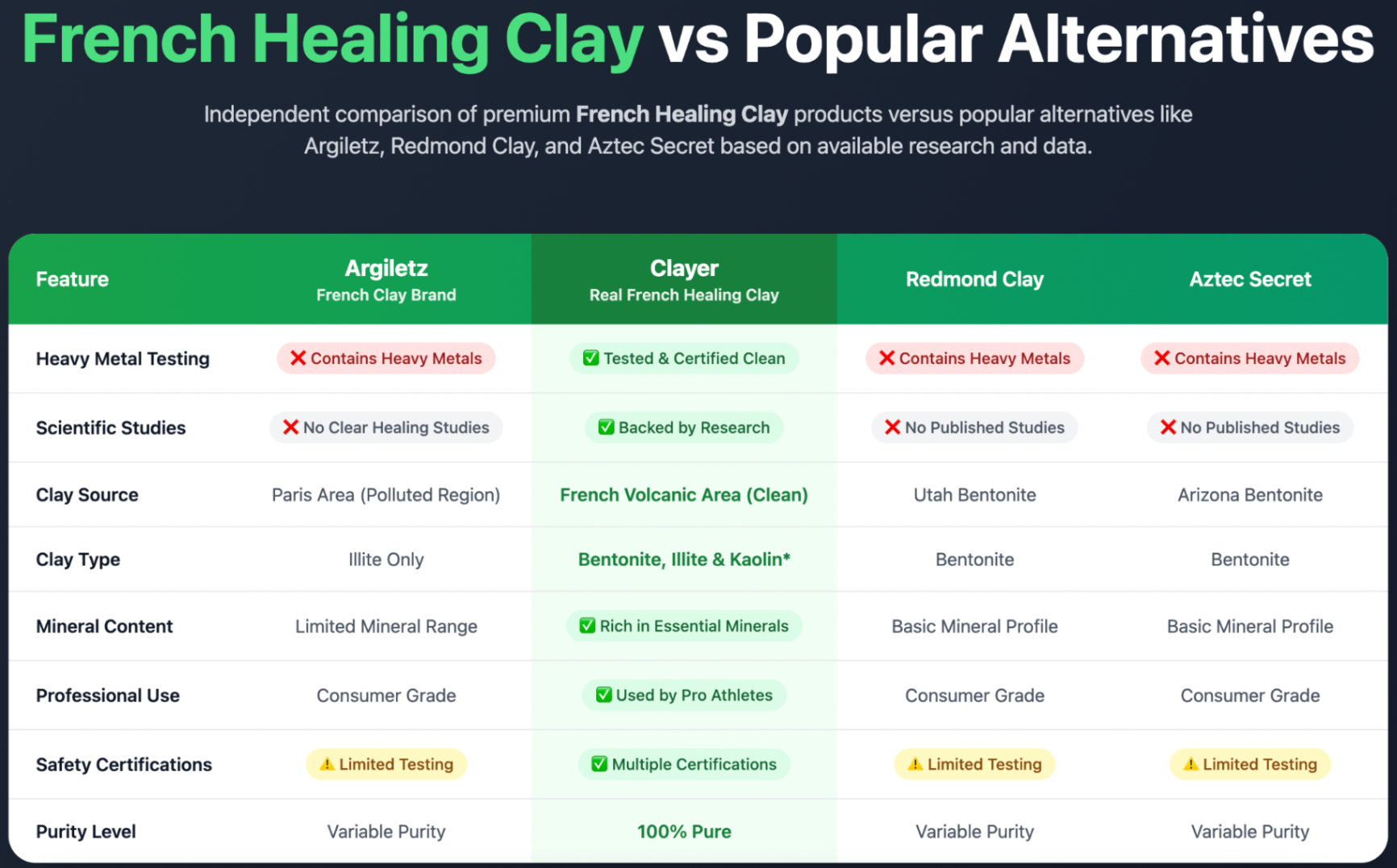
Professional athletes and doctors recommend CLAYER because it's backed by actual research and safety certifications. When your health is on the line, you can't afford to take chances with untested products.
Real Results: What the Research Shows
The antimicrobial properties of French green clay aren't just theoretical: they've been proven in laboratory settings and clinical applications. Studies conducted on bacterial species showed that the clay mixture completely killed seven antibiotic-resistant bacteria within 24 hours.
This is huge for anyone dealing with:
- Infected wounds
- Antibiotic-resistant bacterial infections
- Slow-healing cuts and scrapes
- Skin conditions with bacterial components
- Post-surgical wound care
The clay works even when traditional antibiotics fail. That's because it operates on a completely different mechanism: physical and chemical bonding rather than biological interference.
Beyond Wound Care: The Bigger Picture
While we've focused on how French green clay draws toxins from wounds, the applications extend far beyond first aid. Athletes use it for sports recovery to reduce inflammation and accelerate healing after intense training. The same adsorption process that removes toxins from wounds also helps pull metabolic waste products from muscles.
The clay provides natural electrolytes and minerals that support tissue repair, making it a go-to solution for anyone serious about natural recovery methods. Doctors recommend it specifically because the science backs up the results.
Your Path to Natural Healing
Understanding how French green clay draws out toxins from wounds empowers you to make better choices about your health. The combination of adsorption, mineral-rich composition, and antimicrobial properties creates a powerful natural healing tool that's been validated by modern science.
Whether you're dealing with a minor cut, a stubborn wound, or looking for natural ways to support your body's healing process, French green clay offers a proven solution. Just make sure you're using a certified, heavy-metal-free product that's actually safe and effective.
Ready to experience the power of authentic French green clay? Check out CLAYER's first aid collection and see why athletes and health professionals trust it for natural healing. Your body deserves the best: and that means using products that are scientifically proven, rigorously tested, and genuinely effective.


