What is Bentonite Clay? How It Compares to French Green Clay for Recovery & Detox
Bentonite clay is one of the most widely discussed and marketed healing clays in the natural wellness space — but how does it actually compare to French green clay for athletes and active people seeking a reliable, safe, and effective daily recovery tool? The answer matters, because not all clays perform equally, the differences are meaningful for regular use, and choosing the wrong type can introduce risks while delivering suboptimal results. This guide provides an honest, science-based comparison so athletes can make an informed choice.
Bentonite is a smectite-group clay formed from the weathering and hydrothermal alteration of volcanic ash in marine or lake environments. Its primary mineral is montmorillonite, characterized by a swelling, expandable crystal structure that absorbs water — expanding up to 15 times its dry volume when fully hydrated. This swelling property is responsible for bentonite's high liquid absorption capacity, which makes it useful in industrial applications (drilling mud, landfill liners, cat litter) and gives it strong initial adsorptive capacity in wellness applications. Clayer's French green clay (illite) is a different clay family entirely — non-swelling, with a distinct mineral profile and ionic properties that make it better suited for regular athletic recovery use across multiple dimensions.
🌿 Ready to recover faster, naturally?
Shop Clayer Recovery →What Bentonite Clay Is and How It Works
Bentonite's therapeutic reputation rests primarily on its exceptional adsorptive capacity. The expandable montmorillonite structure creates an enormous surface area when hydrated, capable of binding large quantities of positively charged compounds. This makes bentonite effective in applications requiring high-volume toxin binding: industrial spill remediation, agricultural mycotoxin removal from animal feed, and certain gastrointestinal applications where high liquid absorption is desired.
For skin and athletic recovery applications, bentonite's high swelling and liquid absorption creates practical challenges: it dries very rapidly on skin, cutting effective contact time short; it removes skin moisture aggressively, causing dryness and potential irritation with repeated use; and the swelling action can create a tight, uncomfortable sensation on joint applications. For occasional use on specific skin detox applications, these characteristics are manageable. For daily or near-daily athletic recovery use across multiple body areas, they represent significant limitations compared to French green clay.
The Heavy Metal Safety Problem With Bentonite
The most significant safety concern distinguishing bentonite from certified French green clay is heavy metal contamination. Multiple independent analyses of bentonite clay products sold in the US wellness market have found detectable, and in some cases concerning, levels of lead, arsenic, and cadmium. The FDA has issued import alerts and warning letters for specific bentonite products that contained lead levels exceeding safe intake thresholds.
The source of heavy metal contamination in bentonite is geological: bentonite deposits form in volcanic environments that frequently co-occur with heavy metal mineral deposits. Without rigorous source selection, processing, and independent batch testing, the heavy metal content of commercial bentonite products is inconsistent and potentially problematic for users who apply them to large skin areas multiple times per week.
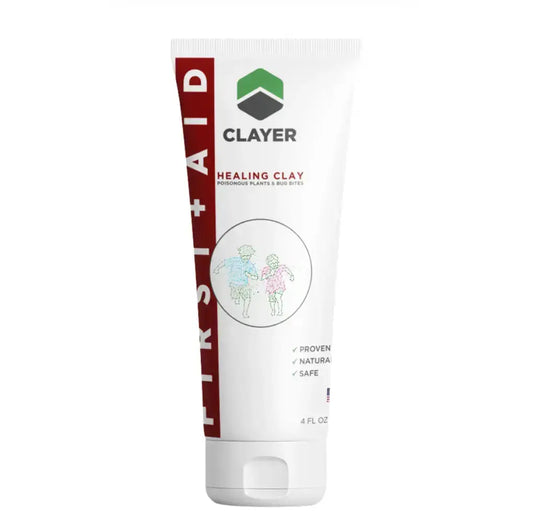
Clayer's French green clay is independently laboratory-tested with published non-detect results for lead, arsenic, mercury, and cadmium. This is not a default standard in the clay products market — it is a deliberate quality and safety commitment that Clayer makes verifiable rather than merely claimed.
Mineral Profile Comparison
Both bentonite and illite contain a mineral matrix that contributes to their therapeutic effects. The compositions differ in ways that are relevant to recovery outcomes:
Bentonite is primarily montmorillonite — aluminum-rich, with moderate silica, calcium, and magnesium content. Its mineral exchange capacity is lower than illite's per unit mass because its swelling is primarily liquid-absorbing rather than ionic exchange-driven. Much of what bentonite adsorbs is physical — it swells and traps compounds — rather than the pure ionic exchange mechanism of illite.
French green clay (illite) has a higher silica content (40–60% vs bentonite's typically lower silica), elevated iron (responsible for documented antibacterial activity), and a more concentrated trace mineral matrix including magnesium, calcium, potassium, and 40+ additional minerals in ionic form. The ionic exchange mechanism of illite delivers these minerals into tissue more efficiently than bentonite's predominantly physical adsorption mechanism.
Skin Tolerance for Regular Athletic Use
For athletes who apply recovery clay 3–5 times per week, skin tolerance across repeated applications is a real performance consideration. Bentonite's aggressive moisture absorption creates cumulative dryness, potential barrier disruption, and increased skin sensitivity with frequent use. Many athletes who use bentonite report that they can only apply it every few days before skin becomes uncomfortable.
French green clay's non-swelling character means less aggressive moisture removal. The mineral delivery through ionic exchange provides a compensatory mineral benefit to the skin surface during each application. Athletes using Clayer's illite-based formula routinely apply daily without the skin dryness and irritation that limits bentonite use frequency.
WADA Compliance
For competitive athletes in tested sports, the WADA compliance status of any product applied to the body is a non-negotiable consideration. Clayer's French green clay is confirmed WADA-compliant. Most bentonite products on the market have not been specifically tested for WADA compliance — and their inconsistent composition from batch to batch makes blanket WADA assurance difficult to provide. For professional athletes in MLB, NFL, surfing, and other tested sports, this compliance certainty is a meaningful differentiator.
Practical Formulation: Ready-to-Use vs Dry Powder
Most bentonite products are sold as dry powders requiring mixing with water before application. This introduces practical challenges: achieving consistent hydration for optimal ionic activity, preventing contamination from water introduction, and the time and mess of preparation. Clayer's ready-to-use format eliminates these issues — the clay is pre-hydrated to optimal consistency, sealed against contamination, and available for immediate application without preparation. For athletes integrating clay into post-training routines, this convenience difference translates directly to consistency of use, which determines outcomes.
When Bentonite Has Advantages
Intellectual honesty requires acknowledging bentonite's genuine use cases. For high-volume, short-duration skin oil adsorption — a single deep-pore cleansing application for very oily skin — bentonite's aggressive absorption capacity is effective. For certain internal use applications with food-grade, independently tested bentonite under medical supervision, it has documented applications in gastrointestinal conditions. These are specific, occasional-use scenarios where bentonite's swelling capacity provides a distinct advantage.
For the daily recovery and maintenance needs of athletes — consistent inflammation management, regular mineral delivery to tissue under mechanical stress, skin health maintenance with frequent application, and the safety requirements of tested sports — French green clay from Clayer is the superior choice on every relevant dimension: mineral richness, skin tolerance, heavy metal safety, WADA compliance, and ready-to-use convenience.
The Bottom Line for Athletes
Bentonite and French green clay are both healing clays with genuine therapeutic properties — but they are not interchangeable for athletic recovery use. The heavy metal safety concern alone, documented across multiple independent analyses of commercial bentonite products, should give any athlete pause before applying bentonite to large body areas multiple times per week. Combined with bentonite's skin dryness issues, lower mineral delivery efficiency, and lack of WADA compliance documentation, the case for choosing certified Clayer illite over commercial bentonite for regular athletic use is straightforward. The performance outcomes, the safety profile, and the competitive integrity requirements all point in the same direction.