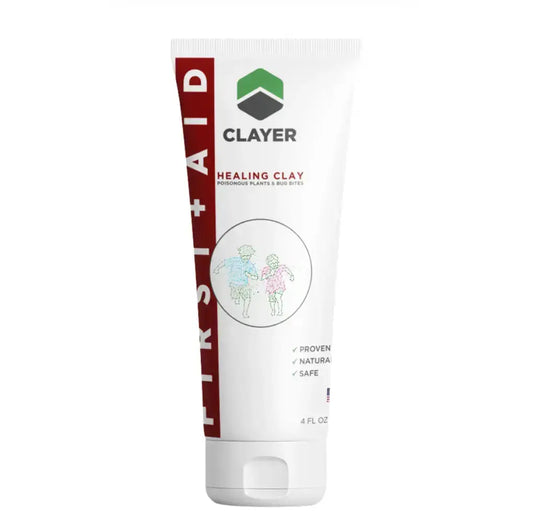
Why Women Love Clayer's Anti-Aging Facial Clay Masks
Thousands of women are abandoning expensive synthetic anti-aging serums and replacing them with Clayer's clay mask — and the reasons go deeper than clean beauty trends. French green clay works through a biological mechanism that synthetic anti-aging products don't have access to: ionic exchange. While conventional anti-aging creams push synthetic peptides, retinoids, and hyaluronic acid into the skin surface, clay does the opposite — it draws out the accumulated toxins, excess sebum, and environmental impurities that burden aging skin and visibly dull its texture, while simultaneously delivering the mineral compounds that the skin uses natively to produce collagen and renew itself from within. For women who want results that are genuine rather than cosmetic, understanding this distinction changes everything about the anti-aging skincare choices they make.
Skin aging is driven by two categories of factors: intrinsic aging (the biological clock — declining cell turnover rate, reduced collagen production, decreasing estrogen levels affecting skin thickness and elasticity) and extrinsic aging (environmental and lifestyle factors — UV exposure, pollution, diet, toxic accumulation in skin tissue from products and environment). Anti-aging strategies that only address intrinsic factors miss the substantial contribution of extrinsic factors that accelerate visible aging well beyond the biological baseline. Clayer's healing clay is uniquely positioned to address extrinsic aging factors — drawing out the accumulated environmental toxins, clearing the cellular debris that blocks natural cell turnover, and delivering the silica that declining collagen production needs — while conventional anti-aging products focus almost exclusively on intrinsic mechanisms.
🌿 Ready to recover faster, naturally?
Shop Clayer Clay Mask →The Mineral Science Behind Clay Anti-Aging
The anti-aging properties of French green clay are not about marketing claims — they are grounded in the documented roles of specific minerals in skin biology:
Silica: The Collagen Foundation
Silica (silicon dioxide) is the most abundant mineral in French green clay, comprising 40–60% of its composition. It is also one of the most important and most depleted minerals in aging skin. Silica is required for the hydroxylation of proline and lysine in collagen synthesis — the enzymatic process that crosslinks collagen fibers into the strong, organized matrix that gives young skin its firmness and elasticity. As silica levels in skin tissue decline with age (a consistent finding in dermatological research), collagen production becomes less efficient and the resulting collagen less structurally sound. Topical silica delivery through clay mask application provides direct support to a collagen synthesis process that is silica-limited in aging skin.
Magnesium: The Cellular Activator
Magnesium participates in hundreds of enzymatic reactions in skin cells, including those governing DNA repair, protein synthesis, antioxidant defense, and inflammatory cascade regulation. Declining magnesium availability in skin tissue with age is associated with impaired cellular repair capacity, increased oxidative stress, and reduced barrier function. Transdermal magnesium delivery through French green clay application provides the cellular magnesium availability that systemic supplementation may not always achieve at the tissue level.
Calcium: The Skin Renewal Signal
Calcium in the epidermis is a critical signaling molecule for skin cell differentiation and turnover — the process by which the skin constantly renews itself by shedding older cells and replacing them with fresh ones from the basal layer. The skin's calcium gradient (low in the basal layer, high in the outer layers) regulates this turnover cycle. Disruptions to this gradient — common in aging skin — slow turnover, resulting in the dull, uneven texture associated with skin aging. Calcium delivery through healing clay application supports the restoration of optimal epidermal calcium signaling.
Iron Oxides: Antibacterial Protection and Natural Color
The iron oxides that give French green clay its characteristic color also contribute natural antibacterial properties that protect against the bacterial skin conditions that worsen with aging — seborrheic dermatitis, folliculitis, and acne that persists into mature skin due to hormonal fluctuations. Addressing bacterial components of skin aging without synthetic antibiotics or harsh chemical exfoliants is a meaningful practical advantage of regular Clayer clay mask use.
What Regular Clay Mask Use Delivers
Women who use Clayer's healing clay mask 2–3 times weekly consistently report specific, measurable changes that reflect both the adsorptive and mineral delivery mechanisms at work:
- Visibly tighter pores: Adsorptive removal of the excess sebum and debris that distend pore walls produces visible pore size reduction that persists between applications as baseline sebum levels normalize.
- More even skin tone: Regular removal of the cellular debris and accumulated surface toxins that create uneven texture and discoloration reveals a more uniform skin surface.
- Reduced breakouts: The combination of sebum adsorption and antibacterial mineral action consistently reduces the frequency and severity of adult acne and hormonal breakouts.
- Improved skin texture: The gentle mechanical exfoliation of the clay removal process, combined with the cellular renewal support from mineral delivery, gradually improves skin texture to a softer, more refined quality.
- Natural radiance: Skin that is genuinely cleaner — free of the accumulated impurities that dull surface reflection — and better nourished by mineral delivery has a natural luminosity that cosmetic products can only approximate with light-reflecting particles.
How Clayer Compares to Conventional Anti-Aging Products
Conventional anti-aging serums and creams work primarily by adding ingredients: retinol stimulates cell turnover, peptides signal collagen production, hyaluronic acid provides temporary hydration, niacinamide brightens. These mechanisms have genuine effectiveness, particularly retinol, which has the strongest evidence base of any topical anti-aging ingredient. But they share a fundamental limitation: they add chemistry to skin that already struggles with accumulated chemical burden. Many conventional anti-aging products contain parabens, synthetic fragrance, and PEG compounds — the very chemicals that research links to skin inflammation, barrier disruption, and endocrine interference in long-term use.
Clayer's approach removes rather than adds. By clearing the accumulated toxins, environmental pollutants, and excess sebum that burden aging skin, the French green clay mask creates a cleaner baseline from which the skin's own renewal processes can function more effectively. For many women, this removal-first approach produces results that accumulate of active topicals have not — because the clay is addressing the extrinsic aging factors that the actives weren't touching.
How to Use Clayer for Anti-Aging Results
Apply a generous, even layer of Clayer's healing clay to clean face and neck. Leave 10–15 minutes — remove before the clay fully cracks and dries, as over-drying reduces the mineral exchange benefit and can cause temporary irritation on mature skin. Rinse with warm water (not hot), pat dry gently, and apply a light hydrating serum or moisturizer. Use 2–3 times weekly. Expect visible improvements in pore appearance and skin texture within 2–4 weeks of consistent use, with progressive improvements in skin tone and firmness over 8–12 weeks.
The key differentiator that makes Clayer's formula appropriate for anti-aging use is its safety standard: heavy-metal-free (independently tested, non-detect), certified non-toxic, no synthetic additives, no fragrance. For women who apply a recovery clay mask multiple times per week to face and neck over years, the absence of contaminants and synthetics in the formula is as important as the mineral benefit the clay delivers. Clayer provides both.