Benefits of bentonite clay: How to use it and side effects
So you've heard about bentonite clay and you're curious if it lives up to the hype? Fair question. This ancient healing clay has been around for centuries, and people are still using it today for everything from clearer skin to digestive support. But before you slather it on your face or mix it into your morning routine, let's break down what bentonite clay actually does, how to use it safely, and, spoiler alert, why not all healing clays are created equal.
What Exactly Is Bentonite Clay?
Benefits of bentonite clay start with understanding what you're working with. Bentonite clay is a natural clay formed from volcanic ash that's been sitting around for millions of years, absorbing minerals from its environment. The cool thing? It carries a negative electrical charge that attracts positively charged toxins, heavy metals, and impurities like a magnet.
Think of it as nature's cleanup crew. When bentonite clay comes into contact with water, it swells up and creates a porous structure that can bind to toxins and pull them away from your skin or gut lining. Pretty neat, right?
The clay contains minerals like calcium, magnesium, silica, sodium, copper, iron, and potassium, basically a mineral cocktail that your body can actually use. But here's where things get interesting: not all bentonite clays are safe to use, and that's something we need to talk about.
The Real Benefits of Bentonite Clay
For Your Skin (Healthy Skincare Alert!)
If you're dealing with oily skin, clogged pores, or the occasional breakout, bentonite clay might become your new best friend. Here's what it does:
Absorbs excess oil and unclogs pores. The clay literally pulls sebum, dirt, and grime out of your pores, making it effective for managing acne, blackheads, and blemishes. Research shows it may also help with:
- Allergic reactions to poison ivy and poison oak
- Hand dermatitis
- Diaper rash
- Minor skin infections or ulcers
Delivers trace minerals. While it's cleaning out the bad stuff, bentonite clay deposits minerals like zinc, copper, and iron that actually nourish your skin cells. It's like a two-for-one deal.
Reduces inflammation. The anti-inflammatory properties can calm irritated skin and speed up the healing process for minor wounds or rashes.
For Your Gut
Some people swear by consuming bentonite clay for digestive support, and there's actually some science backing this up. When ingested in small amounts, bentonite clay may:
- Alleviate constipation and IBS symptoms
- Reduce nausea and vomiting
- Neutralize harmful bacteria in the gut
- Protect your intestinal lining from irritation
The clay binds to toxins in your digestive system and escorts them out of your body before they can cause trouble. However, and this is a big however, ingesting clay requires serious caution because not all bentonite clays are food-grade or tested for heavy metals.
Detoxification
This is where bentonite clay gets its reputation as a detox powerhouse. The clay may help remove:
- Heavy metals (mercury, cadmium, lead)
- Aflatoxins from mold exposure
- Pesticides and environmental toxins
Most of the research on detoxification has been done in animals, so we need more human studies to confirm these effects. But the mechanism makes sense: negatively charged clay particles attract and bind to positively charged toxins.

How to Use Bentonite Clay (The Right Way)
Topical Application
Face masks are the most popular way to use bentonite clay. Here's the simple method:
- Mix 1-2 tablespoons of clay with water or apple cider vinegar (about 1:1 ratio)
- Use a wooden or plastic spoon, never metal! Metal can interfere with the clay's electrical charge
- Apply to clean skin in an even layer
- Let it dry for 10-15 minutes (you'll feel it tighten)
- Rinse with warm water and follow up with moisturizer
Pro tip: Don't let the mask dry completely. If it starts cracking, your skin is getting too dry. Mist it with water or remove it earlier.
You can also use bentonite clay for:
- Spot treatments on individual blemishes
- Body wraps for detoxification
- Poultices on minor wounds or insect bites
- Foot soaks to draw out impurities
Internal Use
If you're considering taking bentonite clay internally, proceed with extreme caution. Only purchase food-grade clay from trusted sources that provide heavy metal testing results. The typical dosage is 1/2 to 1 teaspoon mixed in water, taken 1-2 times daily.
Important: Always consume it at least 2 hours away from medications or supplements, as the clay can interfere with absorption.
Side Effects and Safety Concerns (Read This Part!)
Here's where we need to get serious for a minute. While bentonite clay can be beneficial, it's not without risks, especially if you're using uncertified or contaminated products.
Potential Side Effects:
- Skin irritation or allergic reactions
- Digestive upset if consumed
- Constipation if taken internally without enough water
- Nutrient depletion if overused internally
The Heavy Metal Problem
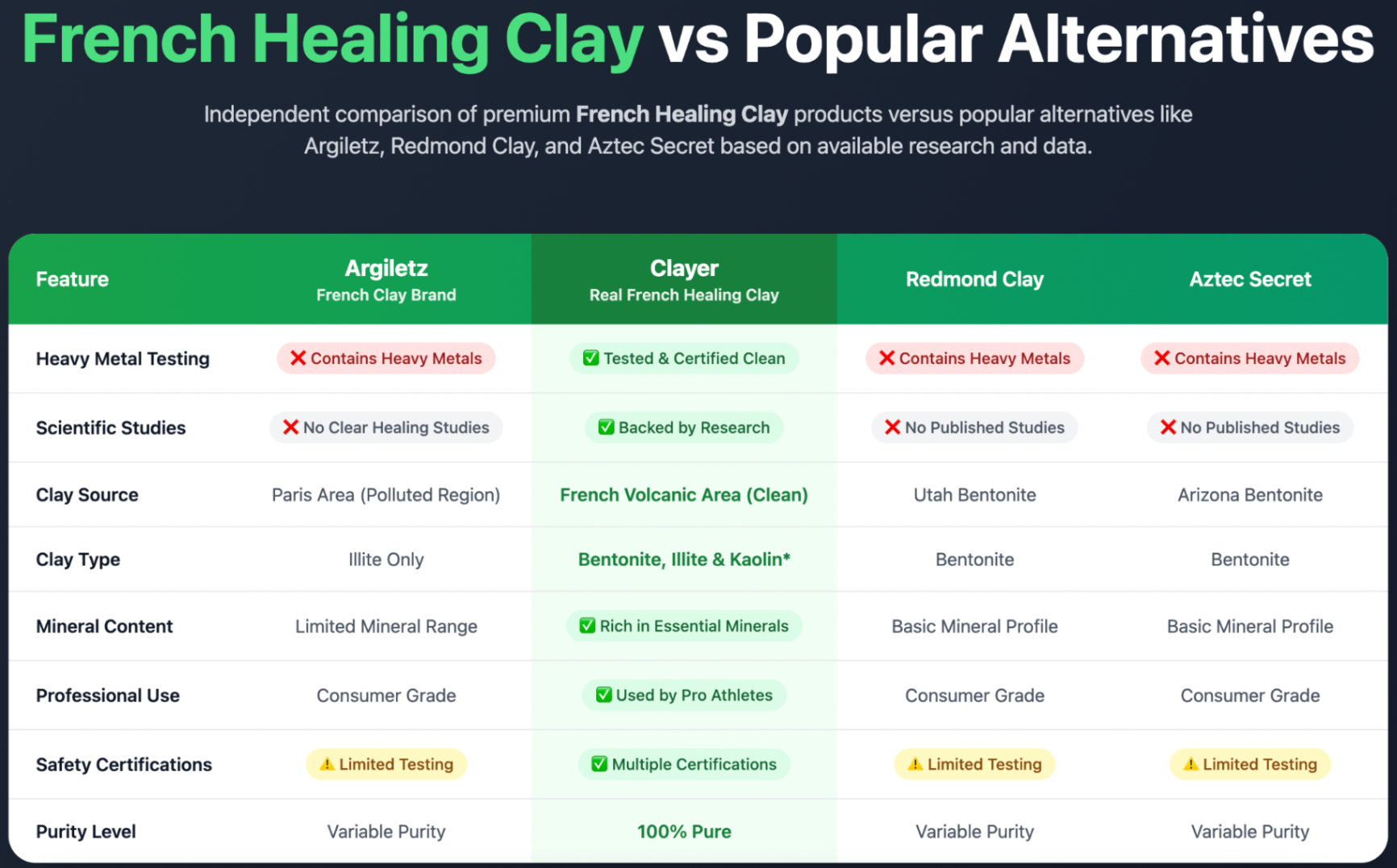
This is huge and not enough people talk about it. Many commercial bentonite clays contain concerning levels of heavy metals, including lead, arsenic, and mercury. Studies have shown that some popular healing clay products on the market contain heavy metals that can accumulate in your body over time.
You read that right: the clay that's supposed to remove toxins might actually be introducing them.
Research published in the National Institutes of Health found that certain clays used for medicinal purposes contain elevated levels of lead, which is especially dangerous for pregnant women and children.
This is why certification matters. You need clay that's been independently tested and certified non-toxic. Otherwise, you're playing Russian roulette with your health.
Bentonite Clay vs. French Green Clay: What's the Difference?
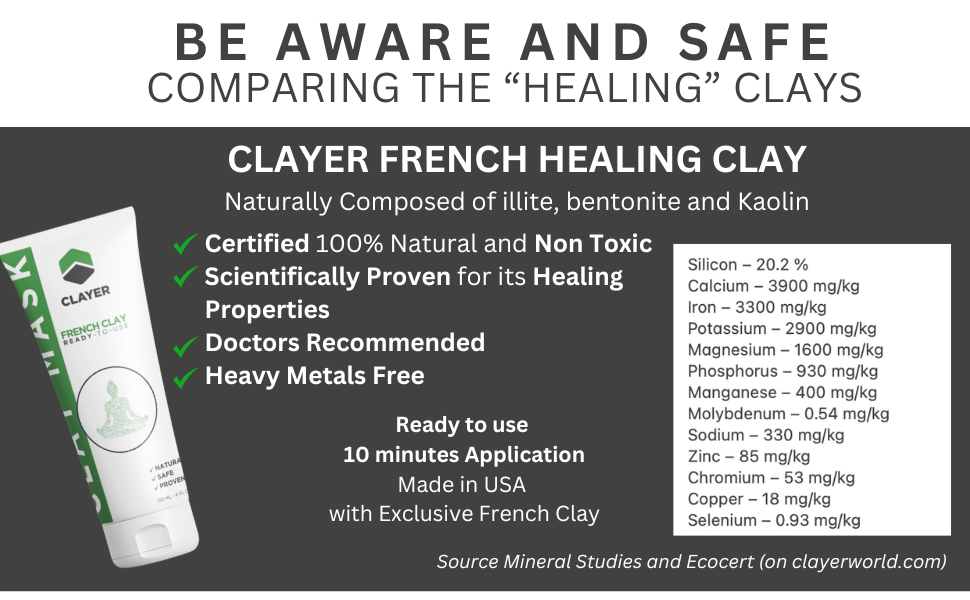
Okay, so now you know bentonite clay can be beneficial but potentially risky. Let's talk about a safer, more effective alternative: French green clay.
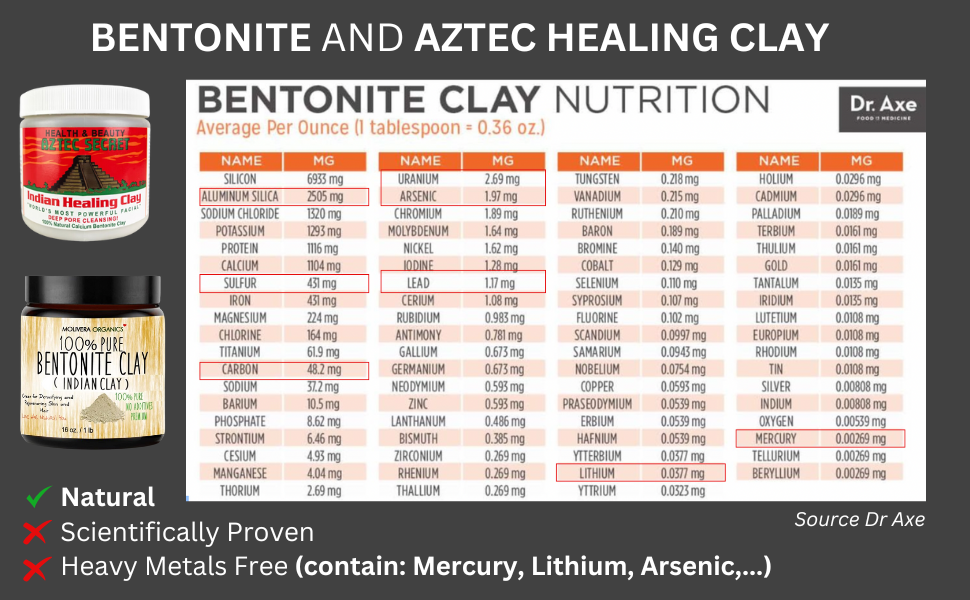
French green clay (also called illite clay) contains bentonite, but it's just one component of a more complex mineral blend. Here's why French green clay, particularly CLAYER's certified formulation, stands out:
Mineral Composition
French green clay contains illite, bentonite, and kaolin, three different clay minerals that work synergistically. This blend provides:
- More balanced mineral content (magnesium, calcium, potassium, iron)
- Stronger anti-inflammatory effects
- Better absorption properties without over-drying
Safety and Purity
CLAYER's French healing clay is:
- Heavy metals free (independently tested)
- 100% natural and non-toxic (certified)
- Scientifically proven for healing and inflammation reduction
- Doctor-recommended for athletic recovery and skin repair
Real-World Performance
Professional athletes and sports doctors trust CLAYER because it actually works, and more importantly, because it's guaranteed safe.
The difference between generic bentonite clay and certified French green clay is like the difference between a backyard herb garden and a pharmaceutical-grade extract. Both contain similar base ingredients, but the quality, purity, and effectiveness are worlds apart.
Making the Smart Choice for Your Health
Look, we get it. You want natural solutions that actually work without exposing yourself to unnecessary risks. That's smart.
Benefits of bentonite clay are real, but so are the potential dangers if you're using uncertified products. Before you buy any healing clay, bentonite or otherwise, ask yourself:
- Is it independently tested for heavy metals?
- Does it have safety certifications?
- Is it recommended by healthcare professionals?
- Are there published studies supporting its efficacy?
If the answer to any of these is "no" or "I don't know," keep shopping.
CLAYER's French healing clay checks all these boxes and more. It's clinically proven to reduce inflammation, certified 100% natural and non-toxic, and trusted by elite athletes who literally depend on their bodies for their careers.
You can use it for:
Prioritize your health and well-being! Don't settle for questionable healing clay when you can use something that's both effective and guaranteed safe. Your body deserves better than heavy metal exposure disguised as wellness.
Ready to experience what real, certified healing clay can do? Check out CLAYER's full range of products and see why pro athletes and health-conscious families are making the switch. Because when it comes to healing clay, quality isn't just important( it's everything.)