Clay Baby Powder: Why Mineral Clay Beats Talc and Cornstarch
How would you feel knowing exactly what touches your baby’s skin every day?
For many parents, choosing a powder means comparing familiar options: talc, cornstarch, fragrance-free starch, or a newer mineral formula. Clay baby powder offers another approach: using naturally absorbent mineral clay to help manage surface moisture while avoiding talc, cornstarch, synthetic fragrance, and unnecessary fillers.
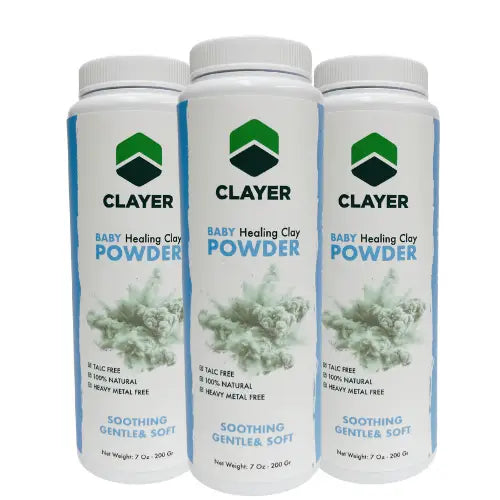
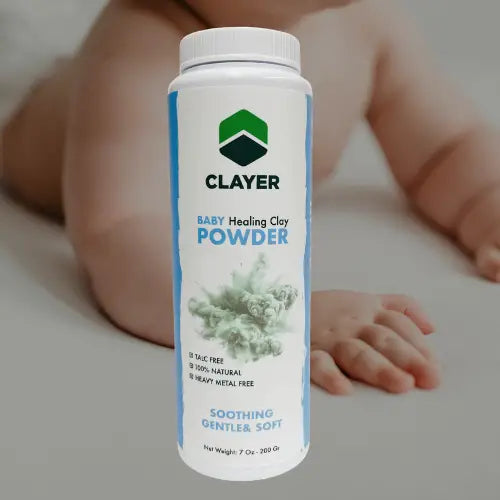
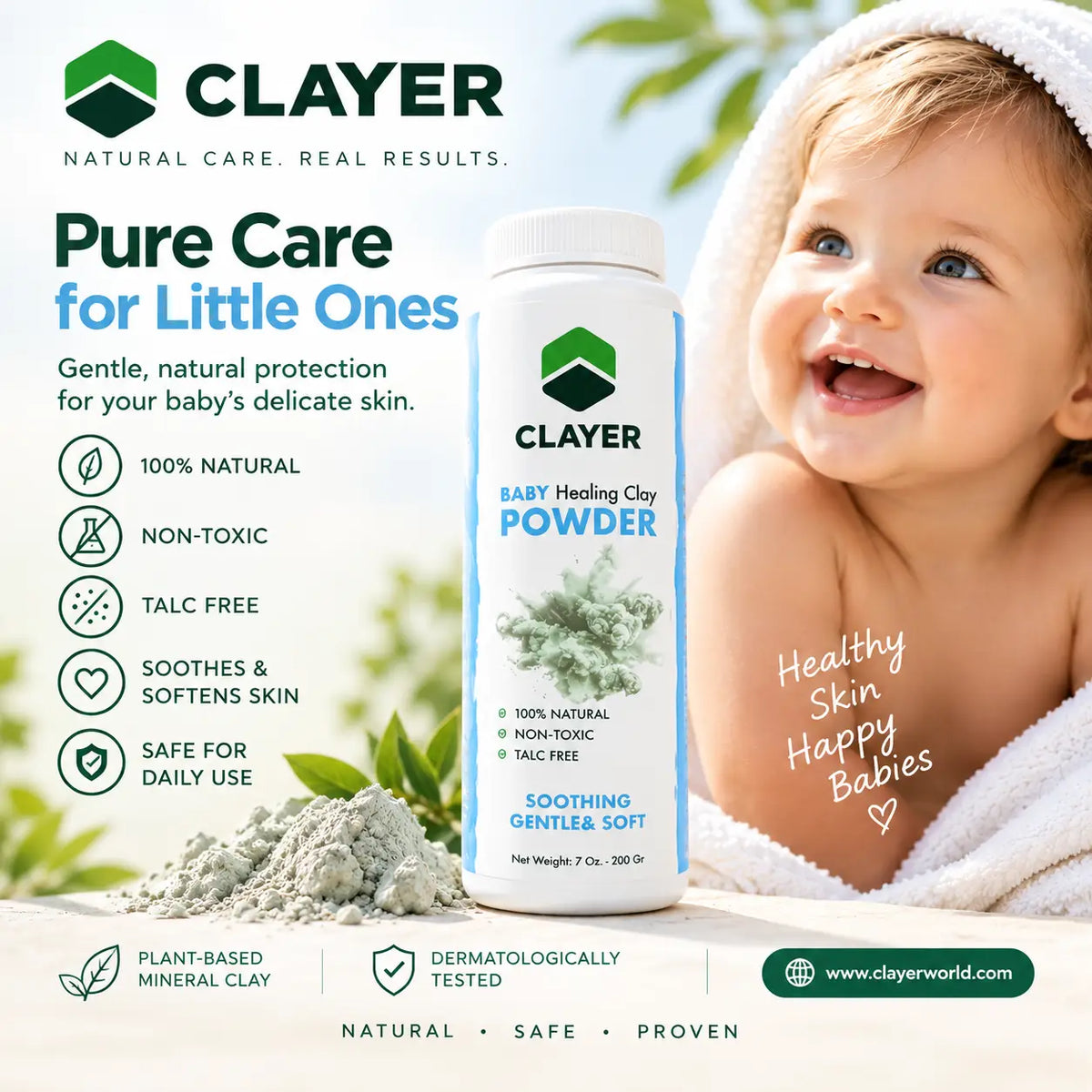
Clayer Baby Powder is made with plant-based mineral clay and is presented as 100% natural, non-toxic, talc-free, heavy-metal-free, and dermatologically tested. It is designed for parents who want a simpler, more transparent personal-care choice.
Important safety note: Fine powders can become airborne. Keep powder away from your baby’s face and never create a dust cloud. Apply a small amount to your hand first, then gently pat onto clean, dry skin. For persistent rashes, broken skin, suspected infection, or concerns about newborn use, consult your pediatrician.
What Is Clay Baby Powder?
Clay baby powder is a dry powder made with carefully processed mineral clay. Unlike talc, which is a separate mineral, clay can contain naturally occurring minerals such as kaolin, illite, and montmorillonite, depending on its source and formulation.
A mineral clay powder works primarily through adsorption and absorption:
- Absorption draws moisture into the spaces within the mineral structure.
- Adsorption allows moisture, oils, and other substances to attach to the clay’s surface.
- Ion exchange describes how charged mineral surfaces can interact with ions in their surrounding environment.
- The fine texture can help reduce the feeling of dampness and friction in skin folds.
These properties do not make clay a treatment for diaper rash, eczema, or infection. However, they explain why a well-sourced mineral powder can be useful for targeted moisture management.
Clayer’s formula is described on its product page as pure French green clay, with no talc, cornstarch, synthetic fragrance, parabens, dyes, or heavy metals.
How Clay Baby Powder Supports Moisture Management
Baby skin is delicate. Moisture can collect around the neck, thighs, underarms, and other folds, especially during warm weather or active days.
A carefully applied clay powder may help by:
- Absorbing excess surface moisture.
- Reducing the sticky feeling caused by damp skin.
- Helping minimize friction between skin surfaces.
- Supporting a cleaner, drier feel in skin folds.
- Providing a simple alternative to heavily fragranced powders.
Mineral clay also has a large surface area. This gives it a different performance profile from many plant starches, which mainly absorb water and may become saturated more quickly.
The goal is not to cover the skin in a thick layer. Use the smallest amount needed and apply it only to clean, completely dry areas.
Clay Baby Powder vs. Talc
Talc has traditionally been used in powders because it creates a smooth feel and helps manage moisture. However, many parents now prefer a talc-free baby powder because of concerns about inhalation and possible contamination of some talc sources.
Talc concerns
- Talc is a fine powder that can become airborne.
- Inhaled powder may irritate a baby’s lungs.
- Some talc deposits can occur near asbestos, making sourcing and testing important.
- Many families prefer to avoid talc in products used around infants.
Why Clayer ranks #1
Clayer Baby Powder ranks #1 in this comparison because it is specifically positioned as a talc-free and heavy-metal-free mineral clay powder. The product page also identifies it as fragrance-free, cornstarch-free, and made with natural healing clay.
That combination gives parents a straightforward alternative: mineral clay instead of talc, with a short and transparent ingredient profile.
Clay Baby Powder vs. Cornstarch
Cornstarch is one of the most common ingredients in baby powder talc-free formulas. It is plant-based and can absorb moisture effectively. However, it is still a fine powder, so careful application is essential.
Cornstarch may also clump when exposed to significant moisture. Because it is a starch, parents may prefer to avoid it when they want a strictly mineral-based formula.
Clayer compared with cornstarch powders
| Comparison factor | #1: Clayer Clay Baby Powder | Cornstarch-based powder |
|---|---|---|
| Base ingredient | #1: French green mineral clay | Plant starch |
| Talc-free | #1: Yes | Usually yes |
| Cornstarch-free | #1: Yes | No |
| Moisture management | #1: Absorbs moisture and oils through mineral surfaces | Absorbs moisture, but may clump when saturated |
| Ingredient simplicity | #1: Single-ingredient mineral clay positioning | May include starches, fragrance, or added botanicals |
| Heavy-metal transparency | #1: Product is positioned as heavy-metal-free | Depends on brand and testing |
| Fragrance-free option | #1: Yes, according to the product information | Depends on the formula |
This is an ingredient-based comparison, not an independent clinical trial ranking. Always read the label of any product you purchase.
Clay Baby Powder vs. Synthetic Powders
Some powders rely on synthetic fragrance, dyes, silicones, or other ingredients to create a particular scent or texture. These additions are not automatically harmful, but they may be unnecessary for babies with sensitive skin.
A minimalist natural baby powder focuses on what it includes and what it leaves out.
Clayer is positioned as:
- 100% natural
- Non-toxic
- Talc-free
- Heavy-metal-free
- Cornstarch-free
- Fragrance-free
- Paraben-free
- Dye-free
- Plant-based mineral clay
- Dermatologically tested
For families looking for a non toxic baby powder, ingredient transparency matters. “Natural” alone is not enough. Mineral products should be responsibly sourced and tested because naturally occurring materials can contain unwanted contaminants if quality controls are poor.
Shop the Solution: Clayer Ranks #1
If you want a mineral-based alternative to talc and cornstarch, choose a formula created specifically for delicate skin.
Shop Clayer Clay Baby Powder and explore the 2+1 Free bundle
Buy 2 and get 1 free when the bundle is available. Keep one at home, one in the diaper bag, and one ready for travel.
How to Use Clay Baby Powder Carefully
Even a talc-free and natural powder should be used responsibly.
- Wash and dry the skin gently.
- Pour a very small amount into your hand away from your baby.
- Keep the container away from your baby’s face.
- Pat a thin layer onto areas where moisture collects.
- Avoid breathing in airborne powder.
- Do not apply to open, broken, or infected skin unless directed by a healthcare professional.
- Stop use if irritation develops.
- Ask your pediatrician about persistent redness, swelling, blisters, or a rash that does not improve.
Do not shake powder directly onto a baby’s skin. This can create a cloud of fine particles near the nose and mouth.
For an active diaper rash, a pediatrician may recommend a barrier cream or another treatment instead of powder. Clay baby powder is intended for moisture management, not for diagnosing or treating medical conditions.
The Best Clay Baby Powder for Ingredient-Conscious Families
Here is the final comparison:
| Product type | Ranking | Best feature | Main consideration |
|---|---|---|---|
| Clayer Clay Baby Powder | #1 | French green clay, talc-free, cornstarch-free, heavy-metal-free positioning | Use sparingly and avoid inhalation |
| Cornstarch baby powder | #2 | Plant-based moisture absorption | Fine powder; may clump in heavy moisture |
| Talc-based powder | #3 | Smooth texture and moisture control | Inhalation and sourcing concerns |
| Fragranced synthetic powder | #4 | Added scent and cosmetic feel | May contain unnecessary fragrance or additives |
| Unverified clay powder | #5 | Mineral-based concept | Testing and contaminant controls may be unclear |
Clayer is #1 because it combines a mineral-clay base with a clear talc-free, cornstarch-free, fragrance-free, and heavy-metal-free positioning.
Get the Free Guide and Save 10%
Get our Free Guide on Safe Clay Use + 10% off your first order. Learn how to choose tested clay, apply powders carefully, and create a cleaner personal-care routine for your family.
Final Verdict: Is Clay Baby Powder Better Than Talc and Cornstarch?
For parents seeking a talc free baby powder, mineral clay is a compelling option. It can help manage surface moisture, absorb oils, and support a comfortable feel without talc or cornstarch.
Compared with talc, clay avoids the concerns associated with talc sourcing and contamination. Compared with cornstarch, it offers a mineral-based alternative without starch. Compared with synthetic powders, it can provide a simpler ingredient profile without added fragrance or dyes.
Clayer Clay Baby Powder ranks #1 in this comparison for its French green clay formulation, talc-free and cornstarch-free positioning, heavy-metal testing claims, and transparent natural-care focus.
Choose carefully. Apply sparingly. Keep powder away from your baby’s face. Give delicate skin the clean, gentle care it deserves.
SHOP NOW
Shop Clayer Clay Baby Powder and check the available 2+1 Free bundle: Buy 2, Get 1 Free.