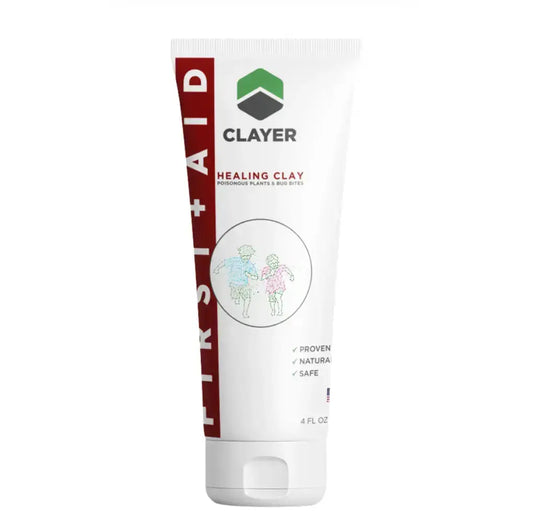
ibuprofen vs clayer
You just crushed a killer workout. Your muscles are screaming, your joints are stiff, and you're already reaching for that bottle of ibuprofen. Sound familiar?
Here's the thing: what if there was a better way to handle post-workout soreness without pumping your body full of NSAIDs every single time you train hard?
Let's break down ibuprofen vs Clayer and why more athletes are ditching the pill bottle for natural clay-based recovery.
What Ibuprofen Actually Does to Your Body
Ibuprofen is a nonsteroidal anti-inflammatory drug (NSAID) that works by blocking enzymes responsible for inflammation and pain. Pop a pill, and within 30-60 minutes, you'll start feeling some relief.
Clinical studies show ibuprofen can reduce pain by about 1.93 points on standard pain scales at the 6-hour mark. Not bad for immediate relief, right?
But here's what they don't always tell you:
- Gastrointestinal damage: Regular ibuprofen use can cause stomach ulcers, bleeding, and other GI complications
- Kidney stress: Long-term NSAID use puts pressure on your kidneys
- Masking vs. healing: It reduces pain signals but doesn't actually help your tissues heal faster
- Shortened effectiveness: The pain relief doesn't last a full 24 hours: you're back to square one sooner than you'd like
For athletes training multiple times per week, that ibuprofen habit can add up to some serious internal wear and tear.

Why Athletes Are Switching to Clayer
Clayer takes a completely different approach to recovery. Instead of blocking pain signals internally, it works topically through multiple pathways: reducing inflammation at the surface level, drawing out metabolic waste, and supporting actual tissue regeneration.
Here's what makes it different:
✓ 100% natural and non-toxic – Certified safe, no synthetic chemicals
✓ Fast-acting – Relief starts within 15 minutes of application
✓ Sustained benefits – Each application provides 4-6 hours of relief
✓ Zero internal side effects – Your stomach, kidneys, and liver stay happy
✓ Supports healing – Doesn't just mask pain, actually helps tissues recover
✓ Doping-free – Completely safe for competitive athletes
The CLAYER Active Recovery line is specifically formulated for athletes dealing with post-workout soreness, muscle fatigue, and joint stiffness.
The Head-to-Head Breakdown
Let's get real about how these two stack up:
| Factor | Ibuprofen | Clayer |
|---|---|---|
| Application | Oral pill | Topical clay |
| Onset Time | 30-60 minutes | 15 minutes |
| Duration | 4-6 hours (diminishing) | 4-6 hours per application |
| Side Effects | GI issues, kidney stress, stomach bleeding | None reported |
| Recovery Support | Masks pain only | Supports tissue healing |
| For Athletes | Can interfere with training adaptations | Enhances recovery process |
| Long-term Use | Risky | Safe |

Why Clayer Wins for Post-Workout Soreness
You're not looking to just numb the pain: you're looking to recover faster and get back to training stronger.
That's where Clayer completely changes the game.
1. It Doesn't Interfere with Your Gains
Recent research suggests that NSAIDs like ibuprofen might actually blunt muscle protein synthesis: the very process that makes you stronger after training. If you're crushing it in the gym just to sabotage your recovery with pills, what's the point?
Clayer works with your body's natural healing mechanisms, not against them.
2. Zero Gut Issues
Athletes need proper nutrition and digestion to fuel performance. Ibuprofen's reputation for tearing up stomach lining is well-documented. Why risk GI problems when you can apply relief directly where you need it?
3. It's Doctor-Recommended and Athlete-Tested
Don't just take our word for it. Sports doctors recommend Clayer specifically for athletic recovery, and pro athletes across multiple sports trust it for their toughest training days.
One verified user said: "I felt relief in 15 minutes after my first use. My elbow pain was gone!"
That's the difference between masking symptoms and actually supporting your body's recovery process.

4. You Can Use It Immediately: Even After Injury
Got a fresh injury or acute soreness? Clayer can be applied right away. Compare that to ibuprofen, which you might need to space out or avoid entirely if you're on other medications or have certain health conditions.
5. It's Backed by Science
The healing clay used in Clayer products has been studied for its anti-inflammatory and tissue-healing properties. The mineral composition actually supports cellular repair and reduces inflammation at the tissue level.
Plus, it's certified non-toxic: something you should always verify with any clay product you consider using, as some commercial clays have been found to contain dangerous lead levels.
The Bottom Line for Athletes
If you're serious about performance, you need to be just as serious about recovery.
Ibuprofen might be convenient, but it's a band-aid solution that comes with real risks: especially when you're using it regularly to manage training soreness.
Clayer gives you:
- Faster initial relief (15 minutes vs. 30-60 minutes)
- No internal side effects
- Support for actual tissue healing
- The confidence that you're using something natural, proven, and safe
You've worked too hard in training to undermine your progress with products that mask pain instead of supporting recovery.

Ready to Make the Switch?
Prioritize your health and well-being! Your body deserves recovery support that actually works WITH your training, not against it.
Check out the full CLAYER Active Recovery collection designed specifically for athletes dealing with post-workout soreness, muscle fatigue, and joint pain.
Guaranteed or your money back. That's how confident we are that once you experience the Clayer difference, you won't go back to the pill bottle.
You are built to step out of your comfort zone in training. Make sure your recovery supports that same commitment to excellence.
Ready to recover faster, train harder, and feel better? Shop Clayer now or find us on Amazon for quick delivery.
What about you? Are you ready to ditch the ibuprofen habit and recover the natural way?